


Oil Shock Raises Input Costs for Indian Businesses as Global Energy Crisis Deepens
Rising crude prices are pushing up the cost of plastics, chemicals, packaging and other industrial inputs, creating fresh pressure on manufacturers and smaller businesses.
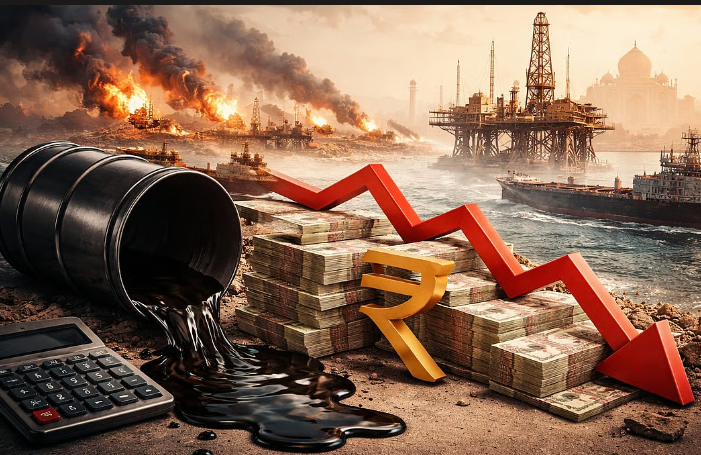
NEW DELHI, Oct 3: India’s latest oil shock is increasingly being felt across businesses through higher industrial input costs, even as the impact on retail petrol prices remains less visible. Rising crude prices and continuing disruption in global energy markets are increasing expenses for manufacturers that depend on petroleum-linked raw materials, transportation and imported components.
The pressure has emerged as international oil prices have remained above the $100 a barrel level amid the continuing conflict and supply disruptions in West Asia. The increase is affecting a wide range of industries because crude oil is not only used for transport fuels but is also a basic input for plastics, chemicals, synthetic fibres, packaging materials and several industrial products.
Data cited by Business Today showed that polypropylene granules, a widely used plastic raw material, increased by around 32 per cent between July and September. The movement illustrates how higher energy costs are moving through supply chains and reaching companies well beyond the petroleum sector.
For Indian manufacturers, the rise in raw material prices comes at a time when businesses are preparing for the festive season and managing demand from consumers. Companies in packaging, automobiles, consumer goods, textiles and chemicals are particularly exposed to changes in petroleum-linked input prices.
The effect of expensive crude is not uniform across industries. Businesses with stronger pricing power may be able to pass part of the additional cost to customers, while smaller manufacturers may have to absorb a larger portion of the increase to retain orders. This can squeeze operating margins and complicate production planning.
The energy shock is also affecting the broader cost structure of the economy. Higher crude prices increase the expense of transporting goods, moving raw materials between factories and distribution centres and delivering finished products to retailers. Industries that depend heavily on road transport therefore face a combination of higher material and logistics expenses.
The latest developments have come against a difficult international backdrop. Global financial markets have been dealing with high borrowing costs, elevated energy prices and geopolitical uncertainty. Reuters reported on October 2 that crude prices had moved above $100 a barrel while major central banks continued to contend with inflationary pressures.
The situation has also prompted governments to consider measures aimed at easing pressure on fuel markets. G7 countries agreed to release emergency stocks of crude oil and refined fuels over the following months, with the objective of improving supply and reducing some of the pressure created by high energy prices. Reports put the planned release at about 100 million barrels of crude, diesel and gasoline.
However, the release of strategic stocks does not immediately remove the underlying risks facing companies. Global supply chains remain exposed to security concerns affecting important shipping routes, while refining capacity and inventories have also come under pressure.
For India, the issue is especially significant because the country remains heavily dependent on imported crude oil. When international prices rise, the cost of bringing energy into the country increases, potentially affecting the trade balance and the cost structure of businesses.
The rupee’s movement against the US dollar adds another layer of pressure because crude oil is traded internationally in dollars. A weaker domestic currency can make imported energy and other commodities more expensive for Indian buyers.
The latest economic indicators nevertheless show that domestic activity remains substantial. September GST collections rose 14.7 per cent year-on-year to more than Rs 2 lakh crore, while domestic GST collections also recorded strong growth. The increase in tax receipts has been cited as one indication of continuing economic activity.
Automobile sales have also shown strength ahead of the festive period. Data reported on October 2 indicated double-digit growth in vehicle dispatches by leading manufacturers, adding to evidence of continued consumer demand.
The combination of strong demand and rising input costs creates a complicated environment for companies. Manufacturers need to maintain production and meet orders while managing expenses that can change rapidly because of developments outside India.
Plastic and chemical producers are among the businesses directly exposed to crude-linked feedstock prices. Packaging companies can also face higher expenses because several packaging materials are petroleum-based. Food and consumer-product manufacturers may eventually encounter higher packaging and transportation costs even if the price of the final product does not immediately change.
Textile manufacturers face a separate challenge because synthetic fibres and related chemicals are closely connected to petrochemical markets. Higher costs for synthetic yarn, dyes, packaging and freight can affect manufacturers across different stages of the supply chain.
The impact can extend to exporters as well. Indian companies competing in international markets have to consider whether higher domestic input costs can be absorbed without making their products less competitive. Companies that cannot immediately revise overseas prices may see pressure on margins.
Smaller enterprises could face greater difficulty because they often have less negotiating power with suppliers and customers. Large companies may have longer-term contracts, diversified sourcing arrangements or financial tools to manage commodity-price volatility. Smaller manufacturers may have fewer options when raw-material prices rise suddenly.
Businesses are therefore likely to pay close attention to crude prices, shipping conditions and currency movements during the coming weeks. Any improvement in energy supply could ease some pressure, while another disruption could quickly push costs higher.
The government and industry will also be watching inflation carefully. Higher input prices can initially affect producers before becoming visible in consumer prices. If businesses continue to face elevated costs for an extended period, some of the increase could eventually pass through to wholesale and retail markets.
At the same time, India’s relatively strong domestic demand provides companies with an important source of support. Strong consumption, tax collections and manufacturing activity can help businesses cope with external shocks, although the degree of resilience will differ across sectors.
The immediate challenge for corporate India is therefore not simply the price of petrol or diesel. The larger concern is how expensive crude filters through the entire production ecosystem, from raw materials and factory operations to freight, packaging and final distribution.
With global energy markets still unsettled, Indian companies are likely to remain focused on controlling inventories, negotiating supplier contracts and protecting margins. The direction of crude prices over the next few months could have a significant bearing on operating costs across manufacturing and consumer-facing industries.

