


IAF Chief AP Singh Says Drones Are ‘Evolutionary’, Rules Out Separate Drone Force
Air Chief Marshal AP Singh says unmanned systems will be integrated with existing weapons and platforms as the IAF expands drones and loitering munitions.
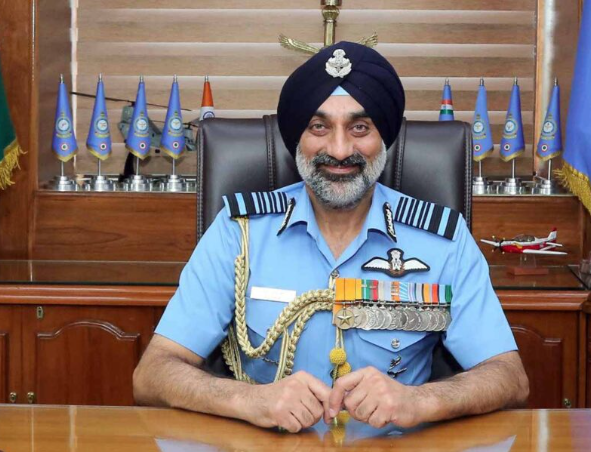
NEW DELHI, Oct 3: Indian Air Force Chief Air Chief Marshal AP Singh on Saturday said unmanned aerial systems were an “evolutionary” development for the force rather than a “revolutionary” one, ruling out the need for a separate drone force and emphasising their integration with conventional weapons and other military platforms.
Addressing the IAF’s annual press conference in New Delhi, Singh said the force had been using drone-related capabilities for several decades and was now expanding them in terms of numbers, varieties and operational roles.
“Drones are not revolutionary to the Indian Air Force, but evolutionary,” Singh said, adding that the IAF was increasing its inventory of drones and loitering munitions.
He said there was currently no plan to establish an independent drone force because unmanned systems would be more effective when deployed alongside other weapons and platforms.
According to Singh, modern military operations require different capabilities to work in coordination rather than functioning independently. He said the objective should be to combine various weapon systems in a manner that produces the intended operational impact.
The IAF chief pointed out that specialised units dealing with drones and related technologies already exist within the force. Their numbers, he said, could be expanded depending on operational requirements.
Singh also highlighted the contribution of loitering munitions during recent military operations, saying they had helped create disruption and target certain air-defence assets. He reiterated that these systems were not entirely new to the IAF, having been part of its capabilities for years.
The expansion of unmanned systems comes as militaries worldwide are increasingly incorporating drones, loitering weapons and other autonomous technologies into combat operations. The IAF’s approach, as outlined by Singh, is to integrate these capabilities into a wider network of weapons and platforms rather than establish them as a separate arm.
The Air Chief Marshal also spoke about the IAF’s fighter aircraft inventory and the challenges surrounding planned acquisitions. He acknowledged that the force’s aircraft numbers were declining and said delays in the arrival of platforms on which the IAF had been relying had contributed to the situation.
“Everybody understands this fact that our numbers are decreasing,” Singh said, noting that aircraft expected to join the force had also been inducted at a slower pace than anticipated.
The IAF is looking towards several programmes to strengthen its fighter fleet, including the Tejas Mark-1A, the proposed Multi-Role Fighter Aircraft programme and the future Tejas Mark-2.
The Tejas Mark-1A is expected to add indigenous fighter capacity to the IAF, while the MRFA programme is aimed at acquiring additional multi-role combat aircraft. The Mark-2 fighter is being developed as a more capable indigenous platform for the future.
Singh also discussed the Advanced Medium Combat Aircraft programme, which is intended to provide the IAF with a next-generation indigenous fighter capability.
He indicated that any prolonged delay in the AMCA programme could require the force to examine alternative options to address its future requirements. Among the possibilities is Russia’s offer of the Su-57 fighter aircraft, although Singh made it clear that no decision had been taken regarding the proposal.
The Russian offer has emerged amid wider discussions about the IAF’s future combat aircraft requirements. Singh’s comments indicated that the force would continue assessing available options while pursuing indigenous programmes.
The Air Chief also stressed the importance of ensuring that major aviation programmes receive coordinated support across the country. He called for a “whole-of-nation approach” to major defence projects so that development and production schedules can translate into timely operational capability.
The issue of aircraft availability remains an important consideration for the IAF as it seeks to maintain adequate combat strength while older platforms gradually leave service and newer aircraft enter the fleet.
The force is simultaneously working on several aircraft programmes, creating a need for coordination among the armed forces, government agencies, public-sector organisations, private industry and research institutions.
Singh’s comments on drones and fighter aircraft therefore highlighted two parallel aspects of the IAF’s modernisation strategy: expanding emerging unmanned capabilities while addressing the requirements of its manned combat aircraft fleet.
On drones, the IAF chief emphasised integration rather than organisational separation. The force intends to increase the number and variety of unmanned platforms and loitering munitions while employing them alongside other weapon systems.
He also indicated that specialised formations already handling these capabilities could be strengthened as operational requirements evolve.
The comments reflect a broader shift in modern warfare in which drones can perform surveillance, targeting, strike and other battlefield functions while operating alongside conventional aircraft and ground-based weapons.
At the same time, the IAF continues to focus on maintaining its fighter aircraft inventory. Delays affecting planned inductions have added pressure to the force’s long-term planning, making timely progress on existing and future aircraft programmes important for its operational requirements.
Singh’s remarks also suggested that the IAF is seeking flexibility in addressing future capability gaps. While indigenous programmes remain central to the force’s modernisation plans, alternative options could be considered if major projects face extended delays.
However, he clarified that the Russian Su-57 offer has not resulted in any decision by the IAF.
The Air Chief’s annual press conference thus covered both emerging technologies and conventional combat capabilities. His assessment of drones underlined the IAF’s preference for integrating unmanned systems into existing operational structures, while his comments on fighter programmes highlighted the need for timely deliveries and coordinated national efforts.
As the IAF expands its use of drones and loitering munitions, the focus will remain on how these systems can complement aircraft, air-defence capabilities and other weapons in coordinated operations rather than functioning as an isolated force.

