


Trump Mistakes Brazil for India While Calling US Electoral Process ‘Corrupt’
Trump’s post describing a 125 million vote Indian presidential election appears to have referred instead to Brazil’s recent first round poll.
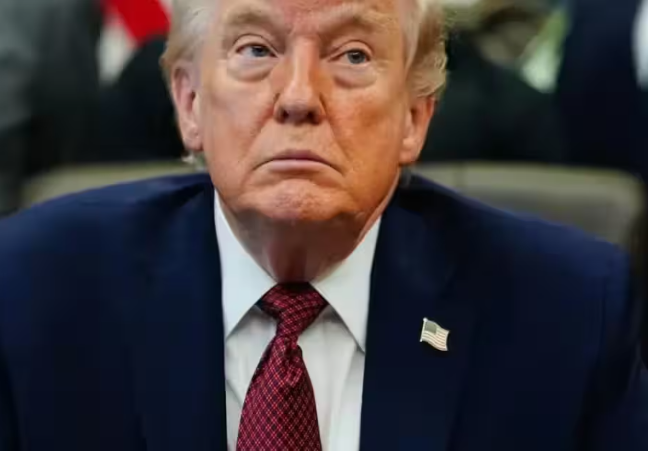
Washington, Oct 5: US President Donald Trump appeared to confuse India with Brazil in a social media post in which he criticised the American electoral system and described voting in the United States as “corrupt”.
In a post on Truth Social, Trump claimed that 125 million people had voted in an Indian presidential election and that the results were announced shortly after polling ended.
He compared the alleged process with elections in several US cities and states, including Detroit and Philadelphia, arguing that American election results can take considerably longer to be finalised.
The reference to India, however, appeared to be a mix-up with Brazil. Brazil held the first round of its presidential election on Sunday, in which 125.27 million valid votes were recorded, according to the country’s electoral authority. Initial results began to be released after voting ended at 5 pm and were updated as ballots were counted and processed.
The Brazilian election featured incumbent President Luiz Inacio Lula da Silva and Flavio Bolsonaro, the son of former president Jair Bolsonaro. As neither candidate secured a majority, the two will face each other in a run-off scheduled for October 25.
India did not hold a presidential election. President Droupadi Murmu, who assumed office in July 2022, remains the country’s President.
India’s presidential election system also differs fundamentally from the process described in Trump’s post. The Indian President is not chosen through a direct nationwide popular vote. Instead, the office is elected by an Electoral College comprising elected members of both Houses of Parliament and elected members of state and union territory legislative assemblies.
The election uses proportional representation through a single transferable vote.
In India’s general elections, citizens directly elect members of the Lok Sabha and state legislative assemblies. The Prime Minister is subsequently appointed by the President, generally the leader of the party or coalition that commands a majority in the Lok Sabha.
Similarly, state governors appoint chief ministers, normally selecting the leader of the party or alliance holding a majority in the respective state assembly.
India had nearly 980 million registered electors for the 2024 Lok Sabha election, one of the world’s largest electoral exercises.
Trump has previously referred to India’s electoral system while advocating changes to voting rules in the United States.
In August, he claimed that India’s Chief Election Commissioner Gyanesh Kumar had asked officials in his administration how US elections could be conducted without a valid photo identification requirement.
Trump made the remarks while seeking support for the SAVE America Act, legislation that would require proof of citizenship for voter registration, establish a nationwide photo identification requirement and place tighter restrictions on voting by mail.
In an August 17 social media post, Trump also cited India’s 2024 election and claimed that 646 million people had voted, with less than one per cent casting ballots by mail. He further asserted that every voter in India was required to present valid photo identification.
The latest post again brought India’s electoral system into Trump’s discussion of voting reforms in the United States, although the specific election he described appeared to correspond to Brazil’s presidential contest rather than an Indian election.
The episode also highlights the significant differences between the electoral systems of the two countries. While Indian voters directly choose representatives in parliamentary and state elections, the President is selected through an indirect constitutional process.
Brazil, meanwhile, elects its president through a direct popular vote, with a second round held when no candidate receives the required majority in the first round.
Trump’s comparison therefore combined details associated with Brazil’s recent presidential election with a reference to India while making a broader criticism of the US electoral process.

