


Mercedes Benz Q3 Sales Fall 8% as China Weakness Overshadows EV Growth
Strong electric vehicle demand in Europe and higher US sales provide some relief as deliveries in China plunge 31 per cent.
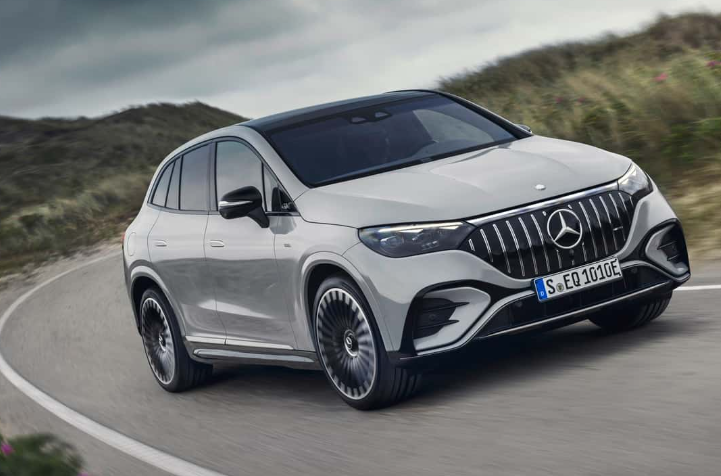
BERLIN, Oct 8: Mercedes Benz reported an 8 per cent year on year decline in third-quarter car sales on October 7, with weakness in the Chinese market weighing heavily on the German luxury automaker despite strong growth in electric vehicle deliveries.
The company delivered 407,200 cars worldwide during the July-September quarter, compared with the corresponding period a year earlier. China, Mercedes-Benz’s largest market, recorded the sharpest decline, with sales falling 31 per cent to 86,800 vehicles.
The figures underline the growing challenges facing premium automobile manufacturers in China, where competition has intensified and consumer preferences are changing rapidly. Local electric vehicle manufacturers have expanded their presence across different price segments, putting pressure on established international brands.
Mercedes-Benz’s top-end vehicle segment was particularly affected. Sales in the category declined 21 per cent to 53,900 units during the quarter, with the company pointing to difficult market conditions in China as well as ongoing model changeovers.
The weakness in China was partly offset by stronger performances in other major markets. Mercedes-Benz car sales increased 6 per cent in the United States and 5 per cent in Europe during the quarter.
The contrasting regional results highlight the uneven nature of the global automobile market. While demand has weakened in China, the company’s sales momentum in Europe and the US has provided some support to overall performance.
One of the strongest elements of the latest results was the company’s electric vehicle business. Group battery-electric vehicle sales, covering cars and vans, increased 52 per cent to 78,100 units. The company described the quarter as a record period for its battery-electric vehicle sales.
The increase indicates that Mercedes-Benz’s transition towards electric mobility is gaining traction even as conventional vehicle sales face pressure in important markets.
The electric GLC was among the major contributors to the improvement. The company has also introduced new electric versions of the GLC, CLA, GLB and GLA, with demand proving particularly strong in Europe.
Mercedes-Benz said its new electric models were sold out in Europe for the remainder of the year, with order books extending into 2027. To meet demand, production facilities in Bremen, Rastatt and Kecskemet have been operating on three-shift schedules.
The strong response to its electric models provides an important counterpoint to the decline in overall deliveries. It suggests that customers in several developed markets remain willing to spend on premium electric vehicles when new products offer improved technology, performance and design.
The situation in China, however, remains considerably more complicated. The country has become one of the world’s most competitive automobile markets, particularly in electric vehicles. Domestic manufacturers have invested heavily in battery technology, software, connected features and new vehicle platforms.
Foreign automakers are consequently under increasing pressure to introduce new products quickly while maintaining competitive prices.
Mercedes-Benz has seen comparatively better resilience from certain established models in China. The GLC and E-Class together accounted for a significant share of the company’s sales in the country, according to the company, and performed better than the wider market.
Nevertheless, the overall decline demonstrates the difficulty of maintaining premium-market share in an environment where Chinese consumers have more domestic alternatives.
The company’s third-quarter performance also illustrates the importance of product cycles. Model changeovers can temporarily affect deliveries as manufacturers prepare factories and dealerships for updated vehicles. This factor contributed to the decline in Mercedes-Benz’s top-end sales.
At the global level, the company is attempting to manage two major transitions simultaneously: adapting to rapidly changing demand in China and accelerating its electric vehicle strategy.
The rise in EV sales provides some encouragement. Battery electric deliveries are growing much faster than overall vehicle sales, suggesting that the company’s investment in electrification is beginning to generate stronger volumes.
However, the transition also carries significant costs. Automakers must invest billions in vehicle development, batteries, software, manufacturing facilities and charging-related ecosystems while continuing to support conventional models during the transition period.
For Mercedes-Benz, maintaining profitability during this transformation will be as important as increasing electric vehicle volumes.
The company’s performance also reflects broader changes in consumer demand. Electric vehicles are becoming increasingly important in Europe and other developed markets, where stricter emissions standards and expanding charging infrastructure are supporting adoption.
The US market presents a different picture. Mercedes-Benz reported a 6 per cent increase in car sales there during the third quarter, helped by demand for refreshed SUV models. European deliveries rose 5 per cent, providing another source of support for the company.
These gains demonstrate that weakness in one major market does not necessarily translate into a uniform global downturn. Automakers with diversified geographic operations can use stronger markets to offset weaker regions.
Still, China’s importance means that developments there will remain a major consideration for Mercedes-Benz and other global luxury manufacturers.
The Chinese market is particularly significant because premium brands have historically relied on strong demand from affluent consumers in major cities. Intensifying competition, however, has changed the market landscape.
Technology has become an increasingly important part of the purchasing decision. Buyers are paying greater attention to digital interfaces, driver-assistance systems, battery performance, connectivity and intelligent vehicle features.
This has created a more challenging environment for traditional luxury manufacturers whose competitive advantage historically centred on engineering, design, brand reputation and driving performance.
Mercedes-Benz’s growing electric portfolio is therefore intended not only to address environmental regulations but also to respond to changing customer expectations.
The company’s strong European order book offers a positive sign as it works through the broader transformation. Yet the continued decline in China means management will need to closely monitor pricing, product launches and customer preferences in that market.
The latest sales figures also have implications for the wider luxury automobile industry. Rivals face many of the same pressures, including slower demand in China, rising competition from local EV companies and the need to invest heavily in electrification.
For suppliers, dealerships and component manufacturers, changes in production volumes could influence orders and capacity planning.
For investors, the key question will be whether stronger electric vehicle demand can eventually compensate for weakness in traditional premium segments. The answer will depend on the pace of EV adoption, pricing power, production efficiency and the recovery of demand in China.
Mercedes-Benz’s third-quarter numbers therefore present a mixed picture. Overall car sales declined, and China’s sharp contraction remains a significant concern. At the same time, electric vehicle demand is accelerating, while sales in Europe and the United States have provided some stability.
The company now faces the task of converting strong interest in its latest electric models into sustained global growth while rebuilding momentum in one of its most important markets.

