


Musk Promises Affordable Starlink Internet in India as Satellite Connectivity Race Intensifies
SpaceX seeks to enter India's price-sensitive broadband market as satellite internet providers await regulatory clearances and competition with established telecom operators grows.
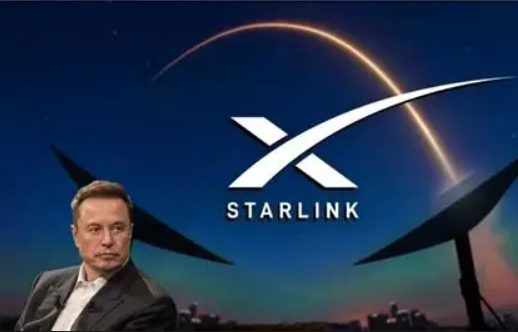
NEW DELHI, Oct 12: Elon Musk has renewed his push to introduce Starlink satellite internet services in India, promising affordable pricing as his company seeks entry into one of the world’s largest telecommunications markets. The announcement has intensified attention on satellite based connectivity, competition among internet providers and the regulatory process governing the launch of commercial services.
Musk said SpaceX would work to ensure that Starlink’s services remain accessible to Indian consumers. His comments come as the company awaits the necessary security clearances to begin commercial operations in India, where established telecom operators already offer mobile data at comparatively low prices.
The proposed entry of Starlink could create additional options for households, businesses and institutions that struggle with unreliable terrestrial connectivity. However, its commercial prospects will depend on pricing, regulatory approvals, network performance and the ability to demonstrate advantages over existing broadband services.
Affordability at the centre of the debate
India’s telecommunications market has developed around relatively inexpensive mobile data packages and extensive wireless coverage. Consumers have become accustomed to accessing online services through affordable mobile connections, creating a challenging environment for satellite broadband providers that must recover the cost of satellites, ground infrastructure and customer equipment.
Starlink’s business model differs from that of conventional mobile operators. Its low-Earth-orbit satellite network is designed to deliver internet connectivity through specialised user terminals communicating with satellites passing overhead.
The technology can be particularly useful in places where laying fibre-optic cables or constructing conventional mobile infrastructure is difficult or uneconomical. Remote villages, isolated industrial facilities, maritime operations and emergency-response teams are among the potential users of satellite connectivity.
Yet technical availability alone does not guarantee widespread adoption. Consumers must consider installation expenses, equipment costs, subscription charges and the reliability of the service. For small businesses and households with access to inexpensive fibre or mobile broadband, satellite internet may not automatically represent the most economical choice.
Musk’s affordability pledge therefore addresses one of the central questions surrounding Starlink’s proposed Indian launch: whether the company can offer a service that is financially attractive while maintaining the economics of a satellite network.
India remains a major opportunity
India’s large population and continuing demand for digital services make it an important potential market for satellite communications. Internet connectivity supports online education, digital payments, healthcare access, government services, business operations and communication across geographically dispersed communities.
Although conventional networks have expanded substantially, some locations remain difficult to serve consistently. Mountainous terrain, islands, forests and sparsely populated regions can present substantial challenges for building and maintaining terrestrial infrastructure.
Satellite services can complement these networks by connecting locations that would otherwise require costly construction. They can also provide an alternative communications route when terrestrial infrastructure is disrupted by natural disasters or other emergencies.
For businesses operating in remote areas, connectivity can support equipment monitoring, inventory management, digital transactions and communication with headquarters. Schools and healthcare facilities may also benefit when reliable conventional broadband is unavailable.
However, satellite services are not a universal replacement for mobile networks or fibre. Their role is more likely to involve filling coverage gaps and providing additional options for specialised users, particularly where traditional infrastructure is limited.
Regulatory approvals remain essential
Starlink’s commercial launch depends on compliance with India’s licensing, security and spectrum-related requirements.
Telecommunications Minister Jyotiraditya Scindia has rejected allegations that the government is favouring established operators over satellite internet companies. The government has maintained that Starlink and other licensed satellite-service ventures must meet the applicable requirements before beginning operations.
Reuters reported on October 9 that Starlink, Reliance Jio’s satellite venture and Eutelsat OneWeb were awaiting regulatory steps, including security compliance and decisions relating to spectrum arrangements.
These requirements are important because satellite communications involve national infrastructure, cross-border signals and systems that must operate within an established regulatory framework.
Security reviews can cover the technical and operational conditions under which services are provided. Spectrum rules, meanwhile, help determine how radio frequencies are allocated and used without creating harmful interference.
Receiving an operating licence does not necessarily mean that a provider can begin commercial services immediately. Companies may still need to satisfy additional conditions governing security, spectrum access and deployment.
For consumers, the distinction means that Starlink’s announced pricing ambitions should not be interpreted as confirmation of a launch date or a final subscription package.
Competition with established telecom operators
The satellite broadband debate has increasingly involved the country’s major telecommunications companies.
Reliance Jio and Bharti Airtel have established extensive customer bases and terrestrial networks. Both companies also have interests in satellite connectivity, placing them in a position to compete in some areas while potentially cooperating with satellite operators in others.
Musk has criticised the delay in Starlink’s Indian entry and suggested that commercial interests may be influencing the process. The Indian government has rejected claims of preferential treatment, stating that the relevant companies must follow the same regulatory framework.
The dispute highlights the commercial significance of the market. India’s telecom sector has traditionally competed on coverage, data allowances, service quality and affordability. Satellite broadband introduces another dimension by offering a potential route to connectivity outside the reach of conventional infrastructure.
Nevertheless, satellite providers face their own constraints. Their equipment requirements and network economics differ from those of mobile operators, while terrestrial companies benefit from existing infrastructure and established distribution channels.
The eventual competitive landscape may therefore involve a mixture of direct competition, partnerships and complementary services rather than a straightforward replacement of one technology by another.
Potential benefits for remote communities
Satellite internet could be especially relevant to communities where conventional connectivity remains inconsistent.
In remote educational institutions, a reliable connection could allow teachers and students to access online learning platforms, digital libraries and educational resources. Healthcare facilities could use connectivity for remote consultations, administrative coordination and access to specialist guidance where appropriate.
Local businesses may benefit from improved access to online marketplaces, digital banking and communications with suppliers and customers. Public agencies could also use satellite links to support field operations and maintain communication in locations where terrestrial coverage is weak.
Disaster management is another potential application. Floods, landslides and other emergencies can damage cables, power supplies and mobile towers. Satellite links can provide an alternative communication channel, provided the necessary equipment, power and operational arrangements are available.
However, successful deployment would require more than making a satellite signal available. Communities would need affordable equipment, reliable electricity, technical support and sufficient digital skills to use the service effectively.
The government and service providers would also need to assess whether satellite connectivity offers better value than expanding existing networks in particular locations.
Technical considerations for users
Satellite internet performance depends on factors including network capacity, terminal installation, weather conditions, congestion and the design of the service.
Low-Earth-orbit systems operate much closer to Earth than traditional geostationary satellites, which can reduce signal travel time. This can make them more suitable for interactive online activities, including video calls and certain business applications.
Even so, actual performance can vary by location and network conditions. Customers would need clear information about expected speeds, latency, equipment requirements, data policies and service limitations before making purchasing decisions.
Coverage maps and advertised performance figures are useful starting points, but real-world experience may differ according to local conditions and the number of users sharing available capacity.
For businesses relying on uninterrupted connectivity, service-level commitments and backup arrangements could be as important as headline speeds.
Balancing expansion with consumer protection
As satellite internet services develop, regulators will face the challenge of encouraging innovation while maintaining fair competition and protecting consumers.
Clear licensing rules can provide certainty to investors and operators. Transparent spectrum policies can help ensure that different services coexist efficiently, while security requirements can protect national interests.
Consumer safeguards are equally important. Providers should communicate pricing clearly, disclose equipment and installation costs, explain service limitations and provide accessible complaint resolution mechanisms.
Competition may encourage providers to improve services and develop more attractive packages. However, the benefits will depend on whether consumers have meaningful choices and whether new services can meet their needs at reasonable prices.
The road ahead
Starlink’s proposed Indian entry highlights the growing importance of satellite connectivity in the global telecommunications industry. The technology could expand broadband access in difficult to reach areas, support specialised operations and provide resilience when conventional networks are disrupted.
The immediate challenge is to convert the company’s affordability promise into a commercially viable service that complies with Indian regulations and meets consumer expectations.
For India, the wider objective is to ensure that satellite networks complement existing infrastructure and contribute to digital inclusion without undermining transparent competition.
Whether Starlink can establish a substantial customer base will depend on its final prices, service quality, rollout strategy and ability to demonstrate value in a market where inexpensive mobile data has already transformed internet access.
The next phase will depend on regulatory decisions and the commercial terms eventually offered to Indian users.

