


Abhijeet Dipke Accuses Modi Government of Waging War on Citizens to Shield CEC
The Cockroach Janta Party convenor questions the Centre over police action against protesters, journalists and MPs amid opposition demands for the Election Commission chief's resignation.
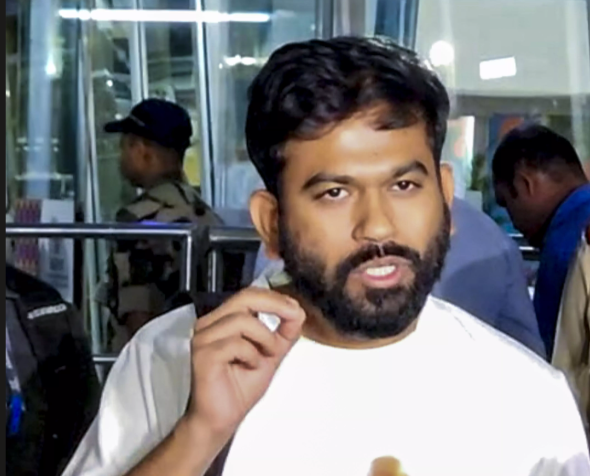
CHHATRAPATI SAMBHAJINAGAR, Oct 12: Cockroach Janta Party (CJP) convenor Abhijeet Dipke on Monday accused the Narendra Modi government of targeting citizens to protect Chief Election Commissioner Gyanesh Kumar, intensifying his criticism of the Centre amid continuing demands for the poll panel chief’s resignation.
Dipke returned to his native village, Santuk Pimpri, in Maharashtra’s Hingoli district, late Sunday night. He also visited the place where his grandmother’s last rites had been performed.
In a post on X, the activist questioned why the government was allegedly resorting to police action against people protesting against the Election Commission’s functioning.
” Youth are being assaulted, journalists are being assaulted, even MPs are being assaulted by Delhi Police. What makes Gyanesh Kumar so indispensable to Modi that he is willing to wage war against everyone just to protect him?” Dipke wrote.
The remarks came after Dipke and two other CJP leaders, Ashutosh Ranka and Saurav Das, were placed under preventive arrest at Delhi airport ahead of a protest at Jantar Mantar on Saturday.
The three were released on Sunday after being given conditions requiring them not to breach the peace for a year, according to the account provided by Dipke’s party.
The arrests have added to tensions surrounding demonstrations against the Election Commission and its handling of electoral rolls. Opposition parties and CJP members have been demanding Kumar’s resignation, alleging irregularities in the Special Intensive Revision (SIR) of voter lists.
The SIR exercise has become a major political flashpoint, with critics raising concerns about the process used to verify voter eligibility and make changes to electoral rolls. Opposition leaders have called for greater transparency and accountability in the exercise.
The Election Commission’s role in maintaining accurate voter lists and ensuring fair electoral processes has remained central to the dispute.
Dipke’s latest statement focused on what he described as the use of police action against people questioning the authorities. His remarks also referred to alleged assaults involving young protesters, journalists and Members of Parliament.
The allegations and the circumstances surrounding the preventive arrests have intensified the political debate over the handling of protests and the right to raise objections against constitutional institutions.
The CJP and opposition parties have continued to press for accountability over the SIR process, with their criticism centred on the Election Commission’s decisions and the leadership of the chief election commissioner.
The latest developments are likely to keep the dispute over electoral roll revisions and the treatment of protesters in the political spotlight.

