


Pope Leo XIV Undergoes Surgery to Remove Lung Nodule at Rome Hospital
The 71 year old pontiff underwent an operation to remove a small lung abnormality, with further tests expected to determine whether additional treatment is necessary. His hospital stay has led to the cancellation of public engagements through October 20.
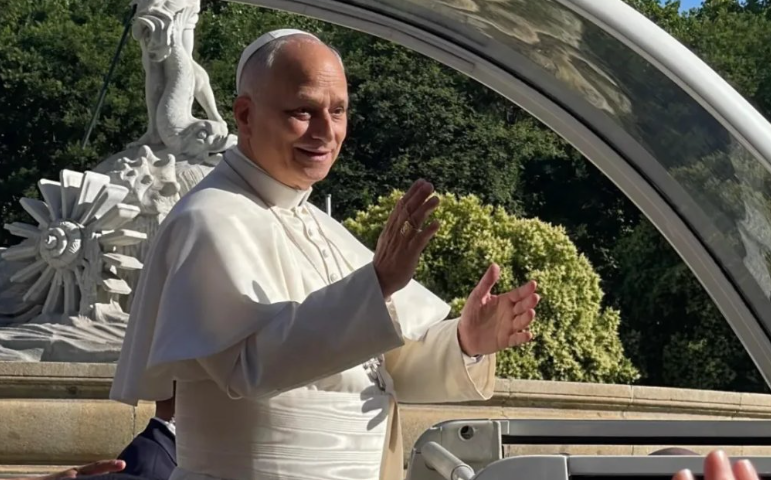
ROME, Oct 13: Pope Leo XIV underwent surgery at Rome’s Gemelli hospital on Tuesday to remove a lung nodule, a procedure intended to establish the nature of the abnormality and determine whether further treatment is required.
The American pontiff arrived at the hospital after a short drive from the Vatican and waved to well-wishers gathered outside the main entrance. The Vatican said the operation was being carried out by a medical team led by Dr Stefano Margaritora, head of thoracic surgery at the hospital.
The procedure began on Tuesday evening, as medical personnel gathered in the hospital chapel to recite the Rosary and pray for the Pope and other patients.
Cardinal Baldassare Reina, the Vicar of Rome, called on those present to pray for the pontiff’s well-being and for people receiving medical care.
At 71, Leo has provided an unusual degree of public information about a significant health concern during his 17-month papacy. He disclosed the discovery of the small, localised lung nodule during his Sunday noon prayer and subsequently announced plans to have it removed.
The Vatican has said the abnormality was identified during routine medical checks. Doctors will need to examine the tissue to establish whether the nodule is benign or malignant and assess whether any additional intervention is warranted.
Medical specialists have indicated that an early-stage lesion can have a favourable outlook if it is removed promptly. However, the Pope’s individual prognosis will depend on the findings from the procedure and subsequent tests.
The operation is generally performed under general anaesthesia. The anticipated hospital stay is about one week, and the Vatican has cancelled all the Pope’s scheduled audiences through October 20 to allow time for treatment and recovery.
Dr Lorenzo Spaggiari, director of thoracic surgery at the European Institute of Oncology in Milan, said the condition could be treated effectively if the clinical details corresponded to the description provided publicly. He is not involved in the Pope’s treatment but is familiar with the medical team at Gemelli.
The Vatican has also clarified the arrangements for the pontiff’s stay. Although the hospital has a dedicated papal apartment on its 10th floor, complete with a private chapel, Leo will occupy a nearby room because the apartment is undergoing renovations.
Doctors may use advanced robotic techniques
Specialists say a biopsy may be carried out to establish the nature of the nodule, followed by the removal of the affected portion of the lung if clinically necessary. Depending on the medical assessment, the diagnostic and surgical procedures could be completed during the same session under general anaesthesia.
Spaggiari explained that robotic bronchoscopy technology can help doctors obtain tissue samples from very small lung abnormalities. One such system, known as ION, is capable of guiding instruments to nodules measuring as little as three millimetres.
Both Gemelli hospital and the European Institute of Oncology have this technology, which has become available in Italy in recent years.
The hospital also has robotic surgical equipment that can enable doctors to remove a nodule through minimally invasive techniques. Such procedures typically involve several small incisions in the chest, through which surgical instruments are inserted.
The surgeon controls robotic arms while viewing a magnified, high-definition, three-dimensional image of the operating area. This approach can allow the procedure to be performed without the larger incision required in traditional open surgery.
However, the precise technique selected for the Pope had not been publicly confirmed. Spaggiari noted that Gemelli has experience with robotic procedures for both diagnosing and removing lung abnormalities.
He described the risks associated with a biopsy as very low and said surgical risks depend on the patient’s overall health, heart and lung function, as well as the complexity of the operation.
The final treatment plan will be determined by the medical team’s findings rather than by the presence of a nodule alone.
Further tests will guide treatment decisions
Doctors may also examine lymph nodes associated with the affected section of the lung. The results can help establish whether an abnormality has remained localised or has spread beyond its original site.
According to Spaggiari, if the nodule proves malignant but the relevant lymph nodes are clear, the condition may be classified as stage one, which generally carries a favourable outlook. In such cases, surgery alone may be sufficient, although the decision depends on the final pathology and other clinical factors.
A lung nodule is a small area of abnormal tissue measuring up to three centimetres in diameter. It may be detected during a chest scan or an examination performed for an unrelated medical reason.
Such nodules are not necessarily cancerous. Some are associated with infections, inflammation or other non-cancerous conditions, while others may represent an early-stage tumour. Doctors therefore consider factors such as the nodule’s size, appearance, growth and the patient’s medical history when deciding whether monitoring, biopsy or removal is appropriate.
The discovery of an asymptomatic nodule during routine checks can provide an opportunity for early investigation. Spaggiari described the timing of the discovery as fortunate because it enabled doctors to assess the problem before it caused noticeable symptoms.
Recovery may affect planned South American visit
The Pope’s medical treatment has also raised questions about his international travel schedule. He is due to visit Uruguay, Argentina and Peru from November 6 to 17, in what would be the longest overseas journey of his papacy so far.
The proposed itinerary involves more than 31,000 kilometres of travel, approximately a dozen flights and two helicopter journeys. The programme also includes changes in altitude during the Peru leg.
The feasibility of the trip will depend on the Pope’s recovery and his doctors’ assessment of whether he is fit to undertake a demanding schedule so soon after surgery.
The European Institute of Oncology generally advises patients to avoid flying for three weeks following lung surgery. That period could leave a limited recovery window before the planned journey, although the recommendation for any individual patient must be determined by the treating team.
Cardinal Kikuchi Tsutomu of Tokyo, who met Leo on Monday, said the pontiff had decided to undergo the procedure promptly in the hope of preserving his future travel plans. He described the operation as planned rather than an emergency.
No final conclusion about the November itinerary can be drawn until the Pope’s recovery progresses and his medical team provides further guidance.
Previous hospitalisation during missionary years
The operation is believed to be Leo’s second hospitalisation. The pontiff is generally regarded as physically active and has been known to enjoy tennis and swimming.
As a young missionary priest, he was hospitalised with typhoid fever in 1985, shortly after arriving in Chulucanas, Peru. The experience became an important turning point in his life and ministry.
In an interview published in Elise Ann Allen’s 2025 biography, Pope Leo XIV: The Biography, he recalled the severe pain he experienced during the illness and the prayers he offered while receiving intravenous treatment.
Leo said the episode prompted him to reflect on his commitment to serving communities in Peru, where poverty and difficult living conditions presented significant challenges. After recovering, he decided to continue his work there, a choice that shaped his subsequent religious career.
His current hospitalisation comes decades after that experience, during a papacy that began in 2025. For now, the immediate focus remains on the outcome of the lung procedure, the results of the tissue examination and the time needed for a safe recovery.
Further medical findings will determine whether the Pope requires additional treatment and when he can resume his public duties.

