


Fresh Saudi Airstrikes Target Oil Facilities Near Yemen’s Capital
The strikes near Sanaa follow an evacuation warning and threats of retaliation from Houthi forces, raising concerns over further escalation and regional oil supply disruptions.
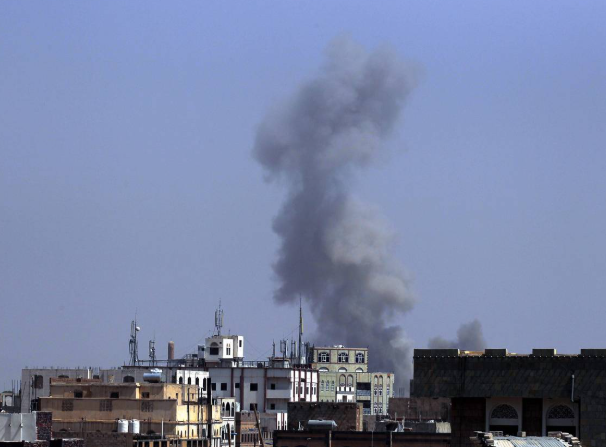
Sanaa, Oct. 14: The Saudi led coalition has carried out fresh airstrikes targeting oil facilities west of Yemen’s capital, Sanaa, according to Houthi linked broadcaster Al Masirah and local residents, marking another escalation in the intensifying regional conflict.
The strikes came shortly after a coalition spokesperson urged civilians to evacuate the area around the Yemeni Oil Company site and nearby storage facilities. Residents reported hearing explosions following the warning, although the full extent of the damage and the precise targets remained unclear.
The developments have heightened tensions between Saudi Arabia and Yemen’s Houthi movement, which controls Sanaa and several other parts of the country. Both sides have issued warnings as the conflict increasingly threatens regional security, aviation and critical transport routes.
The Yemeni Oil Company said its storage facilities were empty and maintained that an attack on the site would not affect the country’s available oil reserves or fuel supplies for residents. Houthi officials appeared to anticipate a possible strike after the coalition issued its evacuation advisory.
Shortly before the reported attack, Houthi military spokesperson Brigadier General Yahya Saree warned that any Saudi assault on Sanaa would trigger a strong response against Riyadh. In a message posted on Telegram, he described the anticipated retaliation as a “firm and painful” response.
The threatened oil facility is located in the Al-Subaha area of western Sanaa, on elevated ground overlooking the capital. Although the immediate vicinity is not densely populated, a nearby fuel station serves members of the public, raising concerns about potential risks to civilians.
The latest exchange of threats comes as Saudi Arabia faces questions over the effectiveness of its air defence systems following a series of missile and drone attacks attributed to the Houthis. An earlier assault on Riyadh’s international airport reportedly killed at least 13 people and injured more than 300, according to the information available in the initial reports.
The attacks have added pressure on Saudi authorities to strengthen protection around strategic infrastructure and civilian facilities as the conflict continues to widen.
The latest phase of fighting began last month after Houthi forces seized strategically important areas near the Bab el-Mandeb Strait, a vital maritime passage linking the Red Sea with the Gulf of Aden. The route is essential for international shipping, including the transportation of oil and other commercial goods.
The Saudi-led coalition, which supports forces aligned with Yemen’s internationally recognised government, has been attempting to recover the areas captured by the rebels. The confrontation has raised fears that further fighting could disrupt commercial shipping and threaten the security of energy supplies moving through the region.
The Houthis also renewed their warnings against the use of Saudi airspace on Tuesday, according to Houthi-controlled media. Several airlines have reportedly suspended services to the kingdom following attacks targeting airports, adding to concerns about the safety of commercial aviation.
In a statement carried by the Houthi-controlled SABA news agency, the movement’s foreign ministry accused Saudi Arabia of undermining regional stability and argued that security and sovereignty must be respected across the region.
The rhetoric reflects the increasingly confrontational relationship between Riyadh and the Houthis, whose military operations have extended beyond Yemen’s borders and raised concerns among neighbouring countries.
Diplomatic efforts to contain the escalation have also intensified. Egyptian Foreign Minister Badr Abdelatty urged the Houthis to immediately stop their attacks against Saudi Arabia during a telephone conversation with Iranian Foreign Minister Abbas Araghchi on Tuesday.
Abdelatty said there was no justification for the attacks and that they could not be accepted. His remarks underscored concerns among regional governments that continued military action could trigger a broader confrontation and further destabilise the Middle East.
The latest airstrikes also highlight the vulnerability of energy infrastructure during periods of heightened conflict. Even when facilities have limited or no stored fuel, attacks and evacuation warnings can disrupt local activity, create uncertainty over supply arrangements and raise concerns about damage to nearby infrastructure.
For Yemen, where years of conflict have already weakened public services and damaged essential infrastructure, further attacks could deepen humanitarian and economic difficulties. Any disruption to fuel distribution may affect transportation, electricity generation and the delivery of essential goods.
For Saudi Arabia and its regional partners, the challenge is to protect strategic facilities and civilian populations while preventing the confrontation from spreading further. The security of the Bab el-Mandeb Strait remains particularly important because disruptions there can affect shipping schedules, insurance costs and international trade.
The situation remains fluid, with the extent of the damage from the latest reported strikes yet to be established. Further developments will depend on the response from Houthi forces, the coalition’s military decisions and diplomatic efforts to prevent additional attacks.
The latest exchange of airstrikes and threats demonstrates how the conflict has evolved beyond local territorial disputes into a wider regional security challenge, with potential consequences for civilian safety, aviation and international energy transportation.

