


Jaishankar Holds Talks with UAE Foreign Minister on Bilateral Ties, Global Issues
During his three-day visit to the UAE, India's External Affairs Minister discusses strategic cooperation, regional security and international affairs with Sheikh Abdullah bin Zayed Al Nahyan.
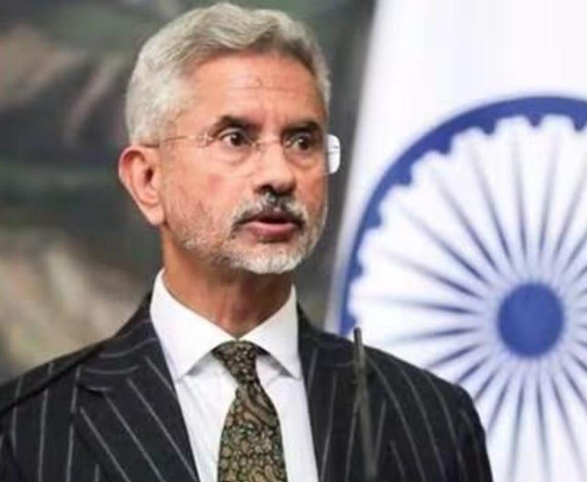
ABU DHABI, Oct 15: External Affairs Minister S Jaishankar met his United Arab Emirates (UAE) counterpart, Sheikh Abdullah bin Zayed Al Nahyan, to discuss bilateral relations and key international developments, reaffirming the commitment of both countries to strengthen their Comprehensive Strategic Partnership.
Describing the Wednesday meeting as “warm and productive”, Jaishankar said the two leaders exchanged views on bilateral and global matters in the spirit of their longstanding strategic relationship.
In a social media post, the Indian minister highlighted the importance of continued engagement between New Delhi and Abu Dhabi as both countries seek to expand cooperation across multiple sectors.
Jaishankar arrived in the UAE on Wednesday for a three-day official visit aimed at reviewing progress in bilateral relations and exploring opportunities for further collaboration.
India and the UAE have significantly broadened their partnership in recent years, with trade, investment, energy, defence and security emerging as major areas of engagement. Both countries have also worked to strengthen economic links and facilitate greater movement of goods, services and investment.
A key milestone in their economic relationship was the Comprehensive Economic Partnership Agreement (CEPA), which came into force in May 2022. The agreement established a framework for expanding bilateral commerce, improving market access and encouraging stronger business ties.
Earlier on Wednesday, Jaishankar participated in the second edition of the Raisina Middle East event, where he joined Sheikh Abdullah bin Zayed Al Nahyan, who also serves as the UAE’s deputy prime minister, for a discussion titled The World Ahead: Power, Purpose & Possibility.
The session provided an opportunity to exchange views on emerging international challenges, shifting geopolitical dynamics and the future of cooperation among countries amid a changing global environment.
During his Abu Dhabi engagements, Jaishankar also met Georgian Foreign Minister Maka Botchorishvili. Their discussions focused on strengthening cooperation in areas such as business, connectivity and cultural exchanges, reflecting India’s efforts to deepen relationships with partners across different regions.
The meeting with the UAE foreign minister followed earlier diplomatic engagements involving India, the UAE and France. Last month, Jaishankar held talks with Sheikh Abdullah bin Zayed Al Nahyan and French Foreign Minister Jean-Noel Barrot on the sidelines of the United Nations General Assembly in New York.
The three ministers reviewed progress in trilateral cooperation across mutually agreed areas and discussed developments in West Asia, a region of considerable strategic and economic importance to all three countries.
Jaishankar had also visited the UAE in April, when he met his Emirati counterpart to discuss the evolving regional situation and its wider implications.
The UAE remains a significant partner for India in the Gulf, serving as an important source of energy supplies, investment and commercial opportunities. The two countries also share extensive people-to-people connections, supported by a substantial Indian expatriate population living and working across the Emirates.
According to the Embassy of India in Abu Dhabi, Indian nationals constitute the largest expatriate community in the UAE, accounting for approximately 35 per cent of the country’s population. The number of Indian residents was estimated at around 4.3 million in 2024.
Approximately 15 per cent of the Indian community resides in Abu Dhabi, while the remainder is distributed across the other six emirates, including Dubai.
Kerala accounts for the largest share of Indian nationals in the UAE, followed by Tamil Nadu, Andhra Pradesh and Telangana. Significant communities from Uttar Pradesh, Bihar, Punjab and several other Indian states also contribute to the country’s diverse expatriate population.
The large Indian community plays an important role in strengthening economic, social and cultural links between the two countries. Its presence, alongside expanding trade and investment, continues to underpin the broader relationship.
Jaishankar’s latest visit reflects the continued importance both governments attach to regular high-level consultations, particularly as regional developments and global uncertainties create new challenges and opportunities for cooperation.

