


Rashtra Sevika Samiti Chief Criticises Jantar Mantar Protests, Says ‘Dimagi Naxalism’ Is Influencing Gen Z
Shantakka alleges that protests are aimed at creating instability and claims that the ideology is influencing young people and women.
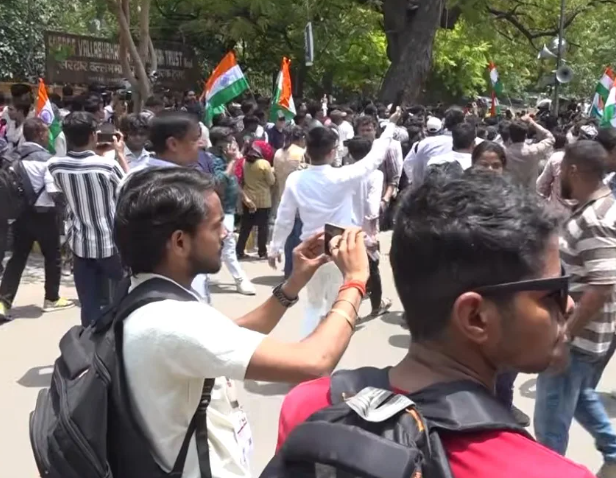
NAGPUR, Oct 16: Rashtra Sevika Samiti chief V Shantha Kumari, popularly known as Shantakka, on Friday described “dimagi Naxalism” as a dangerous and hidden network of harmful ideologies, alleging that it was influencing Generation Z and spreading unrest among women.
Addressing the annual Vijayadashami Utsav and Shastrapujan programme of the Rashtra Sevika Samiti in Nagpur, the organisation’s pramukh sanchalika expressed concern over the prevailing situation in the country. She criticised the protests held at Jantar Mantar in Delhi, alleging that their objective was to create instability rather than bring constructive changes to society.
Shantakka claimed that certain groups were exploiting young people for their own interests and attempting to undermine India’s cultural values. She also alleged that the protests were contributing to unrest among women.
“We have seen continuous protests at Jantar Mantar. We can call it an unconstitutional protest. The country is witnessing anarchy,” she said, alleging that the demonstrators intended to destabilise the country and damage its cultural foundations.
She maintained that these activities were not directed towards meaningful social reform but were instead encouraging disorder and influencing young people for political or ideological gains.
Highlighting the growing influence of what she termed “dimagi Naxalism”, Shantakka said the ideology posed a serious challenge because of its less visible nature and its ability to shape public thinking.
The term “dimagi Naxal” was used by Prime Minister Narendra Modi during his Independence Day address this year. Referring to the government’s efforts against armed Naxalism, Modi said that although armed Naxals had been eliminated from several forest areas, individuals promoting what he described as intellectual Naxalism continued to pose a challenge.
Shantakka’s remarks reflected concerns within the organisation about the ideological influences shaping younger generations and the role of protests in public life. Her allegations regarding the intentions of the demonstrators were not independently established in the account of her speech.

