


India Recall Bhuvneshwar Kumar for T20I Decider Against West Indies
With the five match series level at 2-2, India turn to the experienced pacer as they prepare for the final encounter in Bengaluru amid concerns over rain and batting consistency.
BENGALURU, Oct 17: India will look to reclaim control of their five-match Twenty20 International series against the West Indies when the two sides meet in the decisive contest at the M Chinnaswamy Stadium on Saturday. With the series evenly poised at 2-2, the final match presents both teams with an opportunity to finish the tour on a winning note.
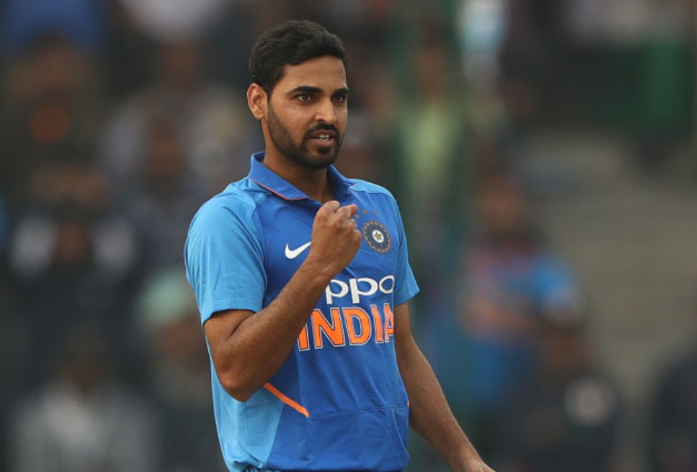
The Indian team management has received a significant boost with the inclusion of experienced fast bowler Bhuvneshwar Kumar in the squad. The Board of Control for Cricket in India announced his addition on Friday after left-arm pacer Arshdeep Singh sustained an injury to his bowling shoulder during the fourth T20I in Hyderabad.
Arshdeep’s availability for the series finale remained uncertain, with the BCCI stating that a decision would be taken after assessing his recovery. Bhuvneshwar’s inclusion provides India with another experienced option as they prepare for a match in which execution with both bat and ball could determine the outcome.Bhuvneshwar’s experience offers India another option
Bhuvneshwar’s return has attracted attention because of his ability to swing the new ball and deliver accurate overs during the closing stages of an innings. His experience in international cricket and the Indian Premier League could prove valuable in a high-pressure encounter.
The right-arm pacer last represented India in November 2022, against New Zealand. His recall comes at a time when the team’s bowling resources are under scrutiny following a series in which the West Indies have repeatedly challenged the Indian attack.
Bhuvneshwar is known for his control over line and length, movement with the new ball and ability to vary his pace. These qualities could be particularly useful against an opposition that has demonstrated its willingness to attack from the beginning of an innings.
However, his inclusion in the squad does not automatically guarantee a place in the playing XI. The team management will have to assess his fitness, match readiness and suitability for the conditions before making a final decision.
India must also consider the balance between pace and spin. Kuldeep Yadav is among the options attracting attention, while the availability of other bowlers gives the selectors several combinations to consider.
The objective will be to select an attack capable of taking wickets without allowing the opposition to score freely during the middle overs. In T20 cricket, containing runs is important, but dismissing established batters often provides the quickest route to controlling a chase.
West Indies arrive with momentum
The West Indies levelled the series at 2-2 after defeating India by 24 runs in the fourth T20I in Hyderabad. Captain Shai Hope produced a century that helped the visitors establish a competitive total and put the hosts under pressure.
The result demonstrated the West Indies’ ability to respond after setbacks earlier in the series. Their batting unit has combined power with aggressive intent, placing India’s bowlers under pressure across different phases of the innings.
Hope’s performance was particularly significant because a substantial contribution from the top order can provide the foundation for a strong finish. The West Indies also have batters capable of accelerating quickly, making it difficult for opponents to rely on defensive plans alone.
India will therefore need to identify opportunities to break partnerships early. Bowling changes, variations in pace and disciplined field placements could become important when the West Indies attempt to build another substantial total.
The visitors will also be aware that a strong start can influence the match psychologically. If their openers attack successfully, India may be forced to adjust their plans earlier than expected. Conversely, early wickets would place pressure on the middle order and potentially reduce the freedom available to the team’s power hitters.
India’s batting approach under scrutiny
Despite possessing considerable batting depth, India have faced questions about their consistency during the series. The team will want its top order to provide a stable platform rather than leave the middle order with a difficult recovery task.
A strong powerplay can establish the required scoring rate while preserving wickets for the later overs. However, an aggressive approach must be supported by sound shot selection, particularly when bowlers use variations or exploit changes in the pitch.
India’s middle order will be another area of focus. Players coming in after the opening overs must be prepared to adapt to the match situation instead of relying exclusively on boundary-hitting.
If the top order scores quickly, the middle order can continue attacking. If early wickets fall, the priority may shift towards rebuilding the innings before accelerating. The ability to make that adjustment could be decisive in a closely contested match.
The series has also highlighted how quickly momentum can change in the shortest international format. A few overs of successful bowling or a brief burst of boundary-hitting can transform a match, making composure as important as individual skill.
India will need contributions from several players rather than depending on a single batter to carry the innings. Partnerships, running between the wickets and the ability to exploit loose deliveries can make a substantial difference when the target is challenging.
Rain adds uncertainty to Bengaluru contest
Weather conditions are another concern ahead of the final encounter. Forecasts issued before the match indicated a possibility of rain and thunderstorms in Bengaluru, raising questions about interruptions and the availability of sufficient playing time.A shortened match would require both teams to adjust their tactics. Batters might need to attack earlier, while bowlers would have less time to settle into their spells. Captains would also have to consider how weather interruptions could affect the calculation of a competitive target.
The possibility of rain makes the toss and the first few overs particularly important, although neither guarantees an advantage. Teams must remain prepared for changing circumstances and avoid committing too early to a single strategy.
Ground conditions can also influence bowling plans. A surface that allows the ball to come onto the bat may favour stroke-makers, while movement with the new ball could offer opportunities to fast bowlers. The team that adapts most effectively is likely to gain an advantage.
A decisive test for both teams
The final T20I offers India an opportunity to address weaknesses exposed in the preceding matches and finish the series with a victory on home soil. The West Indies, meanwhile, will seek to build on their comeback and demonstrate that their recent performance was not an isolated success.
For India, the key priorities are likely to include greater consistency from the top order, more effective execution in the death overs and careful management of the bowling resources available after Arshdeep’s injury.
Bhuvneshwar’s potential involvement adds another dimension to the contest. His experience could help India manage difficult periods, but the team’s overall performance will depend on how effectively the bowlers work together and how the batters respond to pressure.
The West Indies will look to continue their attacking approach while avoiding the loss of wickets in clusters. Their ability to maintain scoring momentum without exposing the lower order too early could shape the final result.
With the series tied and weather conditions uncertain, the Bengaluru encounter promises a demanding examination of tactical planning, execution and composure. Both sides have already shown that they can challenge the other, leaving the final match to determine which team finishes the series on top.

