


Bangladesh Measles Outbreak Claims Over 1,100 Lives, Exposes Gaps in Child Vaccination
More than 202,000 suspected cases have been reported since March, with children under five accounting for most deaths as authorities intensify efforts to reach missed communities.
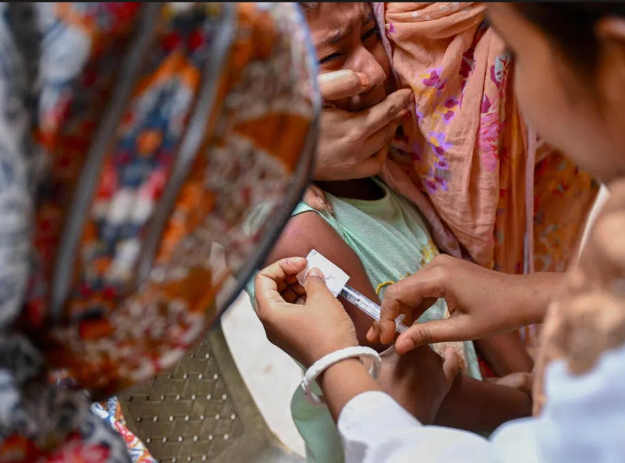
DHAKA, Oct 17: Bangladesh is struggling to contain a major measles outbreak that has claimed more than 1,100 lives and exposed serious weaknesses in childhood immunisation, disease surveillance and access to essential healthcare. The crisis has renewed concerns among global health experts about the consequences of declining vaccination coverage and inadequate public health preparedness.
According to figures reported by the World Health Organization (WHO), Bangladesh recorded approximately 202,000 suspected measles cases, including around 22,000 laboratory confirmed infections, between the beginning of the outbreak in mid-March and October 9, 2026. The reported death toll stood at 1,147, with children below five years of age accounting for approximately 94 per cent of fatalities.
The scale of the outbreak has raised questions about why a country that had achieved comparatively strong vaccination coverage in previous years was unable to protect a large number of children against a preventable infectious disease.
Health specialists have pointed to disruptions in routine immunisation, shortages of frontline personnel, incomplete vaccination records and difficulties reaching families in remote communities. These factors have complicated the emergency response and allowed infections to continue spreading despite mass vaccination efforts.
Declining immunisation coverage raises alarm
Measles is a highly contagious viral infection that can cause high fever, cough, a runny nose, inflamed eyes and a characteristic skin rash. Although many patients recover, the disease can lead to serious complications, including pneumonia, severe diarrhoea, dehydration, brain inflammation and death.
Young children, particularly those who are malnourished or have weakened immune systems, face a greater risk of severe illness. Limited access to timely medical treatment can further increase the danger.
Bangladesh had made considerable progress in routine childhood vaccination before the current crisis. Estimates from the WHO and UNICEF indicated that the country achieved approximately 96 per cent coverage for the first measles vaccine dose in 2024, while coverage for the second dose reached around 93 per cent.
However, the figures deteriorated in 2025. Estimates published by the two organisations in July 2026 placed first-dose coverage at approximately 90 per cent and second-dose coverage at 86 per cent.
The decline left a substantial number of children without the protection needed to prevent sustained transmission. The WHO generally identifies vaccination coverage of at least 95 per cent with two doses as an important target for preventing measles outbreaks.
The disruption followed a period of political instability in Bangladesh during 2025. Health workers’ strikes, delays in vaccine procurement and interruptions to follow-up immunisation activities weakened the continuity of routine services.
Experts say these developments demonstrate how political and administrative disruptions can quickly undermine public health programmes, particularly when vaccination depends on regular contact between communities and frontline healthcare workers.
Emergency campaign failed to reach every child
Bangladesh launched an emergency vaccination drive in April after infections began rising. Nearly 20 million children reportedly received vaccinations during April and May, and authorities initially observed a decline in new cases in some affected areas.
The campaign targeted children aged six months to five years, including younger infants who became eligible for vaccination under the emergency response.
However, subsequent findings revealed significant gaps in coverage. A separate health intervention conducted in June had a target list containing approximately four million more children in the same age group than the earlier measles campaign. The discrepancy raised concerns that many eligible children had been missed.
Meeting records reviewed by Reuters also indicated that the emergency programme proceeded after only one round of readiness checks because of time constraints, rather than the four rounds normally used in such preparations.
Readiness assessments help authorities determine whether vaccination teams, refrigeration facilities, supplies and beneficiary lists are adequate before a campaign begins. Weak preparation can leave some districts less equipped to deliver vaccines safely and consistently.
By August, health officials had identified persistent coverage problems. Meeting records indicated that the proportion of children with confirmed measles who had not been vaccinated remained high even after the campaign.
The findings suggest that distributing millions of vaccine doses is not enough unless authorities can identify eligible children, verify that they have been reached and ensure that those who miss an initial opportunity receive another chance.
Remote communities face greater risks
The northeastern Sylhet region has been among the areas most seriously affected by the outbreak. Families in remote villages have faced difficulties obtaining vaccinations and accessing hospitals when children develop severe symptoms.
Accounts collected by Reuters described parents who said vaccination workers had not visited their communities before their children became ill. Some families reported receiving assistance only after a child had died.
These experiences highlight the difference between making vaccines available at health facilities and ensuring that families can actually obtain them.
Distance, transport expenses, limited awareness and the absence of regular outreach can prevent children from receiving routine immunisation. Families may also lack reliable information about when a child becomes eligible for a vaccine or where to obtain it.
The problem is compounded by weaknesses in population records. UNICEF and Bangladesh’s Bureau of Statistics have estimated that a substantial proportion of children remain unregistered, making it harder for authorities to maintain accurate vaccination lists and identify those who have missed scheduled doses.
Government data also indicated that approximately one-third of health worker positions were vacant, reducing the workforce available for routine services and emergency operations.
Health experts have therefore called for stronger community-level outreach, more reliable registration systems and improved coordination between local authorities, healthcare facilities and vaccination teams.
Hospitals face pressure as infections rise
The outbreak has also placed additional pressure on hospitals, particularly in severely affected districts.
A 100-bed hospital in Sylhet was reportedly treating 178 patients on the day Reuters visited in September, illustrating the strain on facilities handling a large number of suspected and confirmed infections.
Overcrowding can complicate the isolation of infectious patients, increase the demands placed on medical personnel and make it harder to provide timely care to children with complications.
The outbreak has developed alongside other public health challenges, including dengue, creating additional demands on hospitals and disease-control programmes.
Medical experts stress that early recognition of symptoms and prompt treatment of complications can improve outcomes. There is no specific antiviral treatment routinely used to cure measles, so care generally focuses on managing symptoms, maintaining hydration, addressing nutritional needs and treating complications when they occur.
Vitamin A supplementation is also recommended for children with measles under appropriate clinical guidance, particularly because the infection can cause severe complications in young patients.
Authorities launch a renewed vaccination drive
At the end of September, the government launched another campaign aimed at vaccinating approximately 3.4 million children who may have been missed during earlier efforts.
The initiative is intended to close coverage gaps and reach vulnerable communities through renewed outreach. Officials have also emphasised the need to involve people at the village level so that families who are difficult to reach are not overlooked.
However, experts caution that a successful campaign requires more than setting a numerical target. Authorities must establish accurate lists of eligible children, monitor vaccination progress, maintain cold-chain systems and ensure that remote settlements receive adequate attention.
Health specialists have also raised questions about whether vaccination efforts should extend more broadly to older children. According to WHO figures cited in reporting on the outbreak, children above five years account for approximately one-third of measles cases, indicating that immunity gaps may extend beyond the youngest age group.
Any expansion would require decisions based on epidemiological evidence, vaccination histories and official public health guidance.
Lessons for global health systems
Bangladesh’s experience has become a warning for countries that have reduced investment in routine immunisation or allowed vaccination coverage to decline.
Measles spreads rapidly among susceptible populations. Even when a national programme performs well overall, communities with lower coverage can become vulnerable to outbreaks, particularly where population movement and weak surveillance allow infections to spread unnoticed.
The crisis also illustrates why reliable health data matters. Incorrect population estimates, incomplete birth registration and inconsistent vaccination records can create a false impression that immunisation targets have been met.
Public health experts argue that governments must prioritise routine vaccination rather than rely mainly on emergency campaigns after an outbreak has already begun. Preventive programmes are generally less costly and safer than managing widespread infections, hospital admissions and avoidable deaths.
Strengthening the health workforce, ensuring dependable vaccine supplies, improving community engagement and maintaining transparent monitoring systems will be essential to rebuilding protection.
For Bangladesh, the immediate priority remains reaching children who have not been vaccinated and providing timely medical care to those who become seriously ill. In the longer term, restoring confidence in routine immunisation and ensuring that every child can access preventive services will be crucial to reducing the risk of another crisis.
The outbreak underscores a fundamental public health lesson: vaccines can prevent severe disease, but their benefits depend on reliable delivery systems that reach every community, including families living far from hospitals and major towns.

