


Ranbir Kapoor and Yash’s Ramayana to Hold Grand World Premiere in Los Angeles on October 27
Nitesh Tiwari’s ambitious mythological production will receive an international launch at the Academy Museum of Motion Pictures, with a 3D screening and a red-carpet celebration inspired by Indian traditions ahead of its November 5 theatrical release.
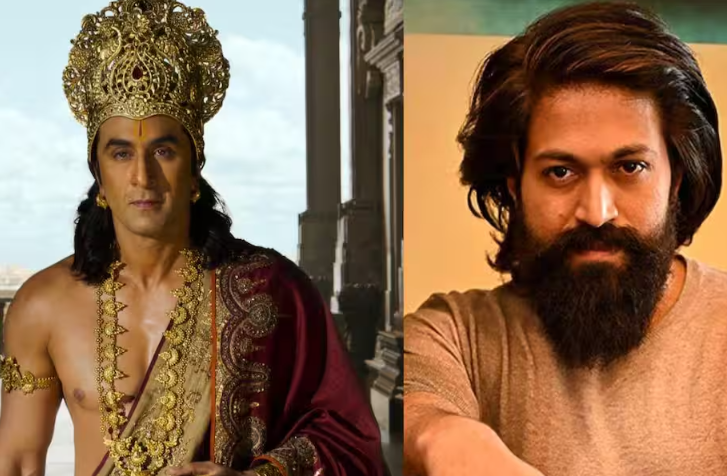
LOS ANGELES, Oct 19: The makers of the upcoming film Ramayana: Rise of a Legend, starring Ranbir Kapoor as Lord Rama and Yash as Ravana, are preparing for a major international showcase with a world premiere scheduled for October 27 at the Academy Museum of Motion Pictures in Los Angeles.
The invite only event will take place at the museum’s David Geffen Theater and is expected to welcome approximately 945 guests, including filmmakers, Hollywood personalities, international media representatives and members of the Indian film industry. The screening is planned in 3D, offering attendees an early look at one of the most anticipated Indian productions of the year.
The film is directed by Nitesh Tiwari and produced by Namit Malhotra. Its international premiere comes ahead of the first instalment’s scheduled theatrical release on November 5, 2026.
The organisers are reportedly planning a Diwali-themed red-carpet celebration, with guests encouraged to wear traditional Indian attire. The event is intended to introduce the film to an international audience while highlighting the cultural heritage associated with the epic on which the production is based.
The Los Angeles screening represents an important promotional milestone for a project designed to reach audiences in India and overseas. By choosing a prominent film institution for its global premiere, the makers are placing the production within an international cinematic setting ahead of its commercial release.
A major international launch
The Academy Museum of Motion Pictures is dedicated to the history, art and technology of filmmaking. Hosting a premiere at its David Geffen Theater gives the production an opportunity to present itself before an audience that includes industry professionals, critics and representatives of international entertainment media.
The reported guest list of 945 people reflects the scale of the planned gathering. Although the screening is invitation-only, coverage of the event is expected to help introduce the film to viewers who may be encountering the production through its promotional campaign rather than through Indian cinema’s traditional publicity channels.
A world premiere can serve several purposes for a large-scale film. It offers filmmakers an opportunity to showcase their work before the general release, provides a platform for cast and crew to discuss the creative process, and creates an occasion for international media coverage.
For Ramayana, the event also provides an opportunity to present an Indian mythological narrative in a setting associated with the broader history of world cinema. The decision to incorporate traditional clothing into the red-carpet arrangements further connects the event to the cultural roots of the story.
The planned 3D presentation is another prominent feature of the launch. Large-scale mythological films often rely on extensive visual effects, elaborate environments and carefully constructed action sequences. A theatrical screening in a specialised format can allow guests to experience those elements in a setting designed for cinema presentation.
Ranbir Kapoor leads an ensemble cast
Ranbir Kapoor will portray Lord Rama, the central figure in the epic, while Sai Pallavi has been cast as Sita. Yash will play Ravana, the powerful ruler of Lanka whose conflict with Rama forms a central part of the narrative.
Sunny Deol is set to appear as Hanuman, while Ravi Dubey will portray Lakshmana. The supporting cast includes several established actors, bringing together performers from different sections of the Indian film industry.
The casting has attracted attention because the production combines familiar faces from Hindi cinema with stars whose popularity extends across other regional markets. Yash, who gained widespread recognition through the KGF films, brings an established following among audiences who watch Kannada cinema and pan-Indian releases.
Kapoor, meanwhile, has worked across romantic dramas, comedies and large-scale productions during his career. His portrayal of Rama places him in a role associated with an enduring cultural and religious tradition, making the performance particularly significant for the film’s reception.
Sai Pallavi’s involvement adds another prominent performer to the principal cast. Known for her work in Telugu, Tamil and Malayalam cinema, she has built a reputation for performances across a variety of dramatic roles.
The film’s ensemble is intended to bring together different generations and regions of Indian cinema. The scale of the cast also reflects the demands of adapting a story with numerous major characters, parallel storylines and large confrontations.
A cinematic retelling of the Ramayana
The Ramayana has inspired generations of writers, performers, artists and filmmakers. Its central narrative follows Rama’s exile, Sita’s abduction by Ravana, and the efforts to rescue her, culminating in the conflict between Rama and the forces of Lanka.
The epic has been adapted through traditional theatre, television serials, animated productions and feature films. Each interpretation has reflected the storytelling methods, visual conventions and audience expectations of its time.
Tiwari’s film seeks to present the familiar narrative through a large-scale cinematic production. The project combines performances, visual effects and music to recreate the world of the epic for contemporary theatre audiences.
Adapting a culturally significant story brings particular creative responsibilities. Filmmakers must determine how to balance familiarity with fresh presentation, especially when audiences already have established understandings of its characters and major events.
The production’s international ambitions add another dimension to that challenge. While Indian viewers may be familiar with the narrative through religious traditions, literature and earlier screen adaptations, overseas audiences may approach the story from different cultural backgrounds.
A release across multiple Indian languages is intended to broaden domestic access, while international distribution can introduce the film to viewers beyond the Indian diaspora. The makers’ promotional strategy suggests that the project is being positioned as both a major Indian cinematic event and an international theatrical release.
Nitesh Tiwari and Namit Malhotra’s ambitious project
Tiwari is known for directing films across different genres, including Dangal and Chhichhore. His involvement in Ramayana marks a move towards a production on a substantially larger mythological canvas.
Malhotra, whose professional background includes visual effects and film production, is backing the project through Prime Focus Studios in association with DNEG and Yash’s Monster Mind Creations.
The involvement of companies associated with large-scale filmmaking and visual effects reflects the technical demands of the production. Recreating mythological settings, armies, landscapes and supernatural elements requires coordination between performers, designers, effects teams and other departments.
The project has attracted attention for its reported scale and budget. However, reported production-cost figures should be treated as estimates unless confirmed by the makers. The commercial outcome will ultimately depend on audience response, distribution arrangements and the film’s ability to sustain interest after release.
The premiere provides the team with an opportunity to present its work to an international audience before the wider theatrical rollout begins.
Music and technical presentation
Music is expected to play an important role in establishing the film’s emotional and dramatic atmosphere. The project has brought together Oscar-winning composer Hans Zimmer and Indian composer A. R. Rahman for its musical score.
Their involvement has generated interest because both composers have worked on productions that combine distinctive musical traditions with large cinematic narratives. The collaboration offers an opportunity to bring different approaches to the film’s score, although the final impact will be judged by audiences when the production reaches theatres.
The visual presentation is another major element of the film’s campaign. A 3D screening at the Los Angeles premiere will provide an early demonstration of how the production’s imagery has been prepared for the theatrical experience.
The use of visual effects in mythological cinema can help filmmakers depict settings and events that would be difficult to stage through conventional production methods alone. At the same time, audiences will assess whether the technology supports the story rather than distracting from the performances and emotional core.
Two-part release planned
The first instalment is scheduled to reach theatres on November 5, 2026, while the second part is planned for a Diwali 2027 release. The two-part format gives the filmmakers room to develop the story across separate theatrical chapters.
Large narratives can benefit from an extended structure when the material involves multiple characters, journeys and conflicts. However, dividing a story into instalments also places pressure on each film to provide a satisfying viewing experience while contributing to the broader narrative.
The upcoming release will therefore be judged on its storytelling, performances, visual design and ability to connect with audiences. Its reception in the opening days may influence expectations surrounding the second instalment.
The production is planned for release in Hindi, Tamil, Telugu, Kannada and Malayalam, with an IMAX presentation also planned. Sony Pictures is handling international distribution outside India, while Dharma Productions is overseeing the Hindi-market release, according to published reports.
Global audience expectations
The October 27 premiere is expected to draw attention to the production before its November theatrical debut. The combination of a recognised Indian epic, a prominent cast and a high-profile Los Angeles venue gives the film a distinct position in the current entertainment calendar.
International launches can help Indian films attract media coverage beyond their primary markets, but publicity alone does not determine box-office performance. Audience engagement, reviews, distribution reach and competition from other releases will all influence the film’s commercial prospects.
The planned traditional-attire theme also offers a cultural dimension to the event. Rather than treating the premiere solely as a conventional red-carpet gathering, the organisers are seeking to connect the occasion with the Indian traditions associated with the festival of Diwali.
For the filmmakers, the immediate objective is to introduce the production to the world before it reaches theatres. The Los Angeles event will be followed by the wider release campaign, with audiences eventually able to judge the completed film for themselves.
As the November 5 release approaches, Ramayana: Rise of a Legend remains one of the major upcoming projects attracting attention across Indian cinema. Its international premiere will mark the next step in bringing the ambitious adaptation to a global audience.

