


UN Loss and Damage Fund Allocates USD 20 Million for Flood-Hit Nepal
The provisional allocation is expected to cover just 0.7 per cent of Nepal’s estimated USD 2.56 billion in flood related losses, highlighting the gap between climate disaster recovery needs and available international support.
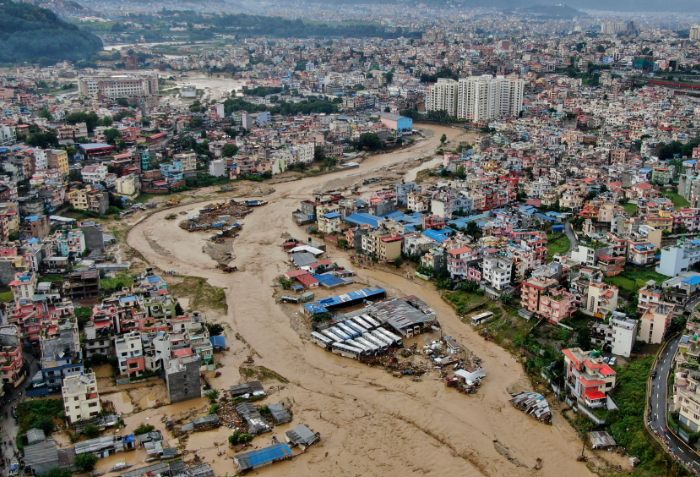
NEW DELHI, Oct 22: The United Nations’ Fund for Responding to Loss and Damage (FRLD) has provisionally earmarked USD 20 million for Nepal to support recovery efforts following devastating floods in August. The allocation comes as the Himalayan nation faces an enormous financial burden from the disaster.
According to Delhi based climate research organisation Climate Trends, preliminary estimates put the damage caused by the floods at approximately USD 2.56 billion. The proposed funding would therefore meet only around 0.7 per cent of the estimated losses.
Nepal must formally apply for the assistance before the fund’s board considers its request at the next meeting scheduled for December. The allocation is provisional and does not mean the money has already been disbursed.
Established through an agreement reached by governments at the 2022 United Nations climate conference in Egypt, the FRLD aims to help vulnerable developing countries address the economic and non-economic consequences of climate change that cannot be prevented through mitigation or adaptation measures.
The fund focuses on supporting communities facing increasingly severe climate-related disasters, including floods, droughts and other extreme weather events. Its board comprises 26 members representing parties to the United Nations Framework Convention on Climate Change (UNFCCC) and the 2015 Paris Agreement.
Welcoming the decision, Raju Pandit Chhetri, lead climate finance negotiator for the least-developed countries at the UNFCCC, said the approval demonstrated that international cooperation could deliver timely responses to countries facing urgent climate emergencies.
He noted that the provisional allocation reflected the ability of nations to reach a consensus on assisting vulnerable countries when disaster strikes.
Although the financial consequences of Nepal’s floods are substantial, Chhetri emphasised that the scale of destruction cannot be assessed entirely in monetary terms. He said the response also demonstrated the potential of multilateral cooperation to address the growing challenges posed by climate change.
However, climate campaigners have questioned whether the amount set aside would be sufficient to meet Nepal’s extensive recovery requirements.
Harjeet Singh of the Satat Sampada Climate Foundation said the country would require billions of dollars for reconstruction, while the international fund had offered assistance worth only millions.
Singh also pointed to concerns surrounding the conditions attached to the decision. He said developed countries had supported the provisional allocation while maintaining that it should neither establish a precedent for future funding decisions nor determine the fund’s long-term operating model.
He questioned whether the international community’s response adequately reflected the scale of the destruction and the needs of affected communities.
The decision has once again drawn attention to the financial challenges confronting developing nations as they deal with climate-related disasters. Countries with limited resources often face significant difficulties financing reconstruction, restoring livelihoods and rebuilding essential infrastructure after extreme weather events.
For Nepal, the proposed USD 20 million represents a potential source of international assistance, but the country’s estimated losses underline the continuing gap between the resources available through global climate finance mechanisms and the funding required for recovery.
The board’s consideration of Nepal’s formal application in December will be an important next step in determining whether the provisional allocation can move forward.

