


Kim Jong Un Vows to Strengthen China Ties During Surprise Border Visit, Inaugurates New Bridge
North Korean leader honours Chinese soldiers killed in the Korean War, meets senior Chinese official and crosses newly opened bridge connecting the two countries.
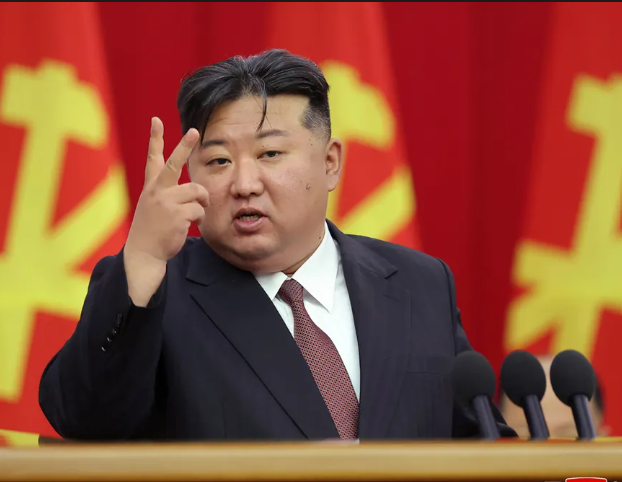
SEOUL, Oct 25: North Korean leader Kim Jong Un has reaffirmed his commitment to strengthening relations with China during an unexpected visit to the Chinese border city of Dandong, where he paid tribute to soldiers who fought alongside North Korea during the Korean War and crossed a newly opened bridge linking the neighbouring countries, state media reported on Sunday.
Kim arrived in Dandong on Saturday through the New Amnok River Bridge, also known as the New Yalu River Bridge, which connects the North Korean city of Sinuiju with Dandong in China. The infrastructure project, completed in 2014, became operational earlier this month after years of delay.
The visit marks Kim’s first known journey to China since September 2025 and comes amid efforts by Pyongyang and Beijing to reinforce their longstanding relationship. North Korea has recently expanded military and political cooperation with Russia, including providing support for Moscow’s war against Ukraine.
According to the Korean Central News Agency (KCNA), Kim was accompanied by several senior officials, including Foreign Minister Choe Son Hui, his sister Kim Yo Jong and Jo Yong Won, a member of the ruling Workers’ Party’s Presidium.
During his stay in Dandong, Kim visited a memorial dedicated to Chinese soldiers who lost their lives fighting alongside North Korean forces in the 1950-53 Korean War. He also met Wang Huning, chairman of the National Committee of the Chinese People’s Political Consultative Conference and a senior member of China’s political leadership.
KCNA quoted Kim as expressing gratitude for China’s historical assistance, saying North Korea would remember the sacrifices made by Chinese soldiers and continue to preserve and strengthen the friendship between the two countries.
The visit coincided with the 76th anniversary of China’s entry into the Korean War. Chinese forces intervened in the conflict in 1950, supporting North Korea against South Korean troops and the United States-led United Nations Command.
Wang conveyed greetings from Chinese President Xi Jinping and described Kim’s visit to the memorial as an important gesture towards preserving and developing the traditional friendship between Beijing and Pyongyang. He also highlighted the close historical ties between the two nations, KCNA reported.
Beyond the commemorative events, Kim visited a bus factory in Dandong, indicating an interest in industrial development and economic cooperation. He later returned to North Korea by crossing the newly opened bridge.
While crossing the structure, Kim reportedly said it would fulfil its historic role in connecting the neighbouring countries and bringing their people closer together. The bridge is expected to improve cross-border connectivity and could support future trade and transport links between the two economies.
The visit was Kim’s sixth known trip to China since he assumed power in 2011, according to South Korea’s Yonhap News Agency. During his previous visit in September 2025, he met Xi in Beijing and attended commemorative events marking the 80th anniversary of the end of World War II, alongside Russian President Vladimir Putin and other international leaders.
China remains North Korea’s most important economic partner and a central diplomatic ally. Beijing has historically provided Pyongyang with significant economic support, while the relationship has been shaped by shared security interests and decades of political cooperation.
However, North Korea’s growing partnership with Russia has added a new dimension to regional diplomacy. Pyongyang has reportedly deployed thousands of troops and supplied conventional weapons in support of Russia’s military campaign in Ukraine. The cooperation has raised questions about the potential military, technological and economic benefits North Korea could receive in return.
China, meanwhile, continues to seek a prominent role in regional affairs and maintain its influence over its neighbour as Pyongyang strengthens its ties with Moscow.
Xi’s visit to Pyongyang in June 2026 provided another opportunity for both governments to reaffirm their commitment to expanding cooperation in political, economic and other areas. Kim’s latest border visit further highlights the importance North Korea attaches to maintaining its relationship with Beijing despite its closer engagement with Russia.
The diplomatic developments also come ahead of a planned Asia-Pacific Economic Cooperation summit in China next month, which US President Donald Trump is expected to attend. Trump has previously expressed interest in restarting dialogue with Kim, although it remains unclear whether the two leaders will meet on the sidelines of the gathering.
Kim’s latest trip has drawn attention because he met Wang rather than holding a publicly reported meeting with Xi during the visit. The absence of a meeting between the two leaders has prompted speculation among analysts about the purpose and broader diplomatic implications of the journey.
However, no official explanation has established whether the visit is connected to possible renewed engagement with Washington. The trip’s public emphasis remained on historical ties, bilateral friendship and the symbolic significance of the new bridge.
As tensions and strategic competition continue to shape East Asian politics, relations among North Korea, China, Russia and the United States remain an important factor in regional security. Kim’s visit to Dandong underscores Pyongyang’s continued interest in preserving its traditional partnership with Beijing while navigating an increasingly complex international environment.

