


India Women Crush Zimbabwe by Eight Wickets in Vadodara ODI
India produced a commanding all-round performance to bowl Zimbabwe out for 131 before completing a comfortable chase, with Vaishnavi Sharma starring with five wickets for 39 runs.
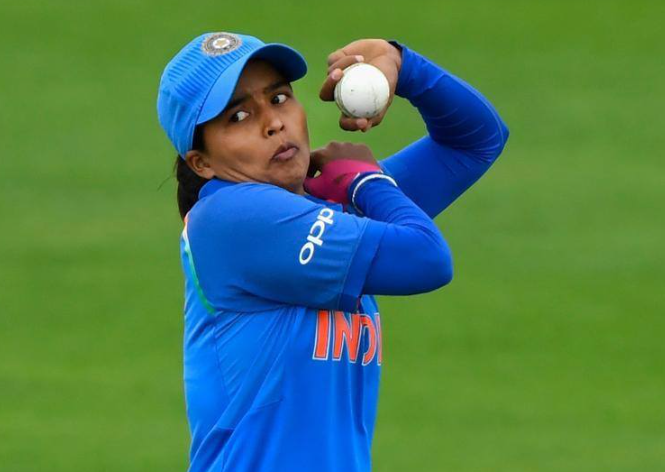
VADODARA, Oct. 28: India Women delivered a dominant performance against Zimbabwe Women, registering an eight-wicket victory in their One-Day International encounter after a disciplined bowling display restricted the visitors to 131 runs.
India chased down the target with considerable ease, reaching 133 for two in 17 overs and finishing the match with 198 balls remaining. The result underlined the hosts’ superiority in both departments, as their bowlers dismantled Zimbabwe’s batting order before the top order completed the pursuit without significant difficulty.
Left-arm spinner Vaishnavi Sharma was the standout performer with the ball, claiming five wickets for 39 runs. Her spell proved instrumental in preventing Zimbabwe from building a competitive total and gave India a clear advantage heading into the second innings.
Zimbabwe were dismissed for 131 in 39.5 overs, unable to establish the partnerships required to challenge India’s bowling attack. The visitors struggled to maintain momentum as wickets fell at regular intervals, leaving their batters with limited opportunities to accelerate the scoring.
India’s response was equally assured. With a relatively modest target to pursue, the home side avoided unnecessary risks and maintained a healthy scoring rate throughout the chase.
The victory offered India encouraging signs about the depth of its women’s squad and the effectiveness of its bowling resources. It also provided an opportunity for the team to assess combinations and strengthen its preparations for upcoming international assignments.
Vaishnavi Sharma Leads India’s Bowling Effort
India’s success began with a disciplined bowling performance, led by Vaishnavi Sharma, whose five-wicket haul prevented Zimbabwe from gaining control of the innings.
Taking five wickets in a limited-overs international is a significant achievement, particularly when the performance results in the opposition being restricted to a low total. Sharma’s figures of 5/39 reflected her importance in India’s effort to control the match.
Zimbabwe needed a stable start to establish a platform for a competitive score. However, the Indian bowlers continued to apply pressure, limiting the visitors’ scoring opportunities and forcing them to rebuild after losing wickets.
The loss of wickets at regular intervals made it difficult for Zimbabwe to establish the kind of partnership that could change the direction of the innings. Each dismissal increased the pressure on the remaining batters, who had to balance the need to score runs with the risk of losing further wickets.
Sharma’s contribution was especially valuable because it helped India maintain control through the middle stages. In women’s ODI cricket, teams often rely on partnerships to recover from difficult starts, but Zimbabwe were unable to produce a substantial stand that would have allowed them to approach the final overs with confidence.
The five-wicket haul also highlighted the importance of specialist bowling options in India’s lineup. While pace bowlers can create early breakthroughs, spinners often play a decisive role in restricting scoring and exploiting pressure during the middle overs.
India’s performance demonstrated how a coordinated bowling attack can make a relatively small target possible by preventing the opposition from developing its innings.
Zimbabwe Struggle to Build a Competitive Total
Zimbabwe’s innings ended at 131, a score that left the team with little margin for error when India began its chase.
The visitors needed contributions from several batters to challenge the home side, but the regular fall of wickets prevented them from building momentum. The inability to maintain partnerships meant that Zimbabwe were unable to capitalise on the available overs.
A total of 131 can sometimes become competitive when conditions favour bowlers or when the batting side produces an exceptional bowling performance of its own. However, India’s experienced batting resources and strong position in the match made the target difficult for Zimbabwe to defend.
The visitors also faced the challenge of responding to India’s disciplined bowling without losing their attacking intent. When a team loses early wickets, batters must decide whether to rebuild patiently or attempt to accelerate the scoring. Zimbabwe’s innings never developed the stability necessary to make that decision easier.
The Indian attack continued to restrict the scoring rate, forcing Zimbabwe to work hard for runs while protecting their remaining wickets. As the innings progressed, the pressure became increasingly difficult to manage.
The eventual dismissal of the final batter in the 40th over ended Zimbabwe’s opportunity to post a stronger total and left India requiring only 132 runs for victory.
For Zimbabwe, the innings will provide areas for improvement, particularly in partnership-building and handling sustained bowling pressure. The team will need to find ways to convert promising starts into substantial contributions if it hopes to compete more effectively against established international sides.
India Make a Confident Start to the Chase
India approached the run chase with a clear advantage and wasted little time in moving towards the target.
The home side reached 133 for two in just 17 overs, completing the task with eight wickets remaining. The rapid conclusion reflected the difference between the two teams’ performances during the first innings and India’s ability to exploit the opportunity created by its bowlers.
Chasing a total of 132 generally requires a balance between caution and scoring intent. A batting team must avoid unnecessary dismissals, but it also needs to keep the required run rate manageable. India’s batters achieved that balance, scoring steadily and ensuring the match did not become unnecessarily competitive.
The two wickets lost during the pursuit did little to alter the outcome. India remained in control, with the target low enough to allow the remaining batters to concentrate on playing their natural game rather than attempting risky shots.
The successful chase also reflected the value of the bowling performance. By restricting Zimbabwe to 131, India ensured that its batters did not need to produce an extraordinary individual innings to secure victory.
A comfortable chase can provide useful confidence for a batting group, especially when the team is looking to develop consistency across different match situations. Players can build their understanding of partnerships, strike rotation and boundary opportunities without the pressure of an increasingly demanding target.
India’s ability to finish the contest in only 17 overs also meant that the team avoided spending unnecessary time at the crease, preserving energy for subsequent fixtures.
All-Round Strength Gives India Encouragement
The victory was notable because it was built on contributions from both the bowling unit and the batting lineup.
Vaishnavi Sharma’s five wickets gave India control of the first innings, while the batters completed the chase with minimal difficulty. Such performances can be important in a long international season, when teams need several players to contribute rather than relying repeatedly on one individual.
The bowling display also reinforced the value of maintaining pressure throughout an innings. Even when a team does not take wickets in every over, restricting scoring can force batters into difficult decisions. India combined that pressure with regular breakthroughs, preventing Zimbabwe from settling into a rhythm.
For the batting group, the chase offered an opportunity to demonstrate composure and efficiency. A low target can occasionally lead to complacency, particularly when the required scoring rate is modest. India instead maintained control and completed the task quickly.
The result will also provide the coaching staff with useful information when assessing the team’s balance. Strong performances from bowlers and batters allow selectors to evaluate how different combinations might work against stronger opposition.
Zimbabwe, meanwhile, will need to improve its response to pressure. The team’s inability to build partnerships was a decisive factor, and the batting unit will have to address that weakness in future matches.
What the Result Means for the Teams
India’s eight-wicket win offers a positive result for the home side, but maintaining consistency will be the next challenge.
International cricket requires teams to adapt to different opponents, conditions and match situations. A successful performance against Zimbabwe can build confidence, but the real test lies in reproducing the same discipline when facing more demanding challenges.
For Vaishnavi Sharma, the five-wicket haul represents an important individual achievement and demonstrates her capacity to influence a match. Sustaining that form across subsequent fixtures will be crucial as she continues to develop her international career.
India’s batting group will also seek to carry the confidence of the successful chase into its next assignment. The ability to finish matches efficiently is an important component of a strong international side, particularly when teams are balancing multiple fixtures within a short period.
Zimbabwe can take lessons from the defeat, especially regarding the need to build partnerships and protect wickets during difficult periods. Improving those areas could help the team post more competitive totals and place greater pressure on opposing batters.
The Vadodara contest ultimately highlighted India’s control in all phases of the match. A five-wicket haul, a modest target and a quick chase combined to produce a decisive victory for the hosts.
India will look to build on that performance as its international campaign continues, while Zimbabwe will aim to respond with a stronger batting effort in its next outing.

