


Auckland Aces Defeat Canterbury by 33 Runs as Sean Solia and Dale Phillips Hit Centuries
Auckland posted an imposing 361 for five before rain interrupted Canterbury's chase in The Ford Trophy, with Sean Solia scoring 120 and Dale Phillips adding 112 to secure a Duckworth-Lewis-Stern victory.
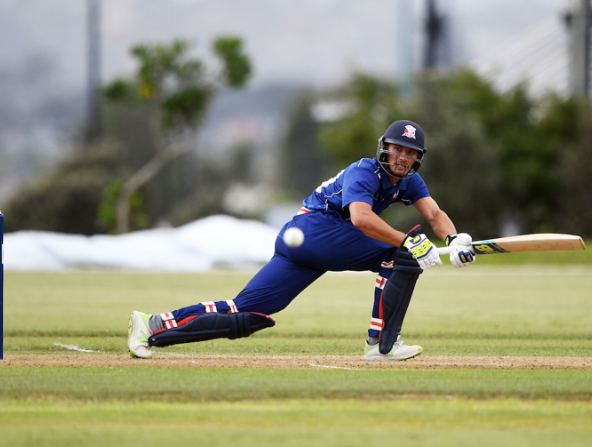
AUCKLAND, Oct. 28: Auckland Aces began their Ford Trophy campaign with an impressive 33-run victory over Canterbury Kings under the Duckworth-Lewis Stern (DLS) method, after centuries from Sean Solia and Dale Phillips powered the hosts to a formidable total at Eden Park Outer Oval.
Auckland scored 361 for five in their allotted 50 overs before Canterbury were dismissed for 311 in 44.1 overs while chasing a revised target of 345 from 46 overs. The result gave Auckland a winning start to the domestic one-day competition and highlighted the importance of substantial batting partnerships in high-scoring matches.
Solia led the Auckland innings with a commanding 120 from 119 deliveries, striking 14 boundaries and three sixes. Phillips provided equally significant support, scoring 112 off 95 balls, including 11 fours and six sixes.
The pair established the foundation for Auckland’s imposing total, putting Canterbury’s bowling attack under sustained pressure and allowing the home side to accelerate during the closing stages.
Canterbury responded with an aggressive batting effort of their own, but the demanding target and the loss of wickets at crucial moments prevented them from completing the chase. Chad Bowes scored an impressive century, while Auckland’s bowlers maintained enough pressure to secure the victory.
The match demonstrated the attacking potential of both sides and provided an entertaining start to Auckland’s campaign in New Zealand’s domestic one-day competition. <Cite refs={[“turn230668search0″,”turn230668search2″,”turn230668search10”]}/>
Solia and Phillips Build Auckland’s Foundation
Auckland’s innings was built around the outstanding partnership between Solia and Phillips, who gave the team the platform needed to post a total exceeding 350 runs.
Solia’s 120 came through a combination of patience and controlled aggression. He faced 119 deliveries, ensuring Auckland maintained stability while continuing to score at a healthy rate.
Phillips complemented the innings with an even more attacking approach. His 112 from 95 balls included six sixes, helping Auckland increase the scoring rate and put pressure on Canterbury’s bowling options.
The two centuries were central to Auckland’s performance. When both batters were at the crease, Canterbury struggled to restrict the flow of runs, and the partnership allowed the hosts to move into a commanding position.
Phillips was eventually involved in a run-out after scoring 112, ending the opening partnership at 219. Solia continued his innings after the dismissal, reaching his century and helping Auckland maintain momentum.
Their contributions illustrated the value of building a substantial partnership in one-day cricket. Rather than relying on a brief burst of scoring, Auckland established a strong base through two major individual performances.
The hosts subsequently added further runs through Cam Fletcher, who scored 58 from 43 deliveries. His innings included four boundaries and three sixes, helping Auckland maintain its scoring momentum as the innings approached its conclusion.
Ryan Harrison then provided a late flourish, finishing unbeaten on 26 from just 11 balls. His three sixes helped Auckland add valuable runs during the final overs.
Auckland finished on 361 for five, leaving Canterbury with a challenging target even before the effects of rain altered the conditions of the chase.
Canterbury Face a Difficult Chase
Canterbury entered the second innings needing a strong start and substantial contributions from the top order to remain in contention.
The visitors made an aggressive beginning, with Chad Bowes leading the response. Bowes reached his half-century quickly and continued attacking, putting pressure on Auckland’s bowlers.
However, Canterbury lost wickets during the early stages, making the chase more difficult. The team needed to balance its scoring ambitions with the importance of preserving wickets, particularly against an opposition defending a large total.
Bowes continued to provide resistance and eventually reached 150 from 100 deliveries, hitting 17 fours and seven sixes. His innings was one of the standout batting performances of the match and kept Canterbury’s hopes alive for a considerable period.
Despite his efforts, wickets at the other end made it increasingly difficult for Canterbury to sustain the required scoring rate.
The visitors reached 311 before losing their final wicket in the 45th over. Their total reflected an aggressive effort, but it was insufficient to meet the revised target under the DLS method.
Canterbury’s innings demonstrated that a large score can still be challenged when batters take calculated risks and find boundaries regularly. However, the team was unable to maintain the partnerships necessary to complete the pursuit.
Bowes Provides Canterbury With Hope
Bowes was Canterbury’s leading performer with the bat, producing an innings that combined powerful stroke play with sustained scoring.
His century was particularly important because Canterbury had to respond to Auckland’s substantial total while managing the pressure created by the required run rate.
Bowes repeatedly found gaps in the field and cleared the boundary, keeping Canterbury in the contest even as wickets fell around him.
His 150-run contribution demonstrated his ability to build a major innings in the one-day format. It also provided Canterbury with a platform from which the team could attempt to accelerate during the later stages.
However, a successful chase requires contributions across the batting order. While Bowes delivered a significant individual performance, Canterbury needed additional partnerships to prevent the innings from losing momentum.
The eventual dismissal of the remaining batters ended the visitors’ hopes of securing victory.
For Canterbury, Bowes’ innings will be an important positive to take from the defeat. His ability to score rapidly against a high target demonstrated the team’s batting potential, even though the overall result did not go its way.
The challenge for the side will be to ensure that individual performances are supported by greater consistency throughout the order in future matches.
Auckland Bowlers Hold Their Nerve
Defending a total above 350 requires bowlers to remain disciplined, particularly when the opposition responds with aggressive batting.
Auckland faced that challenge as Bowes and other Canterbury batters attempted to keep pace with the required rate.
The hosts had to manage the balance between attacking for wickets and preventing easy boundaries. Their efforts ultimately proved sufficient, as Canterbury were dismissed before reaching the revised target.
The result highlighted the importance of taking wickets at regular intervals in one-day cricket. Even when a team scores heavily, the opposition can remain competitive if its batters build long partnerships.
Auckland’s bowlers continued to compete despite Canterbury’s scoring bursts, preventing the visitors from converting their promising position into a successful chase.
The home side also benefited from the cushion provided by its large total. Solia, Phillips and Fletcher had ensured that Auckland could absorb periods of aggressive batting without immediately losing control of the match.
The victory will give Auckland encouragement about its ability to compete in high-scoring encounters, although the bowling unit will still need to assess how it can improve its control against attacking opponents.
Rain and the DLS Method Influence the Outcome
Rain played a role in the match, requiring Canterbury’s chase to be adjusted under the Duckworth-Lewis-Stern method.
The DLS system is used in limited-overs cricket when weather interruptions affect the time or overs available to the chasing team. It calculates a revised target based on factors including the overs remaining and wickets in hand.
In this contest, Auckland’s total of 361 for five gave the hosts a strong position before the interruption affected Canterbury’s innings.
The visitors were set a revised target of 345 from 46 overs. Although Canterbury scored 311, they were dismissed in 44.1 overs and fell short of the adjusted requirement.
The method is designed to account for the scoring opportunities available to both teams when a match is interrupted. Its application can make high-scoring contests particularly challenging because the chasing side must reassess its required run rate after a change in conditions.
Auckland’s substantial first-innings score proved decisive, providing enough runs to withstand Canterbury’s determined response.
The outcome also demonstrated the importance of maintaining a strong scoring rate throughout the allotted overs. A large total can give a team valuable protection against changes in playing conditions, particularly when rain threatens to disrupt the contest.
What the Victory Means for Auckland
The opening win gives Auckland a positive start to its Ford Trophy campaign and provides several encouraging signs for the matches ahead.
Solia and Phillips demonstrated their ability to construct major innings, while Fletcher and Harrison contributed valuable runs to strengthen the total.
The performance also highlighted the importance of partnerships in one-day cricket. Auckland’s opening stand of 219 placed the team in a commanding position and allowed the middle order to attack with greater freedom.
For Canterbury, the defeat will prompt a review of its bowling performance and its approach to defending against a high-scoring opposition. Although Bowes produced a remarkable innings, the team was unable to secure the support required to complete the chase.
The visitors can nevertheless take encouragement from their batting response, particularly the ability to score more than 300 runs against a strong total. Improving the distribution of runs across the lineup and preventing wickets from falling in clusters could strengthen their prospects in subsequent matches.
Auckland, meanwhile, will aim to carry its batting momentum into the next round while working to maintain consistency with the ball.
The contest at Eden Park Outer Oval provided a reminder that one-day cricket often depends on a combination of individual brilliance, strong partnerships and effective execution under changing conditions.
With Solia and Phillips scoring centuries and Canterbury responding through Bowes, the match produced several notable batting performances. Ultimately, Auckland’s larger total and ability to defend the revised target secured a 33-run victory under the DLS method.
The result gives the Aces valuable early momentum in the competition, while Canterbury will look to convert its promising batting displays into a winning performance in its next outing.

