


Rajnath Singh Offers India’s Battle-Tested Anti-Terror Expertise to ASEAN and Dialogue Partners
At the ADMM Plus conclave in the Philippines, the Defence Minister highlights Operation Sindoor, calls for stronger intelligence sharing and joint military exercises, and reaffirms India’s commitment to Indo-Pacific security.
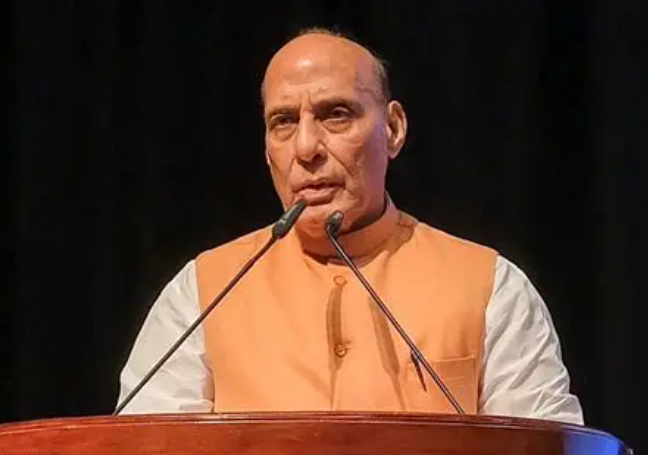
NEW DELHI, October 29: Defence Minister Rajnath Singh on Thursday offered to share India’s operational experience in counter terrorism with ASEAN member states and their dialogue partners, calling for stronger regional cooperation through joint military exercises, intelligence sharing and capacity building initiatives.
Addressing the ASEAN Defence Ministers’ Meeting Plus (ADMM-Plus) conclave in Cebu, the Philippines, Singh described Operation Sindoor as a clear demonstration of India’s position against state-sponsored terrorism. He said India’s experience in tackling cross border security threats could help strengthen the collective capabilities of partner nations.
“India is fully prepared to share its practical and battle-tested counter-terrorism expertise with ADMM-Plus partners,” Singh said, emphasising the need for coordinated efforts to address evolving security challenges.
He noted that India’s counter-terrorism experience had been shaped by decades of confronting cross-border threats and was grounded in operational experience rather than theoretical knowledge alone.
Referring to Operation Sindoor, Singh said the operation had destroyed a significant number of terrorist infrastructure targets and demonstrated New Delhi’s resolve to respond to state-sponsored terrorism.
He added that joint training, intelligence cooperation and institutional capacity-building could improve the ability of participating countries to respond to terrorist threats.
Focus on Maritime Security and Regional Stability
Singh also highlighted the importance of protecting maritime trade routes as international shipping faces emerging security threats. He said regional countries must move beyond statements on maritime security and pursue practical measures to safeguard navigation and commercial activity.
India, he reaffirmed, would continue to serve as a trusted net security provider in the Indian Ocean region and the broader Indo-Pacific.
The Defence Minister said maritime security was closely linked to regional peace, economic prosperity and stability. Disruptions to shipping routes can affect trade, energy supplies and the wider economic interests of countries dependent on uninterrupted maritime connectivity.
He called for a secure and resilient Indo-Pacific in which stability is achieved through collective action and cooperation among regional partners.
India Reaffirms Support for International Maritime Law
Singh underlined India’s commitment to the United Nations Convention on the Law of the Sea (UNCLOS), along with the principles of freedom of navigation and overflight.
He said India’s advocacy of international maritime law was not directed against any particular country but was intended to protect the shared interests of all stakeholders in the region.
His remarks come amid continuing tensions in the South China Sea, where several ASEAN countries have raised concerns over China’s growing military presence and competing territorial claims.
Adherence to international law remains a significant issue for countries seeking to preserve access to maritime routes and prevent disputes from escalating into wider confrontations.
India’s position reflects its broader emphasis on a rules-based regional order, peaceful resolution of disputes and cooperation among Indo-Pacific nations.
Singh’s address placed counter-terrorism cooperation and maritime security at the centre of India’s regional engagement, signalling New Delhi’s willingness to contribute its operational expertise and strengthen partnerships in response to shared security challenges.

