


Carney Hosts EU Leaders as Trump Urges Canada to Strengthen Ties with Europe
Canadian Prime Minister Mark Carney hosts European leaders in Montreal to strengthen trade, defence and economic cooperation, while divisions within the EU over Canada's proposed associate-member status remain unresolved.
TORONTO, Oct 29: Canadian Prime Minister Mark Carney is seeking to establish closer ties with the European Union as trade tensions with the United States under President Donald Trump push Ottawa to diversify its international partnerships. However, a proposal to grant Canada an unprecedented “associate member” status within the bloc has encountered opposition from some European countries.
European Commission President Ursula von der Leyen and European Council President Antonio Costa are meeting Carney in Montreal for a two-day summit focused on expanding cooperation in trade, defence, technology and economic development. The discussions are expected to lay the foundation for a broader strategic partnership between Canada and the 27-nation European Union.
The proposed arrangement could bring Canada closer to the European bloc than any existing partnership with a non-European country. However, disagreements over its structure and designation remain unresolved, with France and Germany reportedly among the countries questioning the proposed associate-member status.
Von der Leyen reiterated her support for the initiative upon arriving in Montreal, expressing Europe’s willingness to strengthen its relationship with Canada through an associate membership arrangement.
Carney, however, has indicated that the terminology is less important than the practical benefits of the proposed cooperation. Speaking earlier this week, he said the summit would initiate negotiations over the coming year, focusing on opportunities for Canadian students, businesses and researchers.
He also emphasised that stronger international partnerships would help Canada become a more independent and sovereign nation.
Ottawa has ruled out full membership of the European Union, which would require Canada to adopt the bloc’s legal and regulatory framework. Canadian officials have also clarified that the country would not take on the EU’s general budgetary obligations, although it could contribute financially to specific programmes.
Any expanded partnership would require approval from Canada’s Parliament.
The Montreal summit represents an important test of Carney’s ambition to reshape Canada’s international relationships amid growing uncertainty over US leadership and global trade arrangements.
Addressing the World Economic Forum in Davos in January, Carney warned that the traditional US-led international order was weakening. He urged middle powers to cooperate more closely to resist economic pressure and protect their national interests.
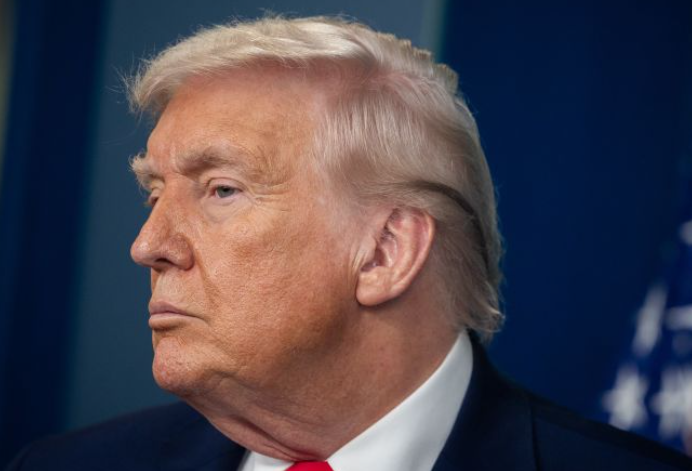
Trump has criticised the proposed Canada-EU arrangement, suggesting it could amount to a hostile move against Washington. He has also threatened tariffs against European countries if their actions are considered unfriendly towards the United States.
A senior Canadian government official said the initiative was not intended to target Washington but reflected the longstanding economic and political interests shared by Canada and Europe.
The two sides are expected to announce an “Alliance for the Future”, providing a framework for cooperation across several strategic sectors, including defence procurement, critical minerals, digital trade, scientific research and emerging technologies.
The proposed arrangement could also establish regular consultations between Canadian ministers and European commissioners. Educational cooperation is another important area, with discussions expected to explore greater Canadian participation in the EU’s Erasmus+ programme, which facilitates international academic exchanges.
Sector-specific meetings involving European commissioners and Canadian Cabinet ministers are scheduled alongside a business forum. Formal discussions between the leaders will take place on Friday, with officials hoping to advance negotiations towards a possible broader agreement in 2027.
Analysts believe disagreements over the associate-member label are unlikely to prevent the two sides from expanding cooperation. However, they caution that reducing economic and military dependence on the United States will require considerable time and could invite retaliatory measures from Washington.
Canada has traditionally depended heavily on its southern neighbour for trade and economic growth. Strengthening relations with European countries is therefore seen as an important step towards diversifying its international engagement.
Carney’s personal and professional connections with Europe have also influenced his diplomatic approach. Before becoming prime minister, he served as governor of the Bank of Canada and later headed the Bank of England between 2013 and 2020.
He selected Paris and London for his first overseas visit as prime minister instead of Washington, breaking with the conventional practice of Canadian leaders making the United States their first foreign destination.
The growing uncertainty surrounding US policies has also prompted Canada to reconsider aspects of its defence procurement strategy.
Ottawa is reviewing its plan to purchase 72 additional American-made F-35 fighter aircraft and is examining Sweden’s Saab Gripen as a possible alternative. Canada has already committed to acquiring an initial batch of 16 F-35 jets.
At the same time, Canada has secured a place in the European Union’s 150-billion-euro SAFE defence procurement programme, becoming the only non-European participating country. The arrangement allows Canadian companies to participate in joint European military procurement projects.
Nevertheless, further defence integration could face disagreements over industrial participation. France is advocating strict European production requirements that could restrict access for Canadian manufacturers, while Germany supports wider participation from countries outside the bloc.
Negotiations over the EU’s next seven-year budget could consequently become a significant factor in determining the future scope of cooperation.
Economic relations between Canada and Europe already have a strong foundation through the Comprehensive Economic and Trade Agreement (CETA), which removed most tariffs between the two sides. The agreement has been provisionally implemented since 2017, although some EU member states have yet to complete ratification.
Despite these arrangements, Canada’s dependence on the American market remains substantial. The United States accounted for 71.7 per cent of Canadian merchandise exports in 2025.
Carney has set an ambitious target of doubling Canada’s exports to markets outside the United States over the next decade, making Europe an important partner in Ottawa’s diversification strategy.
Both sides are also exploring opportunities in digital commerce and critical minerals, with discussions underway on potential European Investment Bank financing and measures to stabilise mineral prices to encourage investment.
Europe’s efforts to diversify its supply chains amid growing trade tensions with China have increased the strategic importance of Canada’s natural resources and mining expertise.
While Canada can provide essential minerals, Europe offers industrial demand, advanced technology and investment capital, creating opportunities for mutually beneficial cooperation.
The evolving global economic and political environment is also giving the European Union an opportunity to strengthen its position as an independent international power.
The Montreal discussions are therefore expected to extend beyond trade and investment, reflecting a broader effort by Canada and Europe to establish a more balanced international partnership amid uncertainty over Washington’s future role in global affairs.

