


Ebola Outbreak in Congo Crosses 10,000 Cases, Experts Warn of Wider Spread
More than 10,000 confirmed infections and nearly 5,000 deaths have been reported, as untracked transmission and weak medical infrastructure complicate containment efforts.
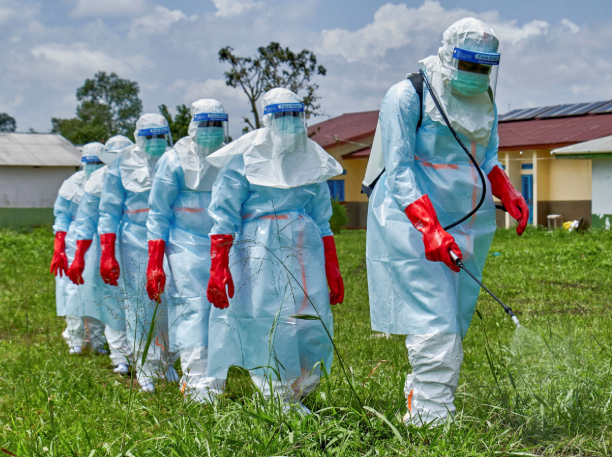
KINSHASA, Oct 30: The Ebola outbreak in the Democratic Republic of Congo (DRC) has crossed 10,000 confirmed infections, raising international health concerns as experts warn that continued transmission, weak healthcare infrastructure and difficulties in tracing infected people could increase the risk of further spread.
The outbreak, caused by the Bundibugyo strain of Ebola virus, has become one of the largest recorded Ebola emergencies, with nearly half of confirmed patients reported to have died.
According to the latest available figures from the US Centers for Disease Control and Prevention (CDC), the outbreak had resulted in 10,224 confirmed cases and 4,964 confirmed deaths across affected countries as of October 27.
The Democratic Republic of Congo accounted for 10,193 confirmed infections and 4,960 deaths, while cases were also reported in Kenya, Nigeria, Uganda and France.
Although the pace of new infections has shown signs of stabilisation, health experts have warned that the situation remains serious because weekly cases are not declining significantly and a substantial proportion of newly infected people have not been identified through existing contact-tracing systems.
The outbreak has also exposed major weaknesses in healthcare delivery across affected regions, where medical facilities are struggling with limited resources, insecurity, staff shortages and difficulties in reaching remote communities.
Public health specialists believe that strengthening surveillance, improving access to treatment and building trust among local populations will be critical to controlling the disease.
Transmission continues despite signs of stabilisation
According to epidemiological assessments reported on October 30, new infections have remained at approximately 400 to 500 cases a week rather than increasing at an exponential rate.
However, experts have cautioned that a plateau in transmission should not be interpreted as evidence that the outbreak is under control.
The number of infections has remained persistently high, while fewer than one-quarter of newly reported patients were previously identified as contacts of confirmed cases.
This indicates that a considerable proportion of transmission is occurring outside monitored networks, making it difficult for authorities to identify infected individuals before they spread the virus to others.
Contact tracing is among the most important tools used to control Ebola outbreaks. Health workers identify people who have been exposed to an infected individual and monitor them for symptoms during the incubation period.
When contacts cannot be identified or followed, infected individuals may continue interacting with family members, neighbours and other community members before receiving medical attention.
Experts have warned that such gaps could prolong the outbreak and increase the possibility of infections spreading to additional regions.
The latest developments have prompted renewed calls for stronger coordination between national governments, international health agencies and humanitarian organisations.
Healthcare infrastructure under pressure
The outbreak has placed considerable pressure on the already fragile healthcare system in eastern Congo.
Many medical facilities are operating with limited staff, inadequate equipment and insufficient isolation facilities.
Armed conflict and insecurity have further complicated efforts to deliver medical supplies and provide treatment in affected communities.
Healthcare workers are facing difficulties reaching patients in remote locations, while poor road infrastructure and population displacement have made disease surveillance more challenging.
Mistrust and misinformation have also affected public health operations, with some communities reluctant to report symptoms or cooperate with medical teams.
Health authorities have been encouraging residents to seek medical assistance when symptoms develop and to avoid direct contact with individuals suspected of carrying the infection.
The outbreak has also disrupted routine healthcare services, including childhood vaccination programmes and treatment for other infectious diseases.
In several affected areas, medical resources that would ordinarily be used for maternal care, routine consultations and emergency treatment have been diverted towards responding to Ebola.
The consequences have extended beyond patients infected with the virus, affecting families who depend on already limited healthcare services.
Cross-border transmission raises international concern
The outbreak has spread beyond the Democratic Republic of Congo, prompting neighbouring countries to strengthen surveillance and screening arrangements.
Kenya reported an imported case involving a person who had travelled from Congo through Uganda. Subsequent infections were identified among family members and healthcare workers linked to the initial case.
Nigeria also reported a confirmed case, while Uganda and France had earlier reported infections associated with the outbreak.
According to the CDC’s October 27 assessment, the total confirmed cases across affected countries stood at 10,224, with 4,964 deaths.
The spread across national borders has highlighted the importance of coordinated surveillance, information-sharing and contact tracing.
Countries in the region have been advised to strengthen preparedness at entry points, healthcare facilities and communities receiving travellers from affected locations.
However, experts have cautioned against relying exclusively on airport screening, as infected individuals may not develop symptoms immediately after exposure.
Ebola symptoms generally appear between two and 21 days after infection, with the incubation period varying between individuals.
Travellers who have been exposed to the virus may therefore require monitoring even if they initially appear healthy.
International health agencies have continued to emphasise the importance of identifying suspected cases quickly and ensuring that people receive medical care through appropriate infection-prevention arrangements.
Understanding the Bundibugyo strain
The current outbreak is caused by Bundibugyo virus, one of the distinct viruses responsible for Ebola disease.
Ebola is a severe infectious disease that can cause serious illness and death. It is transmitted through direct contact with the blood, body fluids or contaminated materials of an infected person or someone who has died from the disease.
The virus does not generally spread through casual contact or simply by being in the same room as an infected person.
Symptoms can include fever, fatigue, headache, muscle pain, sore throat, vomiting, diarrhoea, abdominal pain and, in severe cases, internal or external bleeding.
Early symptoms may resemble those of malaria, typhoid and other common infectious diseases, making laboratory confirmation important.
Healthcare workers face particular risks when treating suspected patients without adequate protective equipment or infection-control procedures.
Medical facilities must therefore maintain strict isolation protocols, use appropriate protective clothing and ensure the safe handling of contaminated materials.
The Bundibugyo strain also presents a specific challenge because vaccines and treatments developed for other Ebola virus species cannot automatically be assumed to provide protection against it.
This has increased the importance of research into vaccines and other medical interventions specifically targeting the strain responsible for the current outbreak.
Vaccine research offers a possible breakthrough
Researchers have been working to develop medical interventions that could help control the outbreak and reduce the risk of future transmission.
A Phase 2/3 vaccine trial known as TUMAINI was launched in Bunia in Congo’s Ituri province on October 23.
The trial includes vaccine candidates, including Ervebo, the licensed vaccine against the Zaire ebolavirus species.
The research is intended to assess potential protection against Bundibugyo virus disease.
However, experts have stressed that a vaccine designed for one Ebola virus species cannot be presumed effective against another without scientific evidence.
The development of a vaccine specifically targeting Bundibugyo virus remains an important research priority.
Scientists are also studying the virus’s transmission patterns and epidemiological characteristics to understand how the outbreak has continued to spread across different provinces.
The trial represents an important step towards expanding the scientific understanding of the disease, although the development of a safe and effective vaccine will require appropriate clinical evaluation.
Until effective protection becomes available, public health authorities must continue relying on surveillance, isolation, infection prevention and community-based interventions.
Community mistrust and misinformation complicate response
One of the biggest obstacles to controlling the outbreak has been the difficulty of establishing trust between healthcare teams and affected communities.
In some areas, residents have expressed concerns about isolation centres, treatment procedures and the handling of suspected cases.
Misinformation circulating through communities has also created confusion about how the virus spreads and what measures can prevent infection.
Public health experts have warned that coercive approaches and poor communication can discourage people from seeking treatment, increasing the possibility of further transmission.
They have called for greater involvement of local leaders, community organisations and healthcare workers in awareness programmes.
Explaining the symptoms, transmission routes and importance of early treatment in local languages can help improve public cooperation.
Families also need clear information about safe caregiving practices and the procedures followed when a suspected infection is reported.
Healthcare authorities have emphasised that people should not hide symptoms or avoid medical facilities because of fear or stigma.
Early reporting can help protect family members and prevent additional infections.
International cooperation remains essential
The scale of the outbreak has renewed concerns about the ability of countries with fragile health systems to manage major infectious disease emergencies.
International organisations have been supporting surveillance, laboratory testing, treatment services and public health preparedness.
However, conflict, limited funding and difficulties accessing affected communities have continued to restrict response operations.
Experts have also warned that outbreaks of this scale can have long-term consequences for education, employment, food security and household incomes.
Families may lose their primary earners, while children can face interruptions to schooling and other essential services.
The diversion of healthcare resources towards Ebola can also affect patients suffering from malaria, tuberculosis, maternal complications and other medical conditions.
Public health specialists have therefore called for a broader response that strengthens the entire healthcare system rather than focusing exclusively on Ebola treatment centres.
The latest figures indicate that the outbreak remains a major international health concern despite signs that the rate of new infections may have stabilised.
For Congo and neighbouring countries, the immediate challenge is to identify infections earlier, improve access to medical care and prevent further cross-border transmission.
Experts believe that sustained international support, reliable healthcare infrastructure and cooperation from affected communities will be essential to bringing the outbreak under control.

