


Rahul Gandhi Opposes IDBI Bank Sale, Says Public Banks Are Nation-Building Tools
The Congress leader backs bank employees, questions the reduction in government ownership and raises concerns over job security, reservation safeguards and the valuation of the proposed transaction.
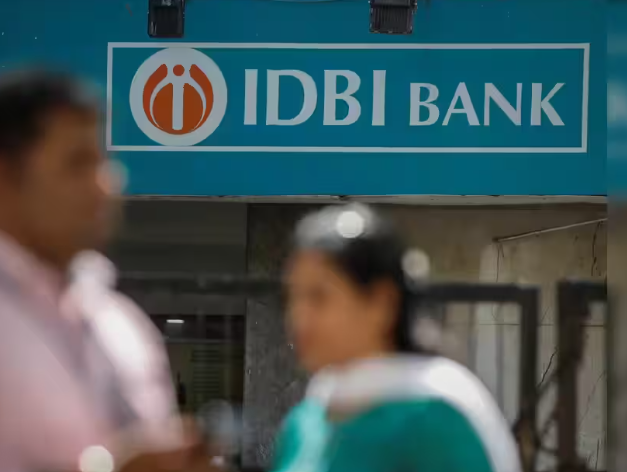
NEW DELHI, Oct 30: Congress leader Rahul Gandhi has criticised the Centre’s proposed sale of IDBI Bank to Canada’s Fairfax Financial Holdings, expressing support for the bank’s employees and questioning the rationale behind privatising a profitable public sector institution.
In an open letter addressed to IDBI Bank employees, the Leader of Opposition in the Lok Sabha argued that public sector banks should be viewed as instruments of national development rather than assets to be sold for financial gains.
Recalling a meeting with IDBI employees at Parliament House in March last year, Gandhi said they had questioned why the government intended to sell a bank that had returned to profitability through their efforts.
He said he had subsequently raised the issue in Parliament, seeking explanations about the proposed disinvestment and assurances regarding the interests of employees and depositors.
“Seven years ago, IDBI was losing money. Last year, it earned a profit of over nine thousand crore rupees. That turnaround is your work,” Gandhi wrote, crediting employees for the institution’s financial recovery.
He recalled that IDBI was established as a development bank to support India’s industrial growth before gradually transitioning into a commercial banking institution.
Gandhi also questioned the government’s decision to reduce its and the Life Insurance Corporation’s (LIC) combined ownership from 95 per cent to 34 per cent following the proposed transaction.
Referring to a commitment made in Parliament in 2003, he said the government had assured that it would retain at least a 50 per cent stake in IDBI Bank. Although the assurance was not legally binding, he maintained that a parliamentary commitment carried responsibility towards the public.
The Congress leader further raised concerns about the implications of privatisation for reservation provisions benefiting Scheduled Castes, Scheduled Tribes and Other Backward Classes, along with the service conditions and job security of existing employees.
He reiterated that his party supported a strong public sector alongside private enterprise and pledged solidarity with the employees’ demands.
In a post on X accompanying the letter, Gandhi contrasted the Congress government’s role in establishing development-oriented financial institutions with the Modi government’s disinvestment policy, alleging that public banking institutions were increasingly being put up for sale.
His remarks came amid concerns raised by bank unions over the valuation and proposed acquisition of IDBI Bank by Fairfax Financial Holdings.
The Department of Investment and Public Asset Management (DIPAM), meanwhile, defended the disinvestment process, stating that the second round of bidding followed procedures approved by the Core Group of Secretaries on Disinvestment (CGD), which was authorised by the Cabinet Committee on Economic Affairs (CCEA) to address procedural matters.
According to DIPAM, the initial bidding exercise conducted during the 2025-26 financial year did not receive approval. Consequently, that round ceased to have further effect, necessitating a fresh bidding process.
The department clarified that neither the reserve price nor the valuation framework was altered for the second round, which was conducted as a best-offer exercise.
Addressing concerns about the price discovery mechanism, DIPAM said bidders independently assess the bank’s value before submitting confidential financial offers. Independent valuation agencies are also appointed to determine the fair value of the institution, providing a benchmark for assessing the reasonableness of the bids.
The department explained that the price discovered through bidding could be higher or lower than the comparative valuation prepared by the agencies.
It also pointed out that the Request for Proposal (RFP) contains provisions for situations where the highest financial offer falls below the reserve price. In such circumstances, the government retains the authority to decide the next course of action.
The Centre approved the sale of a 60.72 per cent stake in IDBI Bank to Fairfax Financial Holdings on October 14 for approximately Rs 53,000 crore, equivalent to around USD 5.5 billion.
Under the proposed transaction, Fairfax, led by Canadian billionaire Prem Watsa, will acquire the government’s 30.48 per cent holding for approximately Rs 26,620 crore and LIC’s 30.24 per cent stake for around Rs 26,440 crore.
The agreed price of Rs 81 per share is higher than the benchmark fair value of Rs 75.99 per share determined by two independent valuation agencies.
The transaction, which represents one of the largest foreign investments in India’s banking sector, is expected to be completed by the end of the current financial year, subject to regulatory approvals, including clearance from the Reserve Bank of India.
The proposed privatisation has triggered a wider debate over public ownership, employee protections, banking sector reforms and the government’s role in managing financial institutions.

