


South Carolina Senate Race Tightens After Lindsey Graham’s Sister Darline Faces Setback
The sudden death of longtime Republican Senator Lindsey Graham and his sister's political inexperience have reshaped the race, giving Democrats renewed hopes of challenging the GOP's decades long dominance in the state.
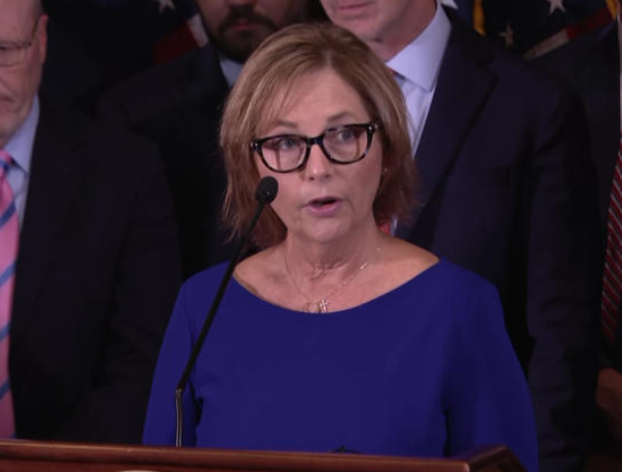
WASHINGTON, Nov 3: The US Senate race in South Carolina has turned into an unexpectedly competitive contest following the death of longtime Republican Senator Lindsey Graham and the decision by his sister, Darline Graham, to seek a full six-year term.
What was initially expected to be a comfortable Republican victory has developed into a closely watched electoral battle, with Democratic candidate Annie Andrews gaining momentum and raising hopes of an unlikely political breakthrough in one of the country’s strongest Republican states.
Lindsey Graham’s sudden death in July dramatically changed the political landscape. His younger sister, who was initially appointed to serve the remainder of his term, has since emerged as the Republican candidate seeking to retain the seat.
The contest has attracted national attention because Democrats have struggled for decades to win statewide elections in South Carolina. A victory for Andrews would represent a significant setback for Republicans and potentially signal changing political preferences among sections of the electorate.
Regardless of the outcome, the election will also mark a historic moment for the state, as the winner will become the first woman elected to represent South Carolina in the US Senate.
Darline Graham Faces Challenges Despite Presidential Backing
Darline Graham entered the political spotlight unexpectedly following the death of her brother, who had represented South Carolina in the Senate for years and was seeking another term.
Republican Governor Henry McMaster appointed her to complete the remaining period of her brother’s tenure, a decision that received considerable support because of the close relationship between the siblings.
Lindsey Graham had helped raise Darline after both their parents died when they were young. Their family circumstances and longstanding personal connection played an important role in the governor’s decision.
However, her decision to contest the subsequent six-year term surprised many political observers, particularly because she had limited experience in electoral politics.
A special Republican primary, organised shortly after Lindsey Graham’s death, attracted several prominent political figures, including US Representative Ralph Norman.
President Donald Trump strongly endorsed Darline Graham and actively campaigned in her support. The president visited South Carolina twice during the final weeks of the primary campaign, seeking to strengthen her position against Norman.
Trump’s backing reflected his interest in retaining Republican control of the Senate and maintaining a political ally in the chamber.
However, the endorsement has also created difficulties for Graham. Some independent voters dissatisfied with Trump’s second administration have questioned her close association with the president.
At the same time, supporters of Norman have expressed frustration over what they consider excessive presidential interference in the state’s Republican selection process.
Concerns about Graham’s political experience have further complicated her campaign, with critics questioning whether she possesses the knowledge and qualifications required to represent the state effectively.
During a Republican primary debate, she struggled to respond to a question concerning the US national security interests surrounding Taiwan and the South China Sea.
She subsequently acknowledged that national security was not her area of expertise, a response that attracted attention and intensified questions about her preparedness for the responsibilities of the Senate.
The controversy has forced Republican campaign organisations to increase their involvement in the state. A Senate Republican-aligned super PAC has reportedly redirected additional resources towards South Carolina to reinforce Graham’s campaign.
Despite these developments, Republican leaders have maintained confidence that the party will retain the seat.
Annie Andrews Sees an Opportunity for Democratic Breakthrough
Democratic candidate Annie Andrews had been campaigning for more than a year before Lindsey Graham’s death transformed the contest.
She had already secured her party’s nomination and was preparing for a general election campaign against the incumbent senator.
However, the sudden change in the Republican field required Andrews to reconsider her strategy and adjust her message to address a different opponent.
She has increasingly presented the election as an opportunity to challenge political dynasties and what she describes as a Washington establishment that prioritises its own interests over ordinary Americans.
Andrews has focused heavily on economic concerns, including household expenses, employment opportunities and the financial difficulties facing families.
She has also attempted to distinguish herself from the Republican establishment by arguing that Darline Graham’s candidacy represents continuity with her late brother’s political influence.
Although Andrews has previously contested a congressional election against Republican Representative Nancy Mace in 2022, she has never held elected office or participated in a statewide race.
Nevertheless, her campaign has gained greater visibility through South Carolina’s position in the Democratic Party’s early presidential nominating calendar for 2028.
Several prominent Democratic figures, including former Transportation Secretary Pete Buttigieg and Arizona Senator Mark Kelly, have visited the state.
Their appearances have increased national attention surrounding the election, although Andrews has largely maintained an independent campaign rather than relying heavily on prominent party leaders.
Candidates Clash Over Experience and Political Allegiances
The two candidates faced each other in their only televised debate last month, exchanging criticism over economic policy, the conflict involving Iran and the growing influence of artificial intelligence.
However, much of the discussion centred on their respective qualifications and suitability for representing South Carolina in Washington.
Andrews questioned whether Darline Graham was relying primarily on her family connection to the late senator to secure political support.
She argued that voters deserved a representative with independent political credentials rather than someone benefiting from an established political name.
Graham rejected the criticism and defended her decision to retain her maiden name, explaining that it represented her connection to her parents and family background.
She also expressed displeasure at Andrews’ reference to her brother, describing the subject as a painful personal memory.
The exchange highlighted the emotional and political dimensions of a contest that began under extraordinary circumstances.
For Andrews, the challenge is to convince voters that she can translate growing dissatisfaction with Republican leadership into actual electoral support.
For Graham, the priority is to demonstrate that she can establish an independent political identity and provide effective representation despite her limited experience.
South Carolina’s Republican Dominance Faces Renewed Scrutiny
The growing competitiveness of the Senate contest has drawn attention to South Carolina’s long history of Republican electoral victories.
The state has not elected a Democrat to the US Senate since Fritz Hollings secured his final term in 1998.
Since then, Republicans have controlled both Senate seats, while Democratic representation in the US House has remained limited, with Jim Clyburn serving as the state’s only Democratic member.
The Republican Party has also benefited from straight-ticket voting, allowing voters to select candidates from the same political party across different offices.
This voting pattern has traditionally provided Republican candidates with a considerable advantage in statewide contests.
The current Senate election, however, has introduced an unusual political dynamic following the unexpected vacancy and the subsequent changes in the Republican nomination process.
An October survey conducted by The New York Times and Siena College indicated that the contest had become closely competitive.
However, previous polling in South Carolina has also demonstrated the limitations of predicting election outcomes.
In 2020, Lindsey Graham faced Democratic challenger Jaime Harrison in an expensive and closely watched Senate contest. Despite significant Democratic investment and national attention, Graham secured re-election by a margin of approximately 10 percentage points.
That result continues to serve as a reminder that polling strength does not necessarily translate into victory in a state where Republican support remains deeply established.
The current campaign is also taking place alongside a separate contest for the state’s open governor’s office, although that race has not attracted the same level of competition.
Libertarian and Constitution Party candidates are also participating in the Senate election, adding further choices for voters.
National Political Implications
The South Carolina contest has implications beyond the state’s political boundaries because control of the US Senate remains central to the legislative priorities of both major parties.
A Democratic victory would challenge assumptions about Republican electoral strength in the southeastern United States and could encourage the party to invest more heavily in traditionally conservative states.
For Republicans, retaining the seat is essential to protecting their Senate position and preventing Democrats from gaining an unexpected advantage.
The outcome will also test the influence of Trump’s endorsements in a state where Republican voters remain a powerful electoral force.
While Graham benefits from presidential support and her family’s longstanding political connections, Andrews is attempting to capitalise on dissatisfaction with the current administration and concerns about political continuity.
The election has therefore become a test of whether personal loyalty, party identification and established political networks will outweigh voters’ interest in new leadership.
With the campaign entering its final stage, both sides are concentrating on turnout and persuading undecided voters.
What began as a predictable Republican contest has developed into an important political test, with the possibility of a Democratic breakthrough attracting attention across the country.

