


Jantar Mantar, Sabz Burj and NSD Selected as Venues for Upcoming India Biennale
The 108 day cultural festival, scheduled from December 4 to March 21, 2027, will transform Delhi's historic monuments, museums and cultural institutions into spaces for artistic and creative exhibitions.
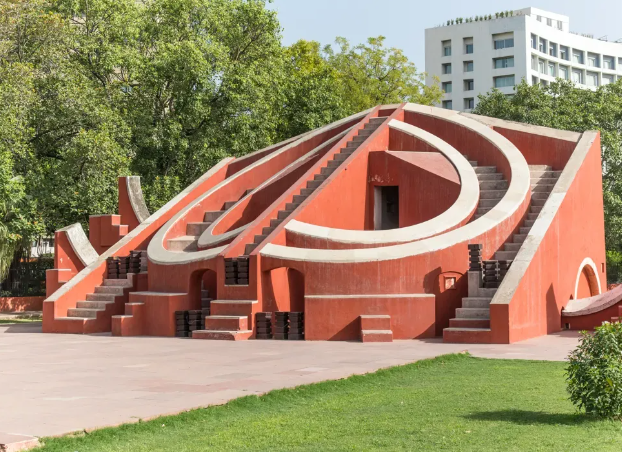
NEW DELHI, Nov. 4: Several prominent historical monuments and cultural institutions in the national capital, including Jantar Mantar, Safdarjung Tomb, Sabz Burj, the National Museum and the National School of Drama (NSD), have been selected as venues for the upcoming India Biennale 2026, officials said.
The 108-day cultural extravaganza will begin on December 4 and continue until March 21, 2027, bringing together art, architecture, heritage and contemporary creative expressions across several locations in Delhi.
The historic Purana Qila will serve as the principal venue for the event, with different pavilions planned within its premises, a senior official said.
Other selected locations include Barakhamba Tomb, Qila Rai Pithora, the Sangeet Natak Akademi, the Indira Gandhi National Centre for the Arts (IGNCA), the National Gallery of Modern Art (NGMA), Hauz Khas monument and the Jantar Mantar observatory.
The Culture Ministry had earlier announced that the festival would extend across several prominent landmarks, including Lodhi Gardens, the Qutub Minar complex, Agrasen ki Baoli, the Red Fort and Safdarjung Tomb, along with art galleries and privately managed cultural spaces.
However, details regarding the specific exhibitions and programmes assigned to individual venues have not yet been disclosed.
Jantar Mantar, built in 1724 by Maharaja Sawai Jai Singh II of Jaipur, holds particular historical significance beyond its astronomical architecture. The adjoining road has remained one of the country’s most prominent locations for public demonstrations and political protests for several decades.
From the mid-1990s onwards, the area became an important gathering point for activists, students and various organisations seeking to highlight public concerns. It witnessed several major demonstrations, including a prolonged student-led movement earlier this year.
However, the location was recently removed from the list of authorised protest sites following an October 11 order issued by Delhi Police Commissioner Anurag Kumar.
The selection of the observatory as a Biennale venue adds another cultural dimension to a monument that has remained closely associated with Delhi’s public and political life.
The Culture Ministry recently promoted the event through social media, describing it as a major celebration of artistic expression, architectural heritage and cultural experiences. The historic Purana Qila is expected to become a central attraction during the festival.
The second edition of the India Art, Architecture and Design Biennale (IAADB) is being organised under the revised name India Biennale. The initiative is intended to develop into an international cultural platform and become a flagship programme of the Culture Ministry.
The event builds on the inaugural edition held in December 2023, which was launched to strengthen India’s creative industries, encourage artistic exchange and promote the country’s cultural identity internationally.
This year’s edition will be organised around the theme ‘Tat Tvam Asi’, a Sanskrit expression meaning ‘You Are That’. The concept explores the relationship between individuals, society, heritage and the surrounding environment.
According to the organisers, the Biennale aims to encourage visitors to look beyond conventional artistic experiences and reconnect with themselves, other people and the cultural spaces they inhabit.
The curatorial statement describes the event as an invitation to slow down and rediscover the relationship between people and the city through art and architecture.
It also emphasises the role of historical monuments, museums, galleries and public spaces as active participants in artistic expression rather than merely serving as exhibition backgrounds.
Artists, architects and designers will be encouraged to present works that explore the relationship between traditional craftsmanship and contemporary creative practices.
The programme will welcome different forms of artistic expression, ranging from handmade creations and traditional techniques to digital installations and immersive new-media experiences.
Organisers believe that modern technology can provide new ways of experiencing art and heritage when used to encourage engagement, observation and interaction.
The curatorial framework is structured around four central ideas: Reflection, Rejuvenation, Renewal and Resilience. These themes will be explored through the five human senses, offering visitors different ways to engage with artistic installations and cultural environments.
The statement also highlights the growing challenge of maintaining meaningful connections in an increasingly fast-paced and digitally connected world.
According to the organisers, contemporary lifestyles often reduce opportunities for people to engage deeply with their surroundings, communities and cultural heritage. The Biennale seeks to address this concern by turning familiar urban spaces into places for contemplation and creative discovery.
Delhi’s architectural landscape is expected to play an important role in shaping the festival’s identity. The city’s monuments represent different periods of Indian history and provide opportunities to explore the relationship between traditional structures and modern artistic interpretations.
The Qutub Minar and Red Fort complexes, both recognised as UNESCO World Heritage Sites, are among the prominent heritage locations associated with the broader cultural programme.
The participation of national institutions such as the National Museum, NGMA, IGNCA and NSD is also expected to strengthen the event’s institutional and artistic character.
Through this initiative, the ministry aims to bring together established artists, emerging creative professionals, cultural organisations and international participants on a common platform.
The organisers are seeking to position the India Biennale as an important international destination for discussions and exhibitions involving art, architecture and design.
By using heritage monuments and public cultural institutions as exhibition spaces, the event is expected to offer visitors an opportunity to experience Delhi’s history alongside contemporary artistic practices.
The festival will also provide a platform for exploring how traditional cultural identities can coexist with changing creative technologies and modern forms of expression.
With its extensive schedule and multiple venues, the India Biennale 2026 is expected to become one of the major cultural events in the capital, bringing renewed attention to Delhi’s architectural heritage and contemporary creative landscape.

