


Cristiano Ronaldo Announces Retirement from International Football After Record Breaking 23 Year Career
The 41 year old Portugal captain brings an end to his international journey with 234 appearances and 146 goals, leaving behind an extraordinary legacy that includes Euro 2016 and two UEFA Nations League titles.
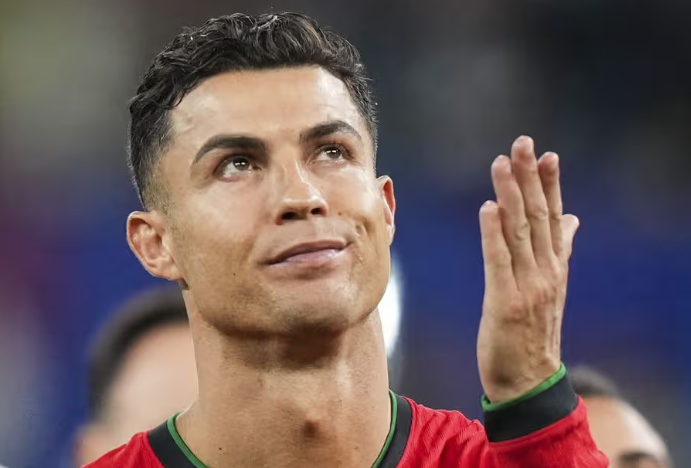
LISBON, Nov 5: Portuguese football superstar Cristiano Ronaldo has announced his retirement from international football, bringing the curtain down on an extraordinary 23 year career with the national team that established him as one of the greatest players in the history of the sport.
The 41 year old forward made the announcement through a video message on social media on Thursday, confirming that he would hand back Portugal’s iconic number seven shirt following the November international break. His decision marks the end of an era for Portuguese football, with Ronaldo leaving behind records that may take generations to challenge.
Ronaldo finished his international career with 234 appearances and 146 goals, making him the most-capped player and highest goalscorer in men’s international football. His remarkable achievements include representing Portugal across six editions of the FIFA World Cup and scoring in every tournament from 2006 to 2026.
In his farewell message, Ronaldo reflected on the responsibility and privilege of representing his country for more than two decades.
He described the decision as an emotional one, explaining that it was not easy to walk away from a team that had been such an important part of his life.
The footballer also thanked Portuguese supporters, his family, teammates, coaches and members of the national team’s support staff for accompanying him throughout his international journey.
Ronaldo said that if any of his goals had brought happiness to supporters, helped someone forget their worries or made people feel proud of Portugal, then his efforts had been worthwhile.
His message carried particular significance because the number seven shirt became closely associated with his identity throughout his career. From his early days as a young winger to becoming Portugal’s captain and leading goalscorer, Ronaldo transformed the shirt into one of the most recognisable symbols in world football.
The announcement brought an end to a journey that began in August 2003, when an 18-year-old Ronaldo made his senior international debut against Kazakhstan. At that stage, he was a promising young player attempting to establish himself among Portugal’s established stars.
Few could have predicted the scale of his eventual achievements.
Ronaldo gradually became a central figure in the national team, earning recognition for his pace, technical ability, aerial strength, finishing and determination. His development from a talented winger into one of football’s most prolific goalscorers helped transform Portugal into a major force in international competitions.
One of the earliest defining moments of his international career came at the 2004 European Championship, which Portugal hosted. The young forward played an important role as the team reached the final but suffered a surprising defeat against Greece.
Although the loss denied Portugal a major trophy, the tournament provided Ronaldo with valuable experience and marked the beginning of his long association with European international football.
At the 2006 FIFA World Cup in Germany, he established himself as an important member of the national squad. Portugal reached the semi-finals before losing to France and eventually finished fourth.
Ronaldo continued to develop as a leader and attacking force in subsequent tournaments. His performances at the 2008, 2012 and 2016 European Championships strengthened his reputation, while his consistent goalscoring made him increasingly important to Portugal’s ambitions.
The defining achievement of his international career arrived in 2016, when Portugal won its first European Championship title.
Portugal entered the tournament without being regarded as the strongest contender but gradually advanced through the competition. Ronaldo played a crucial role in the team’s progress, scoring important goals and motivating his teammates.
In the final against France, however, he suffered an injury during the opening stages and was forced to leave the field. Despite his absence, Portugal continued to fight and secured a 1-0 victory after extra time, with Eder scoring the decisive goal.
Ronaldo watched the closing stages from the sidelines and celebrated passionately as his country lifted its first major international trophy.
The triumph represented a defining moment for Portuguese football and fulfilled a long-standing ambition for a generation of players who had previously come close to success without winning a major championship.
Portugal added another major achievement in 2019 by winning the inaugural UEFA Nations League. Ronaldo played a significant role in that campaign, scoring a memorable hat trick against Switzerland in the semi-final.
The team secured the title with a victory over the Netherlands in the final, adding another international trophy to Ronaldo’s collection.
He later helped Portugal win the 2025 Nations League, further strengthening his record as one of the country’s most successful footballers.
Beyond the trophies, Ronaldo’s international career was distinguished by his extraordinary consistency in front of goal.
He became the first male footballer to score in six different editions of the FIFA World Cup, achieving the milestone during the 2026 tournament in North America. He also joined Argentina’s Lionel Messi as the only male players to feature in six World Cups.
His record of 146 international goals placed him 20 ahead of Messi, who finished his international career with 126 goals in 208 appearances.
Ronaldo’s international achievements were not limited to World Cups and European competitions. He also established himself as Portugal’s most influential attacking player across qualifying campaigns and international friendlies, regularly delivering goals at crucial moments.
The 2026 World Cup proved to be his final international tournament. Portugal entered the competition hoping to add another major trophy to its collection, but the campaign ended in the round of 16 with a 1-0 defeat against eventual champions Spain.
The elimination meant that Ronaldo’s long-standing ambition of winning the World Cup remained unfulfilled. Nevertheless, his participation in the tournament added another chapter to an international career filled with historic milestones.
His retirement announcement also came against the backdrop of a recent disagreement with Portugal coach Jorge Jesus.
Ronaldo had left the national team camp without permission in September ahead of a Nations League fixture against Denmark. The forward later explained that his departure was connected to disagreements over assurances regarding his role in the team.
Jesus denied making any such agreement but indicated that Ronaldo could return following Portugal’s 2-1 victory against Norway.
Ronaldo subsequently apologised to supporters and teammates and maintained that he remained available for international selection. The Portuguese Football Federation imposed a 30-day suspension and a fine of 255 euros following the incident.
Despite the disagreement, Jesus said he had spoken to Ronaldo about his international future earlier in the year and had encouraged him to continue representing Portugal.
The coach acknowledged the player’s importance to the national team and said he respected his decision to retire.
Portugal’s football federation also issued a statement expressing gratitude for Ronaldo’s contribution, describing him as an exceptional athlete, inspiring leader and an important symbol of the national team.
Teammate Bruno Fernandes paid tribute to the veteran forward, describing it as a privilege to share important moments with his childhood idol.
Portuguese Prime Minister Luis Montenegro also praised Ronaldo’s achievements, saying his contribution to the country would continue to be remembered.
Ronaldo’s retirement does not mean an end to his professional football career. The forward is expected to continue playing at club level for Saudi Arabian side Al-Nassr, where he remains an important figure.
His decision will now allow Portugal to begin preparing for the next phase of its international journey, with greater responsibility expected to fall on younger players.
For Portuguese football, replacing a player who has scored 146 international goals and appeared in 234 matches will be an enormous challenge. His influence extended beyond the numbers, with his leadership, competitive mentality and ability to deliver under pressure shaping the team’s identity for years.
Ronaldo leaves international football as a player whose achievements have crossed generations and transformed the expectations surrounding Portuguese football.
Although his international journey has concluded, his contribution to the game will remain part of football history. His goals, records, trophies and memorable performances have secured his place among the sport’s most influential figures.
After more than two decades of representing Portugal, the legendary number seven has finally decided to pass the responsibility to the next generation, closing one of the most remarkable chapters in international football.

