


Union Health Minister Reviews AIIMS Awantipora, OPD Services Targeted Before December
J.P. Nadda directs officials to accelerate infrastructure development, equipment procurement and recruitment, with inpatient services and MBBS classes planned for 2027.
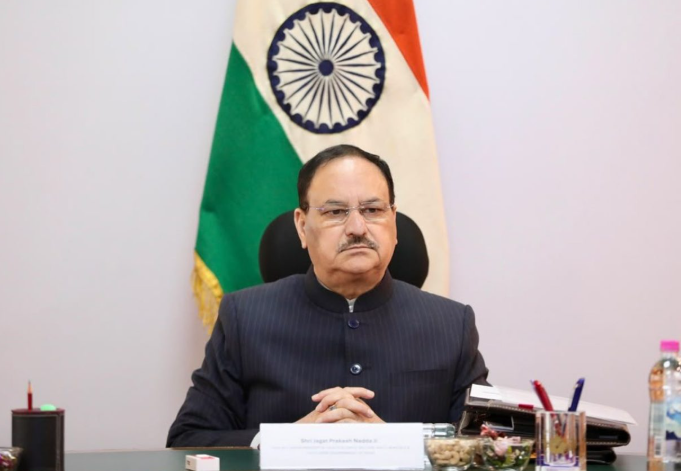
AWANTIPORA, Nov 5: Union Health and Family Welfare Minister Jagat Prakash Nadda on Thursday reviewed the construction and operational preparedness of the All India Institute of Medical Sciences (AIIMS), Awantipora, in Jammu and Kashmir, directing officials to expedite the remaining work and ensure the early commencement of medical services.
During the review meeting, the minister assessed the progress of infrastructure development, procurement of medical equipment and furniture, recruitment of doctors and other personnel, and arrangements required to begin hospital and academic activities.
According to the Ministry of Health and Family Welfare, the major buildings of the institute have been completed, while the remaining construction and operational preparations are being taken forward in phases.
Nadda appreciated the efforts of the Central Public Works Department (CPWD) and other agencies involved in the project, particularly for completing significant infrastructure work despite difficult terrain and other challenges associated with the location.
Emphasising the importance of the institute for the region, the minister directed the concerned agencies to maintain the pace of work and complete the remaining construction activities by March 2027.
The review was focused not only on the physical progress of the campus but also on ensuring that essential facilities, medical equipment and human resources are available before patient services begin.
OPD services targeted before December
One of the major developments discussed during the meeting was the proposed commencement of outpatient department (OPD) services at AIIMS Awantipora before December 2026.
The minister instructed the concerned authorities to prioritise all arrangements necessary for starting OPD operations, including the installation of medical equipment, diagnostic facilities, availability of instruments and deployment of qualified personnel.
The Phase-I infrastructure, which includes the OPD Registration Block, OPD Block, residential buildings and designated hostels, has already been completed.
The process of inventory verification and formal handover of these facilities is currently underway.
The authorities have also been asked to ensure that the facilities are fully prepared before patients begin visiting the institute.
Nadda stressed the importance of close coordination between HITES, the Executive Director of AIIMS Awantipora and other agencies responsible for the project.
The minister directed officials to accelerate procurement procedures so that the commencement of outpatient services is not delayed because of the non-availability of essential equipment or furniture.
The planned opening of OPD facilities is expected to mark an important phase in the development of the institute, allowing patients to access specialised consultations and diagnostic services closer to their homes.
Medical equipment procurement gains momentum
During the review, officials informed the minister about the progress made in procuring medical equipment required for the institute.
Procurement approval has been conveyed for 180 medical equipment items involving an estimated expenditure of Rs 59.41 crore.
Of these, Notices of Award have already been issued for 140 items, while procurement processes for the remaining requirements are being taken forward.
The minister also reviewed the status of OPD instruments, laboratory equipment, laboratory furniture and medical and administrative furniture.
He directed the authorities to complete these procedures on priority and ensure that the institute is adequately equipped before beginning patient services.
Medical equipment is a crucial component of hospital preparedness because the availability of qualified doctors alone cannot ensure effective healthcare delivery without appropriate diagnostic and treatment facilities.
The institute will require equipment across different clinical and diagnostic departments to support consultations, examinations, laboratory investigations and other medical services.
The minister emphasised that the procurement process should be closely monitored to avoid unnecessary delays and ensure that the required facilities become operational according to the proposed schedule.
Recruitment of doctors and supporting staff
The availability of medical professionals and support personnel was another important issue discussed during the review.
Nadda appreciated the efforts of the institute’s Executive Director and the administrative team in advancing recruitment activities but directed them to accelerate the process to ensure that qualified faculty members are available at the earliest.
He also stressed the need to expedite recruitment for non-faculty positions and arrange sufficient manpower for the functioning of OPD services and other hospital facilities.
The ministry has approved engagement of essential manpower for the initial operational requirements of the institute.
The proposed arrangements cover 652 positions across different categories, including hospital attendants, housekeeping and sanitation personnel, and security staff. The provision includes 150 security personnel.
The recruitment and deployment of these employees will be important for ensuring that the institute can manage patient registration, movement, sanitation, security and other essential hospital operations.
A large healthcare institution requires coordination between doctors, nurses, technicians, administrative personnel and support workers. Therefore, completing the recruitment process alongside infrastructure development is necessary for a smooth start.
The minister directed the institute’s administration to ensure that staffing arrangements remain aligned with the planned commencement of medical services.
IPD services and MBBS classes planned for 2027
Apart from outpatient facilities, the review also examined the proposed schedule for introducing inpatient and academic activities at AIIMS Awantipora.
According to the timeline shared during the meeting, inpatient department (IPD) services are proposed to commence in July 2027, subject to the completion of the required infrastructure and operational arrangements.
Academic activities, including the commencement of MBBS classes, are planned for the 2027–28 academic session, beginning around June-July 2027.
The phased approach is intended to allow the institute to gradually expand its operations while ensuring that the necessary facilities and human resources are available.
The introduction of IPD services will represent another major stage in the institute’s development, as it will allow patients requiring hospital admission and more comprehensive medical management to access treatment at the facility.
The beginning of MBBS classes will also add an important educational dimension to the project by creating opportunities for medical training in Jammu and Kashmir.
The development of medical education infrastructure is particularly significant for regions where access to advanced institutions and specialised training opportunities remains an important concern.
With the planned academic expansion, AIIMS Awantipora is expected to contribute to the development of the region’s future medical workforce.
Infrastructure development and institutional preparedness
The minister also reviewed the phased construction and handover arrangements for the remaining buildings.
While the first-phase facilities have been completed, other academic, administrative, hospital, residential and hostel infrastructure is being developed in stages.
Nadda directed the agencies concerned to maintain close coordination and ensure that the remaining work is completed within the stipulated timeline.
He also reviewed arrangements relating to campus security, transportation connectivity, website development and operational partnerships.
The minister emphasised that these facilities should receive adequate attention because the functioning of a major medical institution depends on more than hospital buildings and clinical equipment.
Transportation arrangements, campus management, administrative coordination and security systems are also necessary for providing a convenient environment for patients, students, doctors and other employees.
Officials were asked to address operational challenges through regular coordination between AIIMS Awantipora, CPWD, HITES and the local administration.
The institute’s administration was also directed to ensure that the necessary support systems are ready before the commencement of medical services.
Significance for healthcare in Jammu and Kashmir
The establishment of AIIMS Awantipora is expected to strengthen access to specialised and advanced healthcare facilities in Jammu and Kashmir.
Patients requiring tertiary-level treatment often need access to specialised departments, diagnostic facilities and experienced medical professionals. The development of a major medical institution in the Kashmir region is intended to expand the availability of such services.
Once fully operational, the institute is expected to provide a combination of outpatient consultations, inpatient treatment, specialised medical services and medical education.
Its development could also strengthen the region’s healthcare infrastructure by creating additional opportunities for clinical training, research and the recruitment of qualified medical professionals.
For patients and their families, the availability of advanced treatment facilities within the region may help reduce the need to travel long distances for certain medical services.
However, the extent of these benefits will depend on the institute’s ability to develop its departments, recruit sufficient specialists and establish comprehensive diagnostic and treatment facilities.
The phased operational schedule therefore remains important for ensuring that the institute moves beyond infrastructure development towards providing regular healthcare services.
Government stresses timely completion
Reiterating the Centre’s commitment to expanding healthcare infrastructure, Nadda said the timely completion and operationalisation of AIIMS Awantipora would be an important step towards improving access to quality tertiary healthcare in Jammu and Kashmir.
He underlined the need for all concerned agencies to work together to resolve pending issues and ensure that construction, procurement and recruitment activities proceed without unnecessary delays.
The review highlighted the government’s focus on bringing the institute into operation through a phased approach, beginning with OPD services and followed by inpatient treatment and academic activities.
With major buildings completed and procurement and recruitment processes progressing, the next priority will be to ensure that the institution is equipped with the necessary facilities and manpower to serve patients.
The proposed commencement of OPD services before December 2026 will be the first major milestone in this process, while the subsequent expansion of hospital and academic activities is expected to strengthen the institute’s role in the region’s healthcare system.

