UK Doctor Evacuated from Congo After Testing Positive for Ebola
British medical professional receives treatment at London's Royal Free Hospital after contracting Ebola while working in the Democratic Republic of Congo, as health authorities implement strict infection-control measures.
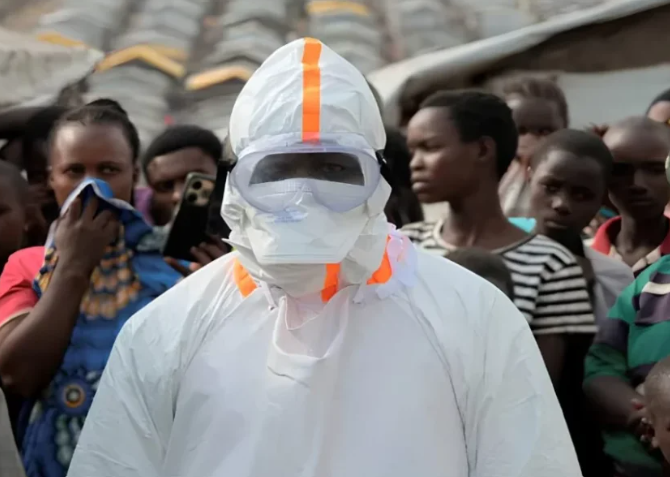
LONDON, Nov 5: A British doctor who contracted Ebola while working on the outbreak response in the Democratic Republic of Congo (DRC) was evacuated to London on Thursday for specialised medical treatment, prompting health authorities to activate strict infection-control arrangements.
The doctor, whose identity has not been disclosed, is receiving treatment at the Royal Free Hospital, which has a high-level isolation unit specifically designed to manage patients suffering from highly infectious diseases.
The evacuation was organised through cooperation between the British and Congolese governments, along with international health partners.
The case marks the first British national infected during the current Ebola outbreak in Congo and the first British patient evacuated from the affected region for treatment. It is also the third person infected with the virus to return to Europe during the ongoing outbreak.
British health authorities have sought to reassure the public that the incident does not pose a significant risk of wider transmission. They said established infection-prevention procedures and specialised medical arrangements were in place to protect hospital staff, other patients and the general population.
Renu Bindra, Deputy Director for All Hazards Public Health Response at the UK Health Security Agency (UKHSA), said the agency and the National Health Service (NHS) had established appropriate infection-control protocols to prevent the disease from spreading further.
Officials said they did not anticipate a major public health impact in Britain and expected no disruption to international travel or trade.
Specialised isolation arrangements in London
Following his arrival in Britain, the doctor was transferred to the Royal Free Hospital in London, where he is being treated in a dedicated high-level isolation facility.
The hospital has experience in managing serious infectious diseases and previously treated patients during the West African Ebola epidemic between 2014 and 2015.
The isolation unit is designed to minimise contact between infected individuals and the wider public. It operates with specialised clinical teams trained to manage high-risk infections and follow strict protective procedures.
Healthcare professionals working in such facilities use specialised protective equipment and follow carefully controlled procedures while examining and treating patients.
The arrangements also involve managing patient movement, handling potentially contaminated materials and ensuring that medical waste is disposed of safely.
Authorities have not disclosed detailed information about the doctor’s medical condition or the circumstances surrounding his infection.
The UKHSA has maintained that the risk to the general population remains low, stressing that the established safeguards are intended to prevent onward transmission.
The evacuation also highlights the importance of international coordination when healthcare workers become infected while responding to major disease outbreaks in regions with limited medical infrastructure.
Congo outbreak remains a major international health concern
The current Ebola outbreak in the Democratic Republic of Congo has become one of the largest recorded in the country’s history.
According to information reported by health authorities, the outbreak has resulted in more than 10,600 infections and over 5,100 deaths. The disease has spread across 67 health zones in eight provinces, compared with only three affected zones when the outbreak was initially declared in May.
The geographical expansion has increased pressure on healthcare facilities, medical personnel and disease surveillance systems.
Several affected communities are located in remote areas where access to hospitals, transportation and essential medical supplies can be challenging.
The outbreak has required extensive efforts involving local health workers, international medical organisations and public health agencies.
Healthcare teams have been engaged in identifying suspected cases, monitoring contacts, providing treatment and strengthening infection-prevention measures.
The infection of medical personnel has added another concern because doctors, nurses and other frontline workers are frequently exposed to patients suffering from severe symptoms.
Despite the use of protective equipment and established safety procedures, accidental exposure can occur during demanding emergency response operations.
Infectious disease expert Damien Tully of the London School of Hygiene and Tropical Medicine said the infection of a British healthcare worker was concerning but not entirely unexpected, given the risks faced by medical teams working in outbreak settings.
He highlighted the difficult circumstances under which healthcare professionals treat severely ill patients, noting that even rigorous protective arrangements cannot completely eliminate the possibility of accidental exposure.
Understanding the Ebola virus
Ebola is a severe viral disease that can cause serious illness and death. According to the World Health Organization (WHO), the disease is transmitted through direct contact with the blood, bodily fluids and tissues of infected people or animals.
Transmission can also occur through contaminated objects and materials, including clothing, bedding and medical equipment.
The virus does not generally spread through casual contact or through the air in the same manner as common respiratory infections.
People who become infected may initially experience fever, fatigue, muscle pain, headache and sore throat. As the illness progresses, symptoms can include vomiting, diarrhoea, abdominal pain and, in severe cases, internal or external bleeding.
The period between exposure and the development of symptoms can range from two to 21 days.
The disease can be particularly dangerous because early symptoms may resemble those of other infectious illnesses, making timely diagnosis and isolation important.
According to WHO estimates, Ebola has an average fatality rate of around 50 per cent, although the actual rate varies depending on the outbreak, virus type and availability of medical care.
Early supportive treatment, including fluid management, monitoring and treatment of complications, can improve a patient’s chances of survival.
Healthcare workers are considered particularly vulnerable because they may come into close contact with infected individuals during diagnosis, treatment and emergency procedures.
Other European cases reported
The British patient is not the first European to have contracted Ebola during the current outbreak in Central Africa.
France confirmed a case in June involving a doctor who had returned from a humanitarian mission in Congo. The medical professional subsequently recovered.
A Swiss woman who was believed to have contracted the virus in Uganda was also evacuated to Geneva for treatment in October. Her husband, a diplomat, was placed in isolation in Zurich as a precaution.
These cases have demonstrated the importance of medical evacuation arrangements and international coordination when healthcare personnel or other individuals become infected while working in affected regions.
The transfer of infected patients across international borders requires careful planning, specialised transportation and coordination between health authorities in the countries involved.
Medical evacuation teams must ensure that patients receive appropriate care while minimising exposure risks during transportation.
The British doctor’s transfer was carried out through arrangements involving the governments of Britain and Congo and their international partners.
WHO advances vaccine research against current Ebola strain
Amid the continuing outbreak, the World Health Organization has also announced progress in research aimed at developing vaccines specifically targeting the Bundibugyo virus, which is responsible for the current epidemic.
On November 4, WHO announced that two additional vaccine candidates had been recommended for inclusion in the ongoing Tumaini clinical trial in Congo.
The candidates are ChAdOx1, developed by the University of Oxford in partnership with the Serum Institute of India, and Moderna’s mRNA-1469 vaccine.
The recommendation followed an assessment by WHO’s independent Technical Advisory Group on Candidate Vaccines Prioritization.
Both candidates will enter the clinical trial following the required national approvals.
The development is significant because it represents the first time vaccines specifically designed to protect against the Bundibugyo virus will be evaluated during an outbreak of the disease.
The Tumaini trial uses a ring-vaccination approach, targeting contacts of people diagnosed with confirmed Bundibugyo virus disease.
Under this method, individuals who have been in contact with infected patients, along with relevant contacts within their networks, are offered vaccination to help limit further transmission.
The approach builds on vaccination strategies used during the West African Ebola outbreak, which helped establish the effectiveness of the Ervebo vaccine against the Zaire ebolavirus strain.
Ervebo is also being evaluated in the ongoing Tumaini trial to assess its effectiveness against the Bundibugyo virus.
WHO said four vaccination rings were already in place, with additional groups being prepared.
Research into potential treatments continues
Alongside vaccine development, researchers are evaluating possible treatments that could improve survival among patients infected with the Bundibugyo virus.
The WHO-sponsored PARTNERS trial, launched in July, is examining whether the monoclonal antibody MBP134, the antiviral medicine remdesivir or a combination of both can improve patient outcomes.
Another treatment, maftivimab, is also expected to be added to the research programme.
A separate study is examining the potential use of obeldevisir as post-exposure prophylaxis.
These studies are intended to generate scientific evidence that could support the development of more effective treatment strategies.
WHO has been providing technical and operational assistance to research teams, helping coordinate international partners and supporting the implementation of clinical studies under appropriate ethical and scientific standards.
Initial findings from treatment trials are expected in the coming months, while results from the vaccine trial are anticipated in early 2027.
International cooperation remains essential
The evacuation of the British doctor has once again highlighted the risks faced by medical professionals working in infectious disease outbreaks and the importance of strengthening healthcare preparedness.
Although British authorities have assessed the risk to the wider population as low, the incident underlines the need for continuous monitoring, effective isolation facilities and strict infection-control procedures.
For Congo, the immediate challenge remains containing the outbreak, protecting healthcare workers and ensuring that affected communities receive timely medical assistance.
International organisations and governments are also working to improve access to vaccines, diagnostic facilities and potential treatments.
The development of additional vaccine candidates and ongoing clinical trials offer possibilities for improving the response to future outbreaks, although their effectiveness will need to be established through research.
As the outbreak continues to affect several provinces, public health experts have stressed that vaccination alone cannot end the epidemic. Surveillance, early detection, safe treatment practices, community engagement and protection of frontline personnel remain equally important.
The British patient’s treatment in London is being closely managed under specialised isolation arrangements, while international health agencies continue efforts to contain the outbreak in Central Africa.