


Pakistan Says Defence Pact with Saudi Arabia and Turkiye Not Aimed at Any Country
Deputy PM Ishaq Dar describes the trilateral Makkah agreement as a defensive arrangement aimed at strengthening collective security and promoting regional stability amid tensions in West Asia.
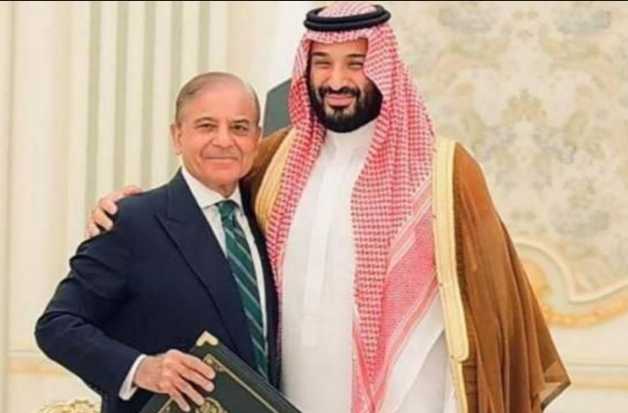
ISLAMABAD, Nov 10: Pakistan’s Deputy Prime Minister and Foreign Minister Ishaq Dar has clarified that the Makkah Joint Defence Agreement involving Pakistan, Saudi Arabia and Turkiye is not directed against any particular country, asserting that the arrangement is intended to strengthen collective security and contribute to regional stability.
Addressing the inaugural session of the Margalla Dialogue 2026, organised by the Islamabad Policy Research Institute, Dar said the trilateral agreement reflected Pakistan’s commitment to regional security, strategic cooperation and credible deterrence.
He emphasised that the pact was purely defensive in nature and should not be interpreted as an attempt to threaten any regional or international power.
Signed on August 7, the Makkah Joint Defence Agreement establishes that an armed attack against any one of the three participating countries would be considered an attack against all. It also provides a framework for enhanced military coordination and defence cooperation.
The agreement has attracted considerable attention amid escalating tensions in West Asia, with speculation emerging over whether it could be directed against a specific regional rival, particularly Iran. Concerns were also linked to previous missile and drone attacks by Yemen’s Iran-backed Houthi rebels against Saudi territory and critical infrastructure.
Rejecting such interpretations, Dar reiterated that the arrangement was designed to promote stability rather than create confrontation.
Speaking on the theme, “Global Order in Transition: Navigating Strategic Uncertainty”, the Pakistani foreign minister called for the establishment of a more equitable, representative and rules-based multipolar international system.
He said Islamabad was pursuing a balanced diplomatic approach through strategic partnerships and constructive engagement with major international players, including China, the United States, Iran, Gulf nations, European countries and Central Asian states.
According to Dar, Pakistan’s national security and economic progress depended on strengthening domestic capabilities while maintaining effective diplomatic relations internationally.
“The answer lies in strength at home and effective diplomacy abroad, both serving one purpose: the security and prosperity of our people,” he said.
Referring to the four-day military confrontation between India and Pakistan in May 2025, Dar maintained that unresolved disputes and unilateral decisions continued to pose challenges to regional peace.
He asserted that Pakistan would protect its sovereignty while remaining committed to peaceful engagement.
India launched Operation Sindoor in May 2025, targeting terrorist infrastructure in Pakistan and Pakistan-occupied Kashmir following the April 22 terror attack in Pahalgam, Jammu and Kashmir, which claimed 26 lives, mostly tourists.
Dar also reiterated Pakistan’s position on Jammu and Kashmir, arguing that the dispute should be resolved in accordance with relevant United Nations Security Council resolutions.
India, however, has consistently maintained that Jammu and Kashmir and Ladakh are integral and inalienable parts of the country and that matters concerning the region fall within its internal jurisdiction.
Discussing the changing global landscape, Dar identified intensifying geopolitical competition, the growing connection between economic interests and strategic rivalries, and rapid technological developments as key factors transforming international relations.
He also referred to the situation in Palestine, highlighting the humanitarian crisis in Gaza, continued occupation and the expansion of Israeli settlements. He described the developments as examples of the consequences of the absence of accountability in international affairs.
Highlighting Pakistan’s diplomatic engagement in West Asia, Dar said Islamabad had played a facilitating role in bringing the United States and Iran into discussions in April.
He referred to the Islamabad Memorandum of Understanding, signed between Washington and Tehran on June 17, as an important framework intended to support further negotiations following months of hostilities that began on February 28.
The proposed understanding envisaged an end to military operations, the restoration of commercial shipping through the Strait of Hormuz and the lifting of the US naval blockade targeting Iranian ports. It also provided for negotiations towards a broader agreement covering Iran’s nuclear programme.
However, the arrangement faced difficulties within weeks as Washington and Tehran remained divided over its interpretation and implementation. Disagreements concerning maritime access through the Strait of Hormuz, sanctions relief and the US naval blockade prevented progress.
Differences over Iran’s nuclear programme further complicated diplomatic efforts, while the 60-day period envisaged for negotiations towards a comprehensive settlement expired without a final agreement.
Despite the setbacks, Pakistan has continued efforts to revive dialogue between the two countries.
Pakistan’s Army Chief General Asim Munir visited Tehran last month and held discussions with Iranian leadership on regional developments and possible mediation initiatives.
Iran, however, has maintained that negotiations with Washington cannot resume unless its key demands, including the removal of the US blockade and sanctions, are addressed.
Dar’s remarks at the Margalla Dialogue underline Islamabad’s efforts to present its defence partnerships as instruments of collective security while pursuing diplomatic engagement amid growing geopolitical uncertainty.

