


Akhilesh Yadav Accuses Adityanath of Insulting Lord Krishna, Predicts BJP’s Defeat in 2027 UP Polls
The Samajwadi Party chief accused the Uttar Pradesh CM of disrespecting cowherds and religious figures, escalating the political confrontation between the SP and BJP ahead of the 2027 Assembly elections.
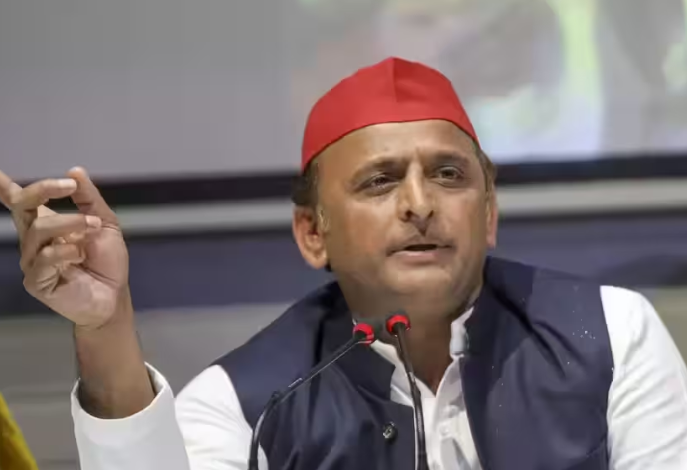
LUCKNOW, Nov 12: Samajwadi Party (SP) president Akhilesh Yadav on Thursday launched a sharp attack on Uttar Pradesh Chief Minister Yogi Adityanath, accusing him of insulting Lord Krishna through his alleged remarks about cowherds and predicting a decisive defeat for the BJP in the 2027 Assembly elections.
In a post on social media platform X, Yadav shared a video clip of Adityanath’s speech delivered during an event in Uttarakhand on Wednesday. The chief minister had reportedly remarked that without people from the hill state, Yadav would have been grazing buffaloes in his ancestral village of Saifai in Etawah.
Reacting to the statement, the SP chief alleged that the chief minister’s comments against cowherds amounted to disrespecting Lord Krishna, who is traditionally associated with cowherding.
“By using abusive language against ‘Gopalaks’ (cowherds), the Uttar Pradesh chief minister has, by implication, insulted Gopal, or Lord Krishna. This is unforgivable,” Yadav said.
He further accused Adityanath of attempting to establish his political authority independently of Sanatan Dharma and alleged that his recent statements reflected an increasingly confrontational approach towards religious traditions.
Yadav also revived allegations concerning the alleged theft of donations and offerings at the Ram temple in Ayodhya. He claimed that the chief minister had protected those responsible by giving them a clean chit out of concern that further investigation could expose uncomfortable facts.
These allegations were made by the SP president amid the continuing political controversy surrounding the handling of temple donations.
Akhilesh raises Varanasi controversy
The former Uttar Pradesh chief minister also referred to incidents involving the Pal community in Varanasi, alleging that members of the community had been subjected to a police lathi-charge.
He additionally accused the state government of showing disrespect towards the statue of Rajmata Devi Ahilyabai Holkar, a prominent historical ruler and devotee of Lord Shiva associated with the Holkar community.
Yadav alleged that the incident involving the statue, following the removal of a Shivalinga from it, demonstrated disrespect towards the religious and historical sentiments of the community.
Questioning Adityanath’s religious credentials, the SP leader said the chief minister could not claim to be a genuine devotee of Lord Shiva, Lord Ram, Lord Krishna or Devi Ahilyabai while allegedly making such remarks and taking such actions.
His comments added another dimension to the political dispute, bringing religious symbolism and community representation into the centre of the debate ahead of the next Assembly elections.
Dig at religious preacher over proposed event
Yadav also took an apparent swipe at preacher Dhirendra Shastri, who is scheduled to conduct a religious discourse in Kunda, Pratapgarh, next week.
Referring to him as “Dushmukhi”, the SP chief alleged that Shastri and Adityanath shared similarities in their clothing, language and their alleged remarks concerning Lord Ram and Lord Krishna.
He also questioned the proposed religious programme, claiming that the BJP was inviting such personalities because the chief minister had become politically weak.
The remarks appeared to be part of the SP’s broader criticism of the BJP’s political and religious positioning in Uttar Pradesh.
Yadav intensifies attack on Adityanath’s language
Continuing his criticism, Yadav accused the chief minister of using increasingly objectionable language because of growing political frustration and anxiety over the BJP’s electoral prospects.
In his social media post, the SP president said he was willing to forgive Adityanath, arguing that the chief minister appeared unable to maintain control over his words.
He further claimed that the more frustrated the BJP leadership became about the possibility of losing the next election, the more aggressive its political language would become.
Yadav also linked Adityanath’s alleged anxiety to the BJP’s electoral setbacks in 2024 and 2026, claiming that these developments had affected the chief minister’s political confidence.
Predicting a permanent defeat for the BJP in the 2027 Assembly elections, he said the chief minister would face the consequences of his statements.
The SP leader argued that a government confident of its achievements would focus on its performance rather than repeatedly targeting political opponents.
He also suggested that Adityanath’s remarks reflected concern over the growing political challenge posed by the Samajwadi Party.
PDA narrative takes centre stage
Yadav reiterated his party’s political narrative centred on PDA, referring to Pichhda, Dalit and Alpsankhyak (backward classes, Dalits and minorities).
Describing the upcoming election as a contest between privileged and dominant groups and a broader coalition of socially disadvantaged communities, he claimed that the 2027 battle would pit five per cent of arrogant and dominant sections against 95 per cent of PDA voters.
The PDA slogan has become an important component of the Samajwadi Party’s political strategy, with the party seeking to consolidate support among backward classes, Dalits and minority communities.
The SP chief’s latest remarks indicate that the party intends to make social representation, community rights and religious respect important issues during its campaign.
Political confrontation intensifies ahead of 2027
The exchange comes amid an increasingly heated political atmosphere in Uttar Pradesh, where the BJP and Samajwadi Party are preparing for the next Assembly elections.
The BJP has been defending the Adityanath government’s record, while the opposition has continued to raise questions about governance, social justice and the treatment of different communities.
Religious issues have also remained an important part of political discussions in the state, with both sides frequently responding to statements and developments involving religious institutions and prominent personalities.
Yadav’s latest attack signals that the SP intends to challenge the BJP not only on administrative performance but also on its claims of representing religious and cultural values.
With the 2027 elections approaching, such exchanges are likely to intensify as political parties attempt to consolidate their support bases and shape public opinion.
For now, the controversy has added to the growing war of words between the two major political rivals in Uttar Pradesh, with Lord Krishna, community representation and religious sentiments becoming prominent themes in the latest political confrontation.

