


PM Modi Arrives in Philippines to Attend Two Major Regional Summits
Prime Minister Narendra Modi is set to engage with regional leaders on strengthening strategic partnerships, promoting economic connectivity and addressing major regional and global challenges in the Indo-Pacific.
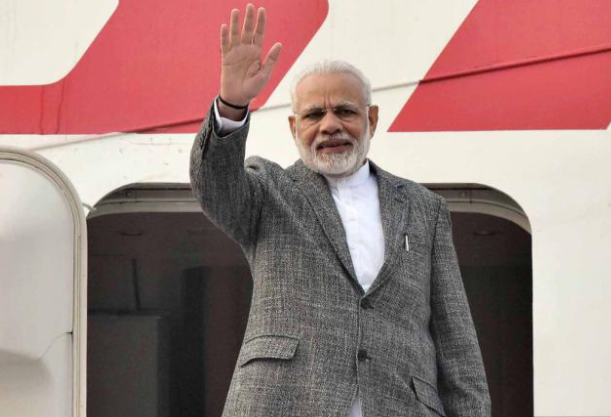
MANILA, Nov 16: Prime Minister Narendra Modi arrived in the Philippines on Monday to participate in two important regional diplomatic gatherings, underscoring India’s commitment to strengthening its engagement with Southeast Asian and East Asian nations.
During his visit, Modi will attend the 23rd ASEAN-India Summit and the 21st East Asia Summit on Tuesday. His trip comes at the invitation of Philippine President Ferdinand R Marcos Jr., as Manila hosts discussions involving leaders from across the Indo-Pacific region.
Ahead of his departure, the Prime Minister highlighted the importance of India’s longstanding relationship with the Association of Southeast Asian Nations (ASEAN), describing it as a cornerstone of the country’s Act East Policy and a central element of its broader MAHASAGAR vision.
MAHASAGAR, which stands for Mutual and Holistic Advancement for Security and Growth Across Regions, represents India’s expanded approach to maritime cooperation, regional security and economic development.
In his departure statement, Modi expressed his willingness to work alongside fellow leaders at the ASEAN-India Summit to further strengthen the Comprehensive Strategic Partnership between India and the regional bloc.
He said the discussions would focus on building upon existing achievements and advancing common objectives related to economic growth, regional connectivity and shared prosperity.
Established in 1967, ASEAN has emerged as one of the most influential regional organisations, playing a significant role in shaping economic and diplomatic cooperation across Southeast Asia.
The grouping comprises 11 member countries: Brunei, Cambodia, Indonesia, Laos, Malaysia, Myanmar, the Philippines, Singapore, Thailand, Timor-Leste and Vietnam.
India maintains a close partnership with ASEAN and participates in several regional initiatives alongside other major dialogue partners, including the United States, China, Japan and Australia.
The ASEAN-India relationship has expanded considerably over the years, covering areas such as trade, investment, infrastructure, digital technology, education, maritime security and cultural exchanges.
India’s engagement with the grouping is also strategically important because of its geographical position and the growing significance of Southeast Asia in global supply chains and international trade.
The second major engagement during Modi’s visit will be the 21st East Asia Summit, which provides a platform for participating countries to exchange views on pressing regional and international developments.
The Prime Minister said the gathering would offer an important opportunity to discuss common challenges and explore ways to strengthen peace, stability and cooperation across the Indo-Pacific.
The East Asia Summit is regarded as a key regional forum for discussions on strategic, geopolitical, economic and security-related matters.
Established in 2005, the platform has played an important role in promoting dialogue among major regional powers and addressing issues affecting the broader Asia-Pacific region.
Alongside the 11 ASEAN members, the summit brings together India, China, Japan, the Republic of Korea, Australia, New Zealand, the United States and Russia.
The participation of these countries makes the forum particularly significant, as it brings together major economic and strategic powers to discuss shared concerns and opportunities for cooperation.
For India, the two summits provide an opportunity to reinforce its diplomatic outreach, strengthen regional partnerships and advance its interests in the Indo-Pacific.
New Delhi has consistently emphasised the importance of an open, inclusive and rules-based Indo-Pacific, with greater cooperation in maritime security, connectivity, trade and sustainable development.
Modi’s participation in the meetings is expected to reaffirm India’s commitment to working with regional partners on common priorities while strengthening its strategic and economic presence in Southeast Asia.

