


India’s Data Centre Expansion to Create 35 Million Sq Ft Warehousing Demand by 2030
Rapid growth in artificial intelligence, cloud computing and digital services is expected to increase demand for specialised logistics facilities, with Mumbai and Hyderabad emerging as major beneficiaries.
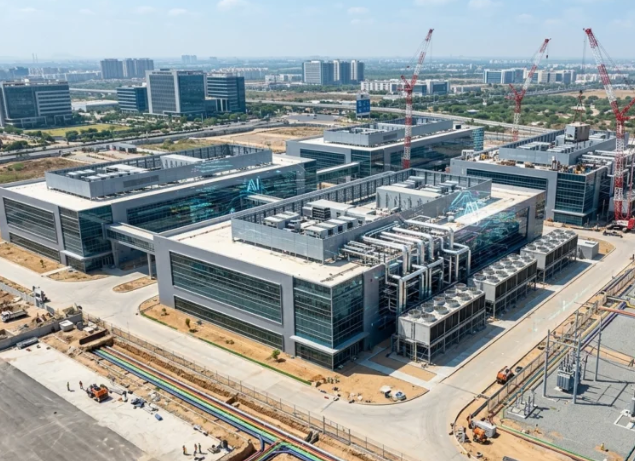
NEW DELHI, Nov 16: India’s rapidly expanding data centre industry is expected to generate between 30 million and 35 million square feet of additional warehousing demand by 2030, opening a significant new opportunity for the country’s industrial and logistics real estate sector.
According to a report released by property consultancy Savills India on Monday, the expansion of digital infrastructure will create demand not only for specialised data centre campuses but also for supporting facilities required to store, transport, install and maintain critical equipment.
The report estimates that India’s operator-based data centre capacity could increase to more than 7 gigawatts of IT capacity by 2030, supported by rising digital consumption, wider adoption of cloud computing, artificial intelligence applications and favourable government policies.
The projected expansion represents an important development for the commercial property market because data centres require a specialised supply chain that extends beyond the buildings housing servers and computing equipment.
Every additional facility needs a range of supporting services, including equipment storage, spare-parts management, transportation, installation and maintenance.
These requirements are expected to increase demand for Grade-A warehouses located close to major data centre clusters.
The report estimates that every one megawatt of data centre IT capacity typically generates a requirement for approximately 6,000 to 7,000 square feet of associated warehousing space.
Based on the expected addition of more than five gigawatts of new data centre IT capacity by 2030, the country could generate approximately 30-35 million square feet of aligned warehousing demand.
The development could create a new source of growth for industrial property developers, logistics operators, infrastructure companies and investors seeking exposure to India’s expanding digital economy.
Digital infrastructure drives demand for industrial property
India’s digital economy has expanded considerably as businesses, government departments and households increasingly depend on online platforms and technology-based services.
Financial transactions, e-commerce, telecommunications, entertainment, enterprise applications and government services generate large volumes of digital information that require secure storage and processing.
The growing adoption of artificial intelligence is adding another dimension to this demand.
AI applications require substantial computing resources, specialised hardware and reliable power infrastructure. As companies introduce more advanced digital services, demand for data centre capacity is expected to increase.
Cloud computing has also changed the way businesses manage their technology infrastructure.
Instead of maintaining all computing facilities internally, companies increasingly use external data centre operators to store information, run applications and manage digital workloads.
This shift has encouraged investment in large-scale facilities capable of providing secure and reliable computing services.
The expansion of these facilities is expected to generate demand for additional industrial and logistics infrastructure.
Warehouses will play an important role during the construction stage, when large quantities of equipment need to be received, stored and transported to development sites.
Once data centres become operational, these facilities will continue to require spare components, replacement equipment and specialised maintenance supplies.
This creates a recurring requirement for storage and logistics services throughout the life of a data centre.
Specialised warehouses become essential
Unlike conventional warehousing operations, data centre-related storage facilities may need to accommodate expensive and sensitive equipment.
Servers, networking systems, electrical components, cooling equipment and other infrastructure materials require careful handling and organised inventory management.
The availability of suitable storage space near data centre campuses can help companies reduce transportation delays and improve the efficiency of installation and maintenance operations.
The location of warehouses is therefore expected to become an important consideration for operators and their supply-chain partners.
Facilities positioned near major data centre clusters could provide faster access to construction sites and operational campuses.
The report highlights that this category of industrial property remains relatively small compared with traditional warehousing demand.
However, its expected growth suggests that specialised storage and logistics facilities could become an increasingly important segment of India’s commercial real estate market.
For developers, this creates an opportunity to design properties that meet the specific requirements of technology infrastructure companies.
Investors may also find opportunities in facilities that offer long-term leasing arrangements to data centre operators, equipment suppliers and specialised logistics providers.
Mumbai and Hyderabad expected to lead
The report identifies Mumbai and Hyderabad as the leading markets likely to benefit from the expansion of data centre infrastructure and related warehousing requirements.
Both cities have emerged as important locations for digital infrastructure investment, supported by established commercial activity and growing technology ecosystems.
Mumbai’s importance is linked to its position as a major financial and commercial centre, along with its connectivity and access to international and domestic business networks.
The city also benefits from its established telecommunications infrastructure and its role in India’s financial services industry.
Hyderabad has attracted growing interest from technology companies and infrastructure investors, supported by its expanding business environment and availability of industrial and commercial development opportunities.
The report identifies Chennai, Delhi-NCR, Bengaluru and Pune as other important markets that could benefit from the expected increase in demand.
These cities have established technology, manufacturing and logistics ecosystems that can support data centre development.
Chennai’s industrial and technology base provides opportunities for infrastructure-related businesses, while Bengaluru’s technology ecosystem supports the growing requirements of cloud computing and enterprise services.
Delhi-NCR offers access to a large commercial market and an extensive logistics network, while Pune benefits from its industrial and technology-related activities.
As the industry expands, demand may also spread to Tier-II cities where infrastructure, connectivity and suitable industrial land become available.
This geographical expansion could provide additional opportunities for warehouse developers and logistics companies outside the country’s traditional commercial centres.
Domestic manufacturing could receive a boost
The report also highlights the potential impact of data centre expansion on India’s domestic manufacturing industry.
Large data centre projects require a wide range of equipment and materials, including electrical systems, power management equipment, cooling solutions, cables, structural components and specialised hardware.
An expanding market could encourage manufacturers to increase production capacity and develop new products for the data centre sector.
This may create opportunities for companies involved in electrical equipment, industrial components, engineering, construction materials and cooling technologies.
Domestic manufacturing could also help strengthen supply chains and reduce dependence on imported components in selected categories.
The development of specialised industrial facilities may become increasingly important as data centre operators seek reliable suppliers capable of meeting technical and operational requirements.
According to Srinivas N, Managing Director of Industrial and Logistics at Savills India, the supporting ecosystem will play an important role throughout the data centre lifecycle.
He highlighted the need for strategically located warehousing to support equipment storage, installation and ongoing operations.
He also pointed to the potential for the sector to accelerate domestic manufacturing of critical equipment and components, generating demand for industrial land and specialised production facilities.
The combination of digital infrastructure, manufacturing and logistics could therefore create wider economic opportunities beyond the direct construction of data centre campuses.
Artificial intelligence increases infrastructure requirements
The growing use of artificial intelligence is emerging as one of the important factors influencing future data centre investment.
AI systems require powerful computing infrastructure to process information, train models and support applications used by businesses and consumers.
As organisations adopt AI for customer services, financial operations, industrial automation and data analysis, the need for computing capacity is expected to increase.
This demand is also encouraging companies to invest in specialised hardware and supporting infrastructure.
Data centres must be designed to manage high computing workloads while maintaining reliable electricity supply, cooling systems and network connectivity.
These requirements increase the complexity of construction and operations, creating additional demand for equipment suppliers and logistics companies.
The rapid development of cloud-based services is reinforcing the same trend.
Enterprises are increasingly moving applications and data to cloud platforms, creating requirements for secure computing facilities with the ability to handle large volumes of information.
The expansion of digital payments and online commerce is also contributing to the need for reliable data storage and processing capacity.
As these activities grow, data centre operators are likely to require more extensive support from suppliers and logistics service providers.
Opportunities for logistics companies and investors
The expected increase in warehousing demand could benefit several segments of India’s logistics and property industry.
Industrial real estate developers may explore the construction of facilities close to major data centre clusters, while logistics companies could expand specialised services for handling sensitive equipment.
The market may also attract investment from institutional funds interested in long-term infrastructure-related real estate assets.
Data centre-related warehouses could offer opportunities for developers to diversify beyond conventional storage facilities used by retail, e-commerce and manufacturing companies.
However, the requirements of this segment may differ considerably from traditional warehousing.
Developers will need to consider factors such as access to major roads, security arrangements, equipment handling facilities, building specifications and proximity to infrastructure projects.
The availability of reliable power and transportation networks will also influence the suitability of locations.
For logistics operators, the opportunity extends beyond leasing storage space.
Companies may develop specialised services covering inventory management, transportation, installation support and maintenance logistics.
Such services could become increasingly important as data centre operators manage larger networks of facilities across multiple cities.
Challenges facing the sector
Despite the positive growth outlook, India’s data centre and supporting logistics industries face several challenges.
Land availability, electricity supply, water requirements, construction costs and regulatory clearances remain important considerations for large infrastructure projects.
Data centres consume substantial amounts of electricity and require sophisticated cooling systems to maintain operational efficiency.
The availability of reliable power is therefore essential for attracting investment and ensuring uninterrupted services.
Developers must also consider environmental sustainability as the industry expands.
Energy efficiency, responsible water management and the adoption of renewable power could become increasingly important in determining the long-term viability of projects.
For warehousing developers, another challenge will be ensuring that new facilities match the technical requirements of data centre operators.
Conventional storage buildings may not always be suitable for expensive or sensitive technology equipment.
The industry may therefore require specialised development standards and closer coordination between property owners, equipment suppliers and data centre companies.
Investors will also need to evaluate whether projected demand translates into actual leasing activity and commercially viable projects.
Long-term outlook remains positive
The projected addition of more than five gigawatts of new data centre capacity by 2030 indicates that India’s digital infrastructure market could enter an important expansion phase.
The associated requirement for 30-35 million square feet of warehousing space highlights how technology investments can create demand across multiple industries.
The benefits are expected to extend to industrial property development, logistics services, equipment manufacturing and infrastructure management.
Mumbai and Hyderabad are positioned to attract a significant share of this activity, while Chennai, Delhi-NCR, Bengaluru and Pune could also experience increasing demand.
The emergence of opportunities in smaller cities may further expand the geographical reach of the sector over time.
For India’s real estate industry, the development represents a shift towards more specialised forms of industrial and logistics infrastructure.
As data centres become increasingly important to the economy, the warehouses and supply chains supporting them are likely to gain greater commercial significance.
The coming years will determine how effectively developers, manufacturers and logistics companies respond to this emerging demand.
If the projected infrastructure expansion materialises, data centre-related warehousing could become a major new contributor to India’s industrial property market by the end of the decade.

