


IIT Delhi Tops Indian Institutions in QS World University Sustainability Rankings 2027
IIT Delhi has secured the 194th position globally in the QS World University Sustainability Rankings 2027, emerging as India's highest-ranked institution. IIT Kharagpur and the University of Delhi also featured among the country's leading universities.
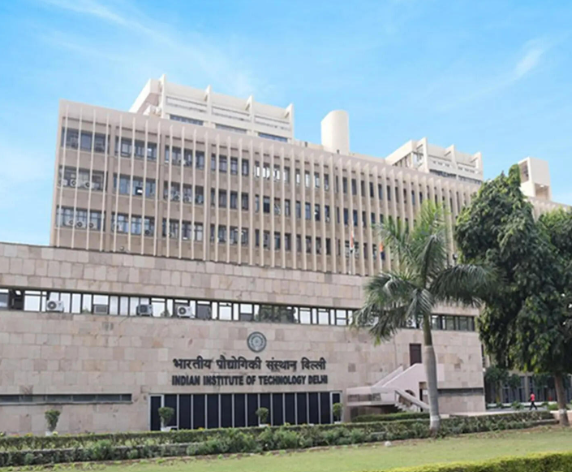
NEW DELHI, November 18: The Indian Institute of Technology (IIT) Delhi has emerged as India’s highest-ranked institution in the QS World University Sustainability Rankings 2027, securing the 194th position globally and strengthening its standing in the international higher education landscape.
The latest rankings highlight the growing contribution of Indian universities towards environmental sustainability, social responsibility and responsible institutional governance. IIT Delhi’s performance places it among the leading institutions worldwide working to integrate sustainability into academic activities, research and campus operations.
IIT Kharagpur secured the 224th position globally, while the University of Delhi ranked 237th. Their presence among the leading Indian institutions reflects the increasing attention being given to sustainability-related initiatives across the country’s higher education sector.
The QS World University Sustainability Rankings assess universities on their ability to address major environmental and social challenges. The assessment considers how institutions contribute through research, teaching, institutional practices and engagement with wider communities.
For Indian universities, participation in such international assessments has become increasingly important as they seek to demonstrate their academic quality and broader contribution to society.
Sustainability Becomes a Higher Education Priority
Environmental sustainability has emerged as an important consideration for universities around the world. Higher education institutions are increasingly expected to contribute to climate research, promote responsible resource management and prepare students to address environmental challenges.
Universities are also incorporating sustainability into their academic programmes, encouraging interdisciplinary research and developing practical solutions related to energy conservation, waste management, water security and climate resilience.
IIT Delhi’s position in the latest rankings reflects the importance of these wider institutional responsibilities.
Engineering and technology institutions have a particularly significant role in developing solutions that can support sustainable development. Research in renewable energy, clean technologies, efficient infrastructure and environmental monitoring can contribute to addressing challenges faced by rapidly growing economies.
India, with its expanding urban population and increasing energy requirements, needs stronger research capabilities in these areas.
Academic institutions can support this transition by encouraging innovation, developing skilled professionals and collaborating with government agencies and industries.
IIT Kharagpur and Delhi University Also Feature
IIT Kharagpur ranked 224th globally, making it another prominent Indian institution in the 2027 sustainability assessment.
The institute has a broad academic and research environment covering engineering, science, technology and interdisciplinary subjects. Its performance adds to the visibility of Indian technical institutions in international sustainability-focused evaluations.
The University of Delhi secured the 237th position worldwide, demonstrating the participation of a major comprehensive university in the global sustainability movement.
Universities with diverse academic disciplines can contribute to sustainability through research in environmental sciences, economics, public policy, social development and related fields.
The inclusion of these institutions among India’s leading performers also underlines that sustainability is no longer restricted to engineering or environmental science departments. It increasingly involves the entire academic ecosystem.
What the QS Sustainability Rankings Measure
The QS World University Sustainability Rankings are designed to evaluate how effectively universities address environmental and social challenges.
The assessment considers environmental impact, social impact and governance-related performance.
Environmental indicators examine the contribution of universities towards sustainable practices, including environmental education, research and institutional initiatives.
Social indicators focus on areas such as equality, health and well-being, knowledge exchange, educational opportunities and the broader contribution of institutions to society.
Governance-related considerations examine institutional structures, transparency and responsible decision-making.
These measurements provide universities with an opportunity to evaluate their progress beyond conventional academic indicators such as research output, faculty reputation and student performance.
The rankings also encourage institutions to adopt measurable sustainability goals and strengthen their contribution to national and international development priorities.
Growing Importance of Green Research in India
India’s higher education sector is undergoing significant changes as universities seek to align academic research with emerging economic and environmental requirements.
Climate change, air pollution, water shortages and rising energy consumption have increased the need for specialised research and technological innovation.
Institutions such as IIT Delhi and IIT Kharagpur can contribute by developing solutions that address these challenges through scientific research and industry collaboration.
Research in renewable energy technologies, electric mobility, sustainable construction materials and waste treatment can help reduce environmental pressures while supporting economic growth.
Universities can also promote awareness among students by introducing sustainability-related subjects and encouraging participation in environmental projects.
The growing emphasis on green research has created opportunities for collaboration between academic institutions, government departments, research organisations and private companies.
Such partnerships can help convert scientific discoveries into practical applications.
Universities Face Increasing Expectations
The latest rankings come at a time when higher education institutions are being assessed on a broader range of responsibilities.
Academic excellence remains central to university performance, but institutions are increasingly expected to demonstrate their contribution to social development, environmental protection and responsible governance.
Students are also becoming more interested in universities that provide opportunities to participate in research, innovation and community-based initiatives.
For universities, sustainability can influence campus planning, infrastructure development, procurement policies and the use of natural resources.
Measures such as energy-efficient buildings, renewable power generation, water conservation and effective waste management can reduce operational costs while improving environmental performance.
Institutions can further strengthen their contribution by making sustainability an integral part of teaching and research rather than treating it as a separate administrative activity.
International Recognition and Future Opportunities
Global university rankings influence institutional visibility, international partnerships and student interest. Strong performance in sustainability assessments can help universities demonstrate their commitment to addressing challenges that extend beyond national boundaries.
For Indian institutions, improved international recognition may also create opportunities to collaborate with overseas universities, research centres and organisations working on climate-related issues.
However, rankings should be viewed alongside other indicators of institutional quality. Academic standards, research facilities, teaching effectiveness, student support and graduate opportunities remain equally important when evaluating a university.
The performance of IIT Delhi, IIT Kharagpur and Delhi University provides an encouraging indication of India’s growing participation in international sustainability initiatives.
The next challenge for these institutions will be to maintain progress through measurable improvements in research, campus management and community engagement.
As environmental concerns become increasingly connected with economic planning and technological development, universities will have an important role in preparing future professionals and generating knowledge-based solutions.
IIT Delhi’s 194th-place finish in the QS World University Sustainability Rankings 2027 therefore represents an important achievement for India’s higher education sector and highlights the growing relevance of sustainability in determining the global standing of universities.

