


US Court Directs Delhi Courts to Serve Summons on Doval, Goel
A New York federal court has directed the delivery of judicial documents to India's National Security Advisor and former RAW chief through designated district courts in Delhi in connection with a civil lawsuit filed by Khalistani separatist Gurpatwant Singh Pannun.
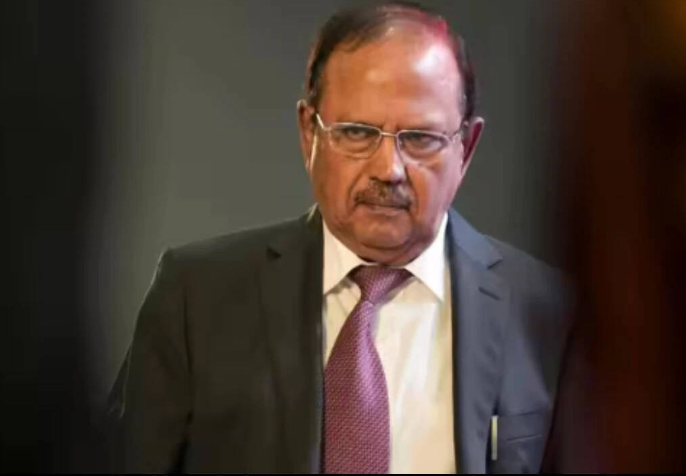
Washington, Nov 19 : A federal court in the United States has sought assistance from Indian courts in serving summonses on National Security Advisor Ajit Doval and former Research and Analysis Wing (RAW) chief Samant Goel in connection with a civil lawsuit filed by Khalistani separatist Gurpatwant Singh Pannun.
In an order issued on November 13, the US District Court for the Southern District of New York instructed its clerk to forward the summonses and related judicial documents to three district courts in Delhi. The Patiala House District Court has been designated to facilitate service on Doval, while the Dwarka and Tis Hazari district courts have been named in connection with Goel.
Judge Katherine Polk Failla, while issuing the directions, requested the cooperation of the Indian judicial authorities to complete the formal process of serving the defendants.
“The court respectfully requests the assistance of receiving Indian courts in effecting service of process upon the defendants in this civil action pending before this court,” the order stated.
The judge referred to the Hague Convention and applicable provisions of India’s Code of Civil Procedure (CPC), explaining that judicial documents issued by foreign civil courts can be transmitted to Indian courts for service under the prescribed legal framework.
Under the relevant CPC provisions, summonses issued by foreign civil courts recognised by the Indian government may be forwarded to domestic courts and served through procedures similar to those followed in Indian civil cases.
The US court noted that its earlier attempt to serve the documents through India’s designated central authority under the Hague Convention had been unsuccessful, with the request being rejected.
Following this development, the court authorised an alternative arrangement under Article 19 of the Hague Convention and the relevant provisions of India’s civil procedure law.
The lawsuit was initiated by Pannun, a US-based lawyer associated with Sikhs for Justice (SFJ), an organisation banned in India. He has sought damages, alleging that Indian officials were involved in a conspiracy to assassinate him on American soil.
Pannun has specifically accused Doval of directing an alleged assassination attempt with the involvement of India’s external intelligence agency, RAW. The allegations form the basis of the civil proceedings currently pending before the New York court.
The latest judicial direction follows an earlier attempt by the US authorities to deliver the summonses through diplomatic channels. Last month, the US court sought to facilitate service on Doval and Goel through a diplomatic communication issued by the State Department to the Indian Embassy in Washington.
India has strongly rejected the allegations and the lawsuit, describing the claims as fabricated and malicious.
On November 10, External Affairs Ministry spokesperson Randhir Jaiswal reiterated New Delhi’s objections, stating that the government would not accept what it considers baseless allegations targeting senior Indian officials.
“We reject the fabricated and malicious attacks on our high officials. Also, we reject the frivolous lawsuits,” Jaiswal said.
He further maintained that requests for serving judicial documents in India must follow the country’s established legal and diplomatic procedures.
According to the spokesperson, such requests can only be processed through India’s designated central authority, the Ministry of Law and Justice.
The Indian government’s position highlights a procedural disagreement over the appropriate mechanism for delivering foreign judicial documents within the country.
It is important to note that the US government is not a party to Pannun’s civil lawsuit. The proceedings are being conducted independently before the federal court in New York.
The civil case is also distinct from criminal proceedings initiated in the United States against Indian national Nikhil Gupta and former RAW officer Vikash Yadav in connection with an alleged murder-for-hire conspiracy targeting Pannun.
Those criminal proceedings concern separate allegations and involve a different legal process, although both cases relate to claims surrounding an alleged plot against the Khalistani separatist.
The November 13 order represents another development in the ongoing legal dispute, with the US court seeking to use Indian judicial channels to formally notify the two officials about the civil proceedings.
However, the allegations contained in the lawsuit remain claims made by the plaintiff and have not been established as facts through a judicial finding.

