


Mechanised Sanitation, Safer Workers
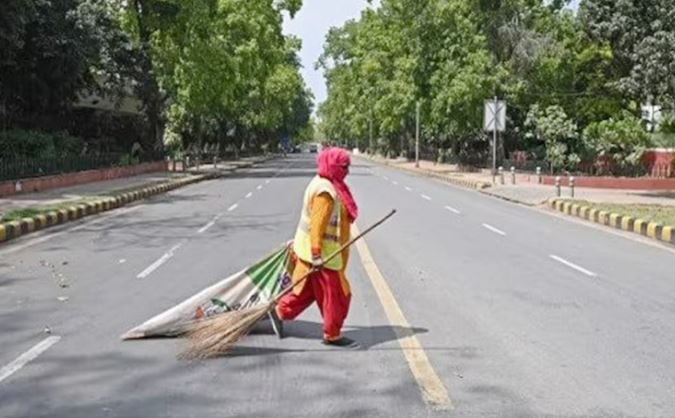
A city cannot take complete pride in its clean streets and modern sanitation facilities unless the people who maintain them are able to work safely, live with dignity and provide a secure future for their families. Sanitation workers perform an essential service that protects public health, yet their contribution often receives less attention than the cleanliness they help maintain. The recent directions issued by National Commission for Safai Karamcharis Chairperson Bhagwat Prasad Makwana during his visit to Jammu offer an important opportunity to address this imbalance. His emphasis on ending manual scavenging, promoting mechanized sanitation and strengthening workers’ rights deserves serious consideration because genuine civic progress must include the welfare of those who make it possible.
The Prohibition of Employment as Manual Scavengers and their Rehabilitation Act, 2013, provides an important legal foundation for eliminating prohibited manual scavenging and hazardous sanitation practices. However, the effectiveness of any law depends upon how sincerely its provisions are followed. Modern sanitation equipment, trained personnel and proper supervision can significantly reduce occupational risks. Mechanization must therefore become a regular feature of sanitation management across Jammu and Kashmir rather than a measure adopted only after an unfortunate incident. The Chairperson’s directions concerning insurance, protective equipment, professional training and social security highlight the practical needs of sanitation workers. Their responsibilities frequently involve demanding environments where inadequate precautions can have serious consequences. Ensuring suitable protective gear, regular medical examinations and timely statutory benefits should be treated as basic employment responsibilities. A worker performing an essential public service should never have to choose between earning a livelihood and protecting personal health. Jammu and Kashmir’s diverse geographical conditions make the issue particularly important. Sanitation services are required not only in Jammu and Srinagar but also in smaller towns, developing urban centres and rural communities. Municipal institutions and local bodies may differ in financial resources and technical capabilities, but workers’ rights and safety standards must remain equally important everywhere. Coordinated planning, suitable equipment and accessible training can help bridge these institutional differences. Residential security, access to education, protection from discrimination and opportunities for economic advancement are essential components of social dignity. Addressing longstanding difficulties requires more than administrative assurances. It calls for respectful engagement with families, transparent welfare procedures and sustained efforts to improve living conditions. Every community deserves the opportunity to participate confidently and equally in social and economic life. Financial assistance and entrepreneurship programmes offer encouraging possibilities for sanitation workers and their children. Education loans, vocational training and support for establishing small enterprises can help families explore opportunities beyond traditional occupations. However, financial inclusion becomes meaningful when beneficiaries receive clear guidance, reasonable repayment arrangements and practical assistance in developing sustainable livelihoods. The transition towards mechanized sanitation should also recognise the experience and professional knowledge of existing workers. Introducing machinery without preparing employees to operate and maintain it would overlook an important opportunity for skill development. Training programmes can help workers move into safer and more specialized responsibilities while strengthening the efficiency of municipal services. An important concern is ensuring that welfare commitments produce visible improvements. Public institutions must maintain dependable records of insurance coverage, safety training, protective equipment and statutory benefits. Contractual employees should receive particular attention so that employment arrangements do not become obstacles to essential protections. Regular consultation with workers can help identify difficulties that administrative reports may overlook.
Finally, Jammu and Kashmir now has an opportunity to establish a more humane and professionally managed sanitation system through coordinated action by municipal bodies, district administrations and welfare institutions. The immediate priorities should include a district-wise mechanization plan, regular occupational safety audits, comprehensive worker registration, timely social security benefits and accessible healthcare. Educational assistance, housing support and entrepreneurship opportunities must also reach eligible families through transparent procedures. Above all, sanitation workers should participate in decisions affecting their safety and livelihoods. The deeper purpose of reform is not simply to replace manual operations with machines, but to replace insecurity with protection, discrimination with dignity and limited opportunities with genuine economic choice. A society’s commitment to cleanliness becomes truly meaningful when those who protect public health enjoy the same security, respect and opportunities that every citizen deserves.

