


Congress Accuses PM Modi, Amit Shah of Seeking ‘Supertainted’ Two-Thirds Majority for Delimitation Bill
Jairam Ramesh criticises the Centre over the delay in introducing a fresh delimitation proposal, urges the government to retain the existing Lok Sabha composition and implement 33 per cent reservation for women without altering state wise representation.
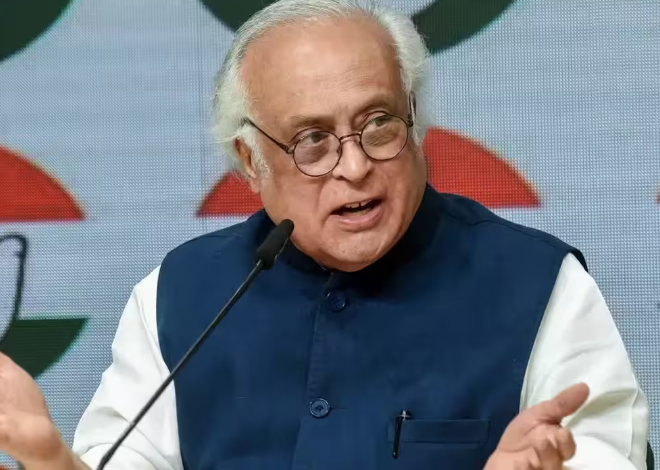
NEW DELHI, Nov 21: The Congress on Saturday accused Prime Minister Narendra Modi and Union Home Minister Amit Shah of continuing to seek a “supertainted” two-thirds majority in the Lok Sabha to secure the passage of a constitutional amendment on delimitation, even as 100 days have elapsed since Parliament’s 2026 Monsoon Session was adjourned sine die.
Congress general secretary Jairam Ramesh said the government had yet to present a fresh proposal or hold meaningful consultations with opposition parties on the proposed changes to parliamentary constituencies.
In a post on X, Ramesh pointed out that the Monsoon Session was adjourned sine die 100 days ago and Parliament had not been prorogued since then.
“The PM-HM jodi is still in search of a supertainted two-thirds majority in the Lok Sabha to get the Constitutional Amendment Bill on Delimitation passed,” he said.
The Congress leader questioned the government’s intentions, arguing that there was little clarity about the contents of the proposed legislation after an earlier delimitation-related bill was defeated decisively in the Lok Sabha on April 17.
He also alleged that the Centre had not discussed any fresh and specific proposals with political parties through a structured consultation process.
Ramesh said no all-party meeting had been convened despite Congress president Mallikarjun Kharge writing four letters to the Prime Minister seeking discussions on the issue.
Emphasising the need for wider political consensus, he argued that delimitation was a significant constitutional exercise with far-reaching implications for parliamentary representation and the federal structure of the country.
According to him, the government should focus on more pressing national concerns rather than attempting to push through a major restructuring of electoral constituencies without adequate consultation.
“There are far more serious and pressing economic, political, social, military and foreign policy challenges that await and demand attention. Far-reaching and comprehensive Delimitation can wait,” Ramesh said.
He referred to historical decisions taken by former prime ministers Indira Gandhi and Atal Bihari Vajpayee to postpone delimitation exercises.
Ramesh recalled that Indira Gandhi had deferred delimitation for 25 years in 1976. Subsequently, the Vajpayee government extended the freeze by another 25 years in 2001, linking the next exercise to the publication of the first Census conducted after 2026.
Describing the decisions as wise and guided by national interests, the Congress leader argued that the existing arrangement should continue until the country reaches its stated development objectives.
Ramesh also referred to Modi’s address at the FICCI conclave on November 19, where the Prime Minister reportedly expressed serious concerns about the condition of the Indian economy.
Taking a swipe at the government’s approach, he suggested that the Prime Minister’s economic concerns made it particularly important to avoid hurried decisions on an issue as consequential as delimitation.
He maintained that discussions on redrawing constituency boundaries required careful consideration, political maturity and extensive consultations with all stakeholders.
The Congress leader further proposed retaining the present strength of the Lok Sabha and the existing state-wise distribution of seats while implementing the constitutionally mandated one-third reservation for women.
Under his suggested arrangement, the current parliamentary composition would remain unchanged until the government achieves its much-publicised Viksit Bharat objective.
Ramesh argued that implementing women’s reservation without immediately undertaking a comprehensive delimitation exercise would allow the country to move forward while avoiding potential disputes over the distribution of parliamentary representation among states.
He said postponing major changes until India becomes a developed nation would provide a more suitable environment for managing the consequences of a nationwide delimitation exercise.
The delimitation debate has emerged as a major political issue because changes in constituency boundaries and parliamentary seat distribution could influence the political representation of different states.
Any substantial increase in Lok Sabha strength or redistribution of seats would require careful consideration of regional representation, population patterns and the federal balance.
The proposed women’s reservation arrangement is also closely connected to the delimitation process, making the timing and implementation of the changes an important point of disagreement between the government and opposition parties.
The Congress has consistently demanded clarity on the government’s plans and has raised concerns about the possible impact of population-based seat redistribution on states that have made significant progress in population control.
The party has also called for broader discussions before any constitutional changes are introduced.
Ramesh’s latest remarks indicate that the opposition intends to maintain pressure on the government over the issue, particularly in the absence of a fresh legislative proposal and formal consultations.
The government, meanwhile, faces the challenge of building sufficient political support for any constitutional amendment requiring a special majority in Parliament.
The debate is expected to remain significant as political parties continue to assess the implications of delimitation, women’s representation and the future composition of the Lok Sabha.

