


Modi Reviews Rs 78,000 Crore Infrastructure Projects, Warns Delays Carry Wider Consequences
At the 55th PRAGATI meeting, the Prime Minister stresses accountability, construction quality and stronger industry partnerships to improve skill development and employment opportunities.
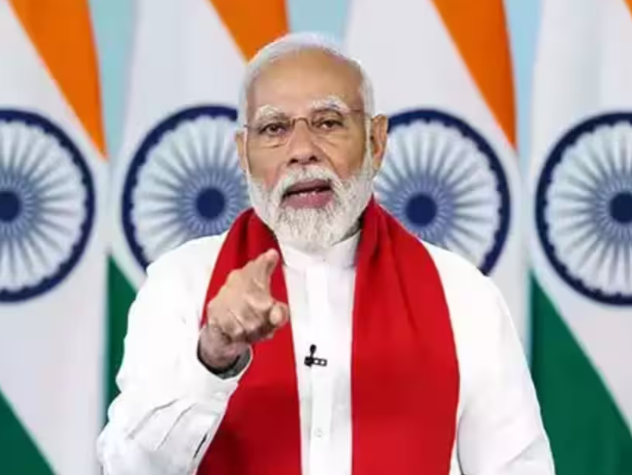
NEW DELHI, Nov 25: Prime Minister Narendra Modi on Wednesday reviewed five major infrastructure projects involving investments of more than Rs 78,000 crore, directing ministries and state governments to address implementation hurdles through clearly defined responsibilities and practical deadlines.
Chairing the 55th meeting of PRAGATI (Pro-Active Governance and Timely Implementation), Modi highlighted that delays in completing infrastructure projects affect more than their financial outlay. They also postpone essential services and economic benefits for citizens, businesses and the country.
The projects examined during the meeting covered the road, railway, power and coal sectors. The Prime Minister also assessed the functioning of the Industrial Training Institute (ITI) ecosystem and progress under the Pradhan Mantri Skilling and Employability Transformation through Upgraded ITIs (PM-SETU) programme, according to a statement issued by the Prime Minister’s Office (PMO).
Sharing details on X, Modi said projects exceeding Rs 78,000 crore had been reviewed, alongside an extensive assessment of vocational training institutions and the implementation of PM-SETU. He described skill development as a key government priority.
The Prime Minister instructed the concerned ministries and state administrations to ensure that unresolved matters are addressed without unnecessary delays. He also underlined that faster execution should not come at the expense of construction standards and project quality.
PRAGATI serves as a technology enabled coordination mechanism between the Centre and state governments, facilitating the resolution of administrative bottlenecks and monitoring the progress of major infrastructure projects and public welfare initiatives.
During the assessment of road infrastructure, Modi called for faster execution and stressed that project performance should be measured by tangible results rather than merely the amount of money allocated.
On coal-related projects, he directed authorities to give adequate attention to rehabilitation and resettlement, ensuring that affected communities are treated with dignity while development work proceeds.
In the power sector, Modi proposed examining innovative approaches to expanding decentralised renewable energy generation, particularly through solar and wind installations.
He suggested developing such facilities closer to consumption centres wherever practical, while considering regional energy resources and local demand. According to the Prime Minister, this approach could strengthen access to dependable and affordable electricity while reducing the burden on existing transmission networks.
A substantial part of the meeting focused on improving the quality and relevance of vocational education through ITIs and the PM-SETU programme.
Modi urged chief ministers and chief secretaries to take an active role in upgrading these institutions and encouraging greater participation from the private sector. He said industries should view this as an opportunity to collaborate with training institutes, modernise their facilities and ensure that courses reflect changing employment requirements.
Emphasising cooperation between educational institutions, state administrations and businesses, he called for partnerships that translate into practical training and better employment prospects for young people.
The Prime Minister also asked public sector undertakings (PSUs) to identify their projected workforce requirements and establish stronger connections with ITIs to facilitate specialised training and recruitment.
He encouraged these enterprises to expand apprenticeship programmes, provide hands-on industrial exposure and increase opportunities for qualified ITI graduates. Such initiatives, he said, could help companies secure appropriately trained personnel while giving students valuable experience in their chosen trades.
Modi further stressed that vocational training must be tailored to the economic and industrial characteristics of individual regions. ITI courses, infrastructure and training capacity should reflect the requirements of existing businesses as well as industries expected to emerge from upcoming investments.
Stronger cooperation between local employers and training institutions could create more jobs within regional economies, reducing the need for young people to migrate elsewhere in search of livelihoods.
The Prime Minister also advocated a ‘3C’ framework comprising ‘Classroom’, ‘Company’ and ‘Career’ to strengthen the vocational education system. The model seeks to connect academic instruction with practical workplace exposure and subsequent career opportunities.
He emphasised that ITIs and industrial organisations must jointly equip trainees with relevant technical expertise, familiarity with real working environments and clear employment pathways.
The meeting reinforced the government’s focus on improving infrastructure delivery through administrative accountability while ensuring that skill development programmes remain closely connected to industry needs and future workforce demand.

