


NIMHANS inaugurates advanced Spectral CT facility to strengthen emergency neurological care
New 256 detector row imaging system to provide round-the-clock diagnostic support for stroke and other critical conditions; Tele-MANAS crosses 50 lakh calls as India expands mental healthcare services.
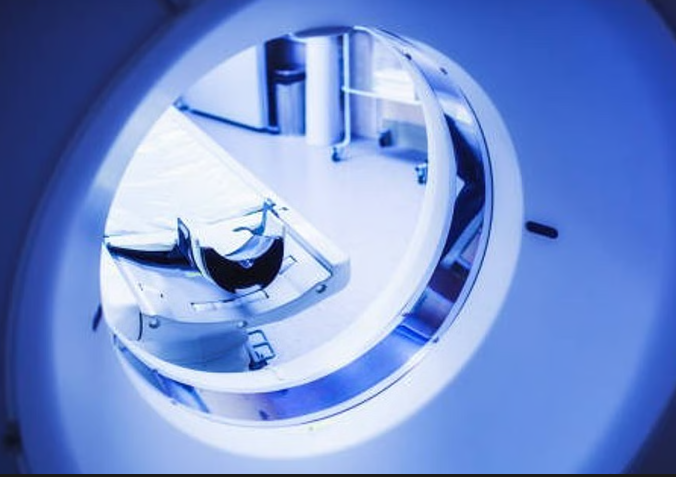
BENGALURU, Nov 27: The National Institute of Mental Health and Neuro Sciences (NIMHANS) has inaugurated an advanced Spectral Computed Tomography (CT) facility at its Emergency Block in Bengaluru, marking a significant step towards strengthening specialised diagnostic services for patients suffering from stroke, neurovascular disorders and other critical medical conditions.
Union Health Secretary Punya Salila Srivastava inaugurated the facility on Friday during her visit to the premier medical institution, where she also reviewed several national initiatives relating to mental healthcare, suicide prevention, addiction treatment and neurological health.
The newly commissioned facility is equipped with the Revolution Apex Elite CT scanner manufactured by GE. The 256-detector-row system incorporates advanced spectral imaging technology and artificial intelligence-based image reconstruction, enabling detailed diagnostic assessment of patients requiring urgent medical attention.
According to the Ministry of Health and Family Welfare, the scanner has been designed to support neurological, cardiac, vascular and whole-body imaging for both adults and children. It will operate round the clock to cater to the substantial patient load at the institute’s Emergency Department.
The introduction of the advanced imaging system is expected to improve the speed and accuracy of emergency investigations, particularly in cases involving stroke and other neurological emergencies, where timely diagnosis can play a decisive role in determining treatment outcomes.
The equipment can help doctors identify brain haemorrhages, arterial blockages and other potentially life-threatening conditions. It will also support investigations involving cardiac and vascular disorders, complications following medical interventions, polytrauma and other complex clinical conditions.
The facility is expected to strengthen the institute’s ability to assess patients requiring specialised emergency care. Rapid imaging is particularly important in suspected stroke cases, as medical teams need to establish the nature of the condition before deciding on an appropriate course of treatment.
During the visit, Srivastava also reviewed the progress of Tele-MANAS, the government’s national tele-mental health programme, which has crossed 50 lakh calls.
The milestone highlights the expanding use of telephone-based mental health support in India, particularly for individuals who may face difficulties accessing specialised psychiatric services in person.
The Tele-MANAS initiative, which stands for Tele Mental Health Assistance and Networking Across States, has been expanded through integration with other helplines, awareness campaigns, counsellor training, accreditation mechanisms and technology-enabled services.
The Health Ministry also reviewed the programme’s five-year vision for 2027–32, which focuses on extending its reach, improving the quality of counselling and strengthening its integration with the wider healthcare system.
The programme is intended to make mental health assistance more accessible by providing people with an additional channel to seek professional support. Its expansion also reflects the growing recognition that mental healthcare needs to be incorporated into routine public health services rather than being treated as a separate area of medical attention.
Srivastava also examined the work of the Centre for Addiction Medicine at NIMHANS, one of six institutions supported under the Ministry’s Tobacco Control and Drug De-addiction Programme.
Between January and October 2026, the centre provided treatment to 25,913 individuals experiencing addiction-related disorders. More than 7,000 patients received follow-up consultations through telemedicine services.
Its specialised treatment facilities include opioid substitution treatment, neuromodulation, counselling and tele-aftercare. These services are intended to support patients through different stages of treatment and recovery.
The centre has also expanded its digital outreach to healthcare professionals through online training and e-learning programmes. Its Addiction Rx mobile application has recorded approximately 19,600 downloads across 145 countries, indicating the international reach of its digital resources.
Community-based activities are another component of its work. These include programmes under the Nasha Mukt Bharat Abhiyaan and the Tobacco Quitline, which has received more than 36,000 calls.
The centre is also working towards expanding digital consultations and developing artificial intelligence-based tools to support the early identification of addiction-related problems, particularly among young people.
The review further covered the NIMHANS–CIP–LGBRIMH Capacity Building Programme, which is being implemented in collaboration with the Central Institute of Psychiatry in Ranchi and the Lokopriya Gopinath Bordoloi Regional Institute of Mental Health in Tezpur.
The initiative focuses on strengthening the professional workforce in four specialised disciplines: psychiatry, clinical psychology, psychiatric social work and psychiatric nursing.
Developing trained personnel in these areas is considered important for improving the availability of mental health services, particularly in regions where access to qualified professionals remains limited.
Another major area of discussion was the work of the NIMHANS Suicide Prevention, Research, Implementation, Training and Engagement Centre, known as N-SPRITE.
The centre’s activities are aligned with the four pillars of the National Suicide Prevention Strategy introduced in 2022.
Its Urban Self-Harm Study has recorded 42,382 cases since 2022, with 31,557 survivors receiving interventions. The reported re-attempt rate among those covered by the study stands at 1.3 per cent.
The suicide prevention initiative is now operational in 37 government hospitals across Karnataka. It also implements programmes such as SURAKSHA, YASHAS and EMPOWER, which focus on suicide prevention at community, youth and workplace levels.
The review also included NIMHANS’ recently launched Wellness Centre, which provides dedicated mental health support to students.
The facility offers counselling, psychotherapy and psychiatric assistance through a multidisciplinary team. Its services include structured short-term therapy, referrals for longer-term treatment where necessary and psychiatric consultations twice a week.
Alongside mental healthcare, the institute’s work in neurological health was also highlighted during the visit.
The Karnataka Brain Health Initiative (KaBHI), developed by NIMHANS in collaboration with the state government and with consultation from NITI Aayog, focuses on the early identification, prevention and treatment of neurological disorders.
The initiative has conducted 2.61 lakh screenings and provided treatment to 32,630 patients.
The National Task Force on Brain Health, constituted by the Union Health Ministry, has proposed the Karnataka initiative as a possible model for replication at the national level.
The proposal reflects an effort to develop a more coordinated approach to neurological healthcare, including early screening, timely referral and access to specialised treatment.
A proposed Hub and Spoke Model for head trauma and stroke care in Karnataka was also discussed. The framework aims to improve access to emergency neurological services through regional treatment centres and coordinated referral networks.
The proposed arrangement includes a Neurohub at KMCRI in Hubballi and an Acute Stroke Emergency and Assessment Centre at NIMHANS.
The inauguration of the Spectral CT facility and the review of the institute’s wider programmes underline the importance of combining advanced diagnostic infrastructure with accessible mental health services, trained professionals and community-based interventions.
With neurological emergencies, addiction-related disorders and mental health concerns requiring different forms of specialised attention, the initiatives reviewed at NIMHANS represent several interconnected areas of healthcare delivery.
The Health Ministry has reiterated its focus on strengthening access to quality medical services through early diagnosis, improved treatment facilities, suicide prevention, addiction care, professional training and wider brain health initiatives.

