


Indian Envoy in Shanghai Attends Workshop on South Asian Studies in China
Pratik Mathur engages with Chinese scholars and students, highlights the role of people-to-people exchanges in strengthening mutual understanding and bilateral ties.
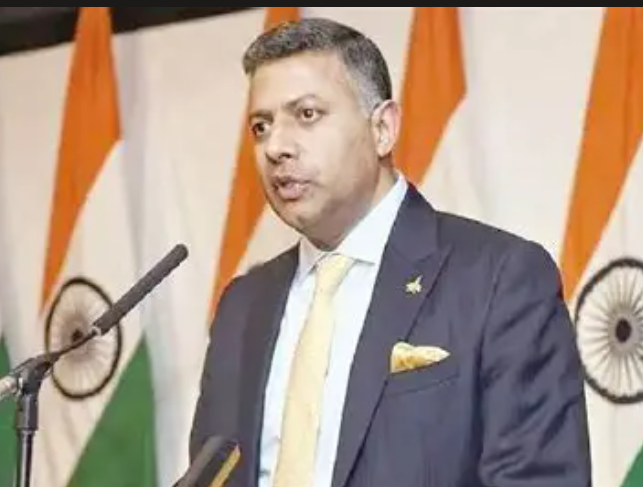
BEIJING, Nov 28: India’s Consul General in Shanghai, Pratik Mathur, participated in the ‘South Asia Studies in China’ workshop, where he interacted with academics and students and emphasised the importance of strengthening people to people connections between India and China.
The event was jointly organised by NYU Shanghai University and the Harvard-Yenching Institute, according to a post shared by the Indian Consulate in Shanghai on X.
During the workshop, Mathur engaged with international relations scholars and students, highlighting how greater interaction between people can contribute to stronger relationships, mutual respect and better understanding between countries.
The Consulate said the interaction provided an opportunity to discuss the importance of academic engagement and exchanges in promoting closer connections between India and China.
In a separate engagement, Mathur met Ye Miao, Vice Mayor and Director of the Management Committee of the Ningbo Economic and Technological Development Zone. Their discussions focused on issues concerning Indian students, traders and professionals residing and working in the region.
The Consulate highlighted the growing trade significance of the Ningbo-Zhoushan port, noting that India was its fifth-largest trading partner in 2025. The port has retained its position as the world’s largest container port for seven consecutive years.
During his visit to Ningbo, the Indian diplomat also toured the historic Ashok Temple, a thousand-year-old religious site named after India’s Emperor Ashoka. It is described as the only surviving temple in China bearing his name.
The temple also houses relics associated with Shakyamuni Buddha. Mathur paid his respects during the visit, the Consulate said.
His engagements highlighted India’s continued efforts to strengthen academic, cultural, commercial and people-to-people ties with different regions of China.

