


A R Rahman Mesmerises Bengaluru Audience With Live Concert
The music maestro combines cinematic melodies, classical influences and contemporary arrangements in a memorable Bengaluru performance.
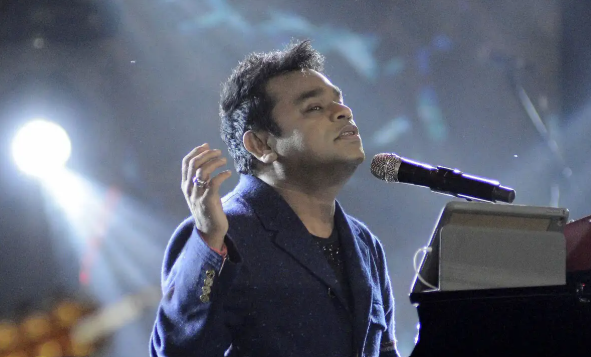
Bengaluru, Oct 5: Music maestro A R Rahman turned Bengaluru into a celebration of music over the weekend with a live performance that brought together his signature film compositions, contemporary arrangements and elements of classical music.
The concert, held on Saturday night, drew music lovers who gathered to experience Rahman’s distinctive combination of cinematic melodies and modern soundscapes.
Unlike many large-scale concerts where audiences often face lengthy delays before the main performance begins, Rahman’s show started on time, allowing the evening to progress smoothly. The punctual beginning was welcomed by attendees and became one of the notable features of the event.
Rahman’s performance demonstrated why his live concerts continue to attract audiences across generations. His music has remained an important part of Indian popular culture for decades, while his ability to blend different musical traditions has helped him develop a distinctive identity.
The Bengaluru event featured a mixture of classical influences, contemporary sounds and songs from his extensive film catalogue. The arrangements were designed for a large live setting while retaining the musical character associated with his recordings.
For many attendees, the concert offered an opportunity to hear familiar compositions in a different format. Live performances allow musicians to reinterpret songs through extended arrangements, changing instrumentation and interaction with the audience.
Rahman has built much of his reputation around experimentation. His work frequently combines Indian classical traditions with electronic production, Western orchestration and global musical influences.
That approach was again visible during the Bengaluru performance.
The concert also highlighted the enduring popularity of film music as a live entertainment format in India. While streaming platforms have transformed the way audiences discover and consume songs, large concerts continue to provide an experience that recorded music cannot replicate.
The presence of thousands of listeners in a shared venue created a different atmosphere from simply listening to a song through headphones or speakers.
Rahman’s career has been closely connected to this evolution. He emerged as a major force in Indian film music during the 1990s and gradually expanded his work into international projects.
His compositions have appeared in Tamil, Hindi and other Indian-language films, while his international projects have introduced his music to audiences outside India.
Over the years, his concerts have similarly become large cultural events rather than simply promotional performances.
The Bengaluru show was notable for its emphasis on musical presentation. Rather than relying solely on spectacle, the performance allowed the compositions and musicians to remain central to the evening.
Rahman’s signature fusion style was particularly effective in the live setting, where changes in rhythm and instrumentation could be experienced more dynamically.
The audience response reflected the emotional connection many listeners have with his music. Several of his compositions are associated with important moments in Indian cinema, meaning that live performances can also evoke memories connected to particular films and characters.
For younger listeners, the concert offered a chance to experience the music of an artist whose influence extends across multiple generations. Older fans, meanwhile, could revisit compositions that have remained popular long after their original release.
This cross-generational appeal has been one of Rahman’s greatest strengths.
His music has also played an important role in introducing Indian musical ideas to international listeners. His work has frequently crossed conventional boundaries between genres, helping demonstrate that Indian film music can incorporate a wide range of global influences without losing its cultural identity.
The Bengaluru performance continued that tradition.
The successful organisation of the concert also stood out. Large music events often involve complex arrangements covering sound, lighting, stage management, crowd movement and performer coordination. The smooth flow of the evening helped the audience remain focused on the performance itself.
Rahman’s ability to command a large venue without relying excessively on theatrics demonstrated the strength of his musical reputation.
The event comes as live entertainment continues to grow across India’s major cities. International artists, Indian musicians and film stars are increasingly using concerts to connect directly with audiences.
For established musicians such as Rahman, these performances provide a way to revisit familiar work while also introducing newer arrangements and ideas.
Bengaluru has emerged as an important destination for such events because of its large young population, strong music culture and diverse audience.
Rahman’s appearance added another major name to the city’s expanding live-entertainment calendar.
The response to the concert suggests that audiences continue to value shared musical experiences even as digital platforms make songs more accessible than ever.
For Rahman, the Bengaluru performance was another reminder of the lasting power of music that crosses linguistic, generational and cultural boundaries.
The evening ended with audiences celebrating a performer whose career has consistently combined innovation with emotional storytelling. His ability to bring together classical traditions, contemporary production and cinematic music ensured that the concert offered more than a collection of popular songs.
It became a showcase of the musical language that has defined A R Rahman’s career and helped establish him as one of India’s most influential composers.

