


Akhilesh Yadav Demands Call Record Probe of All Ayodhya Ram Temple Staff
The Samajwadi Party chief has demanded scrutiny of call detail records of everyone employed at the Ram temple complex, alleging political links behind the donation embezzlement controversy and accusing the BJP of placing power above faith.
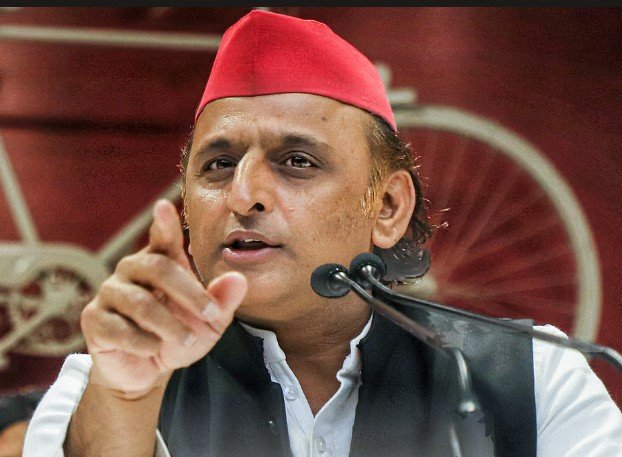
New Delhi, July 09 : Samajwadi Party president Akhilesh Yadav on Thursday intensified his attack on the BJP over the alleged embezzlement of donations at the Ayodhya Ram temple, demanding that investigators examine the call detail records of all those employed at the temple complex. He alleged that such an exercise would expose deep political links and trigger major embarrassment for the ruling party in Uttar Pradesh.
Addressing reporters in Lucknow, the former Uttar Pradesh chief minister said the controversy surrounding the handling of donations at the Ram temple had gone far beyond a routine investigation and had now become a matter of widespread public concern. Referring to the Special Investigation Team probe into the alleged diversion of offerings made by devotees, Yadav said the issue had entered “every household” and was raising serious questions about accountability in one of the country’s most high-profile religious institutions.
Yadav argued that the investigation should not be limited to the individuals already arrested in the case, but should extend to all those associated with the functioning of the temple complex. He specifically demanded a review of call detail records of employees and others working within the Ram temple system, claiming that such a probe would reveal strong connections with the BJP.
According to the Samajwadi Party chief, a detailed examination of phone records could uncover the political network behind the people handling temple affairs and expose what he described as the BJP’s involvement in the broader controversy. He claimed that if those communication records were scrutinised, an overwhelming majority of the individuals linked to the temple administration would be found to have ties to the ruling party. Such a revelation, he said, would create serious turmoil within the BJP and further deepen the political fallout from the donation scandal.
Akhilesh Yadav also used the occasion to accuse the BJP of placing electoral gain above religious values. He alleged that the party had repeatedly reshaped its ideological posture to suit political needs and suggested that the Ayodhya controversy was another example of faith being subordinated to power and money. In his remarks, Yadav said the events surrounding the temple donations had shown that those who assigned responsibilities were no longer visible, while those entrusted with day to day tasks were now facing public scrutiny and legal questions.
He argued that the controversy had shaken the confidence of devotees who regard Lord Ram as a symbol of morality, discipline and righteousness. According to Yadav, the matter was not merely about alleged financial irregularities but about the emotional and spiritual trust of millions of followers of Sanatan Dharma in India and abroad. He said the reported allegations involving donations and offerings had disturbed devotees deeply because, in the religious tradition, offerings made in the name of faith are considered sacred.
The SP leader framed the alleged misuse of donations as a moral issue as much as a legal one. He said that if the accusations about the handling of temple offerings were true, they would amount to a grave betrayal of public faith. In his view, the controversy had already become a subject of discussion across households because of the symbolic weight of the Ram temple and the reverence attached to it. Yadav maintained that for followers of Sanatan Dharma, misappropriation of offerings given to a temple would be viewed as an especially serious wrongdoing.
Yadav also responded to recent allegations made against him by BJP MP Nishikant Dubey, who had publicly claimed that the Samajwadi Party chief had links with one of the accused in the donation theft case, Ramshankar alias Tinnu Yadav. Rejecting the political line of attack, Akhilesh questioned why the BJP had not ensured the registration of a formal FIR if it truly possessed evidence to support such claims. He accused the ruling party of selectively using the police and legal machinery against opposition leaders while failing to act on allegations when it came to its own political narrative.
The Samajwadi Party chief said the pattern of FIRs and investigations in the state had become heavily one-sided, with complaints by opposition figures allegedly being ignored while cases were quickly pursued against those critical of the government. He suggested that the BJP’s conduct in the Ayodhya temple donation case reflected a broader political strategy of deflection raising allegations against rivals while stepping back from questions about those linked to the temple administration itself.
His comments come at a time when the alleged embezzlement of donations at the Ram temple has become one of the most politically sensitive controversies in Uttar Pradesh. The Special Investigation Team probing the case has so far arrested eight accused in connection with the alleged siphoning off of cash offerings made by devotees. The arrests have intensified public and political attention, especially because of the central place the Ayodhya Ram temple occupies in both religious sentiment and the BJP’s political identity.
The fallout from the case has already reached the temple trust. Amid mounting scrutiny, the trust earlier this week accepted the resignations of its general secretary Champat Rai and member Anil Mishra. At the same meeting, Krishna Mohan was appointed as interim general secretary, a move seen as an effort to stabilise the trust’s administration and contain the damage caused by the controversy. However, the resignations have also fuelled speculation about deeper internal concerns over the handling of the matter.
For the BJP, the donation row has become particularly uncomfortable because Ayodhya is not merely a religious issue but a central political symbol. The Ram temple has long been intertwined with the party’s ideological and electoral narrative, and any allegation of wrongdoing involving temple funds carries the potential to damage its moral positioning among supporters. Opposition parties, particularly the Samajwadi Party, appear determined to ensure that the controversy remains in the spotlight and is framed not only as a criminal investigation but as a test of the BJP’s claims about faith, probity and accountability.
Akhilesh Yadav’s intervention signals that the Samajwadi Party intends to push the issue aggressively in the political arena. By demanding a call record audit of all temple employees, he has tried to widen the scope of the controversy beyond the eight arrests already made and shift focus toward the structure of authority and influence behind the temple’s management. The demand also reflects a strategy of connecting alleged financial wrongdoing to political accountability, rather than treating it as an isolated criminal case.
The controversy could carry broader implications in Uttar Pradesh politics if it continues to gather momentum. Ayodhya occupies a unique emotional and symbolic space in the state’s political landscape, and allegations involving temple donations can resonate far beyond the immediate legal facts of the case. For the opposition, it presents an opportunity to challenge the BJP on an issue where faith, governance and public trust intersect. For the ruling party, it is a sensitive matter that requires careful handling to prevent reputational damage.
At the heart of the issue lies a question that is likely to dominate the coming days: whether the alleged embezzlement was the act of a limited group of accused individuals or whether the investigation could uncover wider administrative, political or institutional connections. Akhilesh Yadav’s demand for scrutiny of phone records is clearly aimed at pushing investigators and the public toward the second possibility.
The BJP has yet to fully respond to the latest set of allegations in the manner Yadav appears to be inviting. But the pressure is likely to intensify as the SIT probe progresses, especially if further details emerge about the movement of funds, the role of temple functionaries and the chain of responsibility inside the trust and the temple complex. Opposition parties are expected to continue framing the matter as a question of betrayal of devotees rather than merely an accounting irregularity.
For now, the Ayodhya temple donation case remains both a legal investigation and a high-voltage political flashpoint. With arrests already made, resignations accepted and new allegations being traded publicly, the issue is rapidly moving beyond the confines of a police probe into the centre of Uttar Pradesh’s political discourse. Akhilesh Yadav’s latest remarks have ensured that the controversy will remain in the headlines, with the focus now shifting to whether the investigation broadens in the way he has demanded and what that might reveal about the intersection of religion, money and politics in one of India’s most closely watched institutions.

