


Amit Shah Calls for Zero Infiltration, Stronger Focus on Jammu Region & Strategic Heights
Home Minister Reviews J&K Security for the Third Time in a Week, Emphasizes Unified Approach to Counter Terrorism
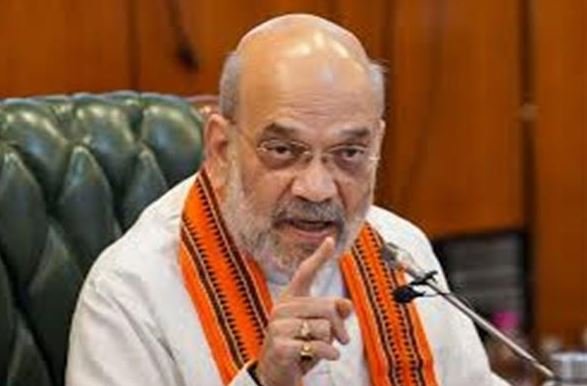
Jammu, Feb 11: Union Home Minister Amit Shah, in his third high-level security review meeting within a week, reinforced the government’s unwavering commitment to a terror-free Jammu and Kashmir. In a decisive move, he directed the Border Security Force (BSF) to ensure zero infiltration from the International Border (IB) while stressing the importance of dominating strategic heights in the Jammu region to prevent terrorist movements.
The meeting, attended by the heads of the Intelligence Bureau (IB), Central Reserve Police Force (CRPF), Border Security Force (BSF), and other senior security officials, focused on enhancing operational coordination and intelligence-sharing to dismantle the terror network in the Union Territory.
This marks Shah’s third security assessment in just seven days—his first meeting on February 4 in New Delhi included top Army officials, followed by another on February 5 with Jammu and Kashmir Police, intelligence agencies, and civil administration. Lieutenant Governor Manoj Sinha participated in the earlier discussions, while senior officials from the Ministry of Home Affairs (MHA) were present in all the meetings.
Reaffirming the Modi government’s commitment to eradicating terrorism from J&K, Shah instructed the BSF to tighten border surveillance, enhance the Border Grid, and leverage advanced technology to prevent any infiltration attempts. The BSF is responsible for securing the IB in Jammu, Samba, and Kathua districts, regions often exploited by infiltrators.
Shah also directed the CRPF to maintain close coordination with the Indian Army and J&K Police, ensuring that no security gaps remain in the region. Reviewing the force’s winter action plan, he emphasized comprehensive area domination to prevent terrorist regrouping and infiltration attempts in sensitive zones.
There have been intelligence reports indicating terrorist movement in the upper reaches of districts such as Doda, Kishtwar, Udhampur, Reasi, Kathua, Rajouri, and Poonch—regions where militants launched attacks last year, targeting security forces, pilgrims, and Village Defence Guards (VDGs). To counter this, security forces, including the Army, CRPF, Jammu and Kashmir Police, and Special Operations Group (SOG), have reinforced their positions in these areas to neutralize any threats.
Reviewing the intelligence infrastructure in J&K, Shah instructed agencies to expand their coverage and penetration to generate high-quality actionable intelligence. He reiterated the importance of advanced surveillance technology in intelligence gathering and counterterror operations.
Additionally, Shah emphasized tightening the grip on terror financing, dismantling narco-terror networks, and breaking the entire terror ecosystem in Jammu and Kashmir—priorities at the core of the Modi government’s “Zero Terror Plan.”
Acknowledging the role of misinformation in fueling unrest, Shah directed security agencies to counter anti-national propaganda effectively by ensuring that the correct narrative reaches the public. He stressed the need for sustained synergy among intelligence and security agencies while harnessing technology-driven solutions to combat terrorism.
Shah urged all security agencies to remain on high alert, work in a synchronized manner, and continue proactive counterterror operations. Assuring unwavering government support, he affirmed that all necessary resources will be provided to ensure a secure, stable, and terror-free Jammu and Kashmir.
The meeting was attended by Union Home Secretary Govind Mohan, Director of Intelligence Bureau Tapan Deka, and other top security officials, reflecting the Centre’s high-priority focus on the security landscape of the region.

