


Arunachal Pradesh Conducts First Kidney Transplant, Expanding Access to Advanced Care
State records its first renal transplant at TRIHMS as authorities seek to reduce the need for patients to travel outside Arunachal Pradesh for specialised treatment.
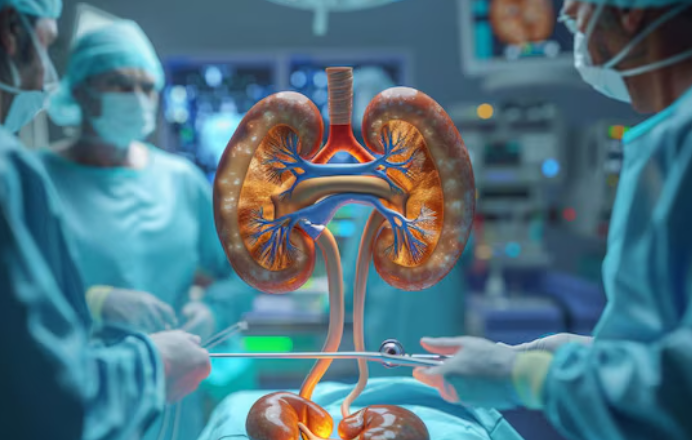
ITANAGAR, Sept 28: Arunachal Pradesh has recorded a major milestone in its healthcare system with the successful completion of the state’s first kidney transplant at the Tomo Riba Institute of Health and Medical Sciences (TRIHMS) in Naharlagun, officials said on Monday.
Chief Minister Pema Khandu announced the development and described the procedure as an important step towards strengthening advanced medical services within the state. The transplant was performed on Sunday with the assistance of a team of senior transplant specialists from New Delhi-based Sir Ganga Ram Hospital.
The procedure marks a significant expansion of the kind of treatment available within Arunachal Pradesh, where patients requiring highly specialised renal care have often had to seek treatment outside the state. Authorities have been working to develop specialist capabilities at TRIHMS so that more complex procedures can eventually be undertaken locally.
Khandu said the state government had been collaborating with Sir Ganga Ram Hospital for the past three years to build the skills of doctors and nurses at TRIHMS. The partnership has included efforts to strengthen clinical expertise and prepare the institute for advanced procedures such as organ transplantation.
The first transplant represents the outcome of that capacity building effort and could provide a foundation for further development of renal medicine in the northeastern state.
Kidney transplantation is a highly specialised procedure that requires coordinated teams covering surgery, anaesthesia, nephrology, critical care, pathology, nursing and post-operative management. Successful transplantation also depends on continuing medical supervision after surgery, including monitoring of the recipient and management of medicines used to prevent rejection of the transplanted organ.
For patients with advanced kidney disease, access to transplantation close to home can reduce the logistical difficulties associated with travelling long distances for treatment. The availability of such services can also help families avoid repeated journeys to major hospitals in other parts of the country for specialist consultations and procedures.
The development is particularly relevant to Arunachal Pradesh because of its geography. The state has large remote and difficult-to-reach areas, making access to highly specialised healthcare more complicated for many residents. Establishing advanced treatment facilities within the state can therefore form part of a broader effort to bring specialist services closer to patients.
The government has also been working on strengthening human resources in the health sector. Earlier this year, authorities said the state was seeking to fill specialist vacancies and expand the pool of doctors available in government institutions. The objective has been to improve the availability of specialised services and reduce dependence on facilities outside Arunachal Pradesh.
The first renal transplant at TRIHMS also highlights the importance of collaboration between state institutions and established medical centres. Rather than relying only on infrastructure, transplantation programmes require experienced professionals, trained support staff, protocols for donor and recipient assessment, laboratory facilities, intensive-care capacity and arrangements for long-term follow-up.
The involvement of specialists from Sir Ganga Ram Hospital provided additional expertise during the initial procedure. According to the chief minister, the partnership with the Delhi hospital had been focused on developing the capabilities of TRIHMS over several years.
The successful operation could consequently become a starting point for a wider transplant programme rather than an isolated procedure. Sustaining such a programme would require regular access to trained transplant teams, appropriate equipment, blood-bank and laboratory support, infection-control systems and mechanisms for monitoring patients after surgery.
Organ donation and transplantation also involve a broader healthcare ecosystem. Identification of potential donors, medical assessment, legal procedures, counselling of families, organ retrieval, transportation and matching of recipients all have to function effectively for transplantation services to expand.
For patients already dependent on dialysis, transplantation can represent an alternative to long-term renal replacement therapy when they are medically eligible and a suitable donor is available. However, transplantation is not a universal option for every patient, and decisions depend on individual clinical circumstances and specialist assessment.
The establishment of transplant capacity at TRIHMS therefore adds another level to Arunachal Pradesh’s healthcare infrastructure while complementing existing renal services.
The state government’s broader aim, as outlined by Khandu, is to ensure that patients can receive treatments within Arunachal Pradesh whenever the required facilities and expertise can be developed locally. The first kidney transplant is being viewed in that context as part of the continuing expansion of specialised healthcare rather than simply as a single surgical achievement.
For TRIHMS, the procedure could also strengthen its role as a referral centre for patients from across Arunachal Pradesh. As specialist departments grow, the institute may be able to provide a wider range of complex treatments that previously required referral to hospitals in Delhi, Assam or other parts of the country.
The achievement comes at a time when healthcare systems across India are seeking to expand specialised services beyond major metropolitan centres. Building such capacity in northeastern states can help address geographical barriers and improve access for populations living far from established tertiary-care institutions.
The first renal transplant at TRIHMS consequently carries significance both for the individual patient and for the state’s healthcare development. It demonstrates that advanced surgical programmes can be built through institutional partnerships, specialist training and investment in medical infrastructure.
For Arunachal Pradesh, the immediate priority will now be to maintain the expertise and systems required for continued transplant care. If those capabilities are strengthened, the state could gradually expand access to other specialised renal services and reduce the need for patients to travel outside the region for complex treatment.
The milestone has thus opened a new chapter in Arunachal Pradesh’s effort to develop a more comprehensive healthcare system, with advanced organ transplantation becoming part of the services available within the state.

