


Asian Stocks Climb on Wall Street Rally as Oil Prices Rise
Markets Track Strait of Hormuz Developments Amid Global Energy Concerns and Central Bank Week Ahead
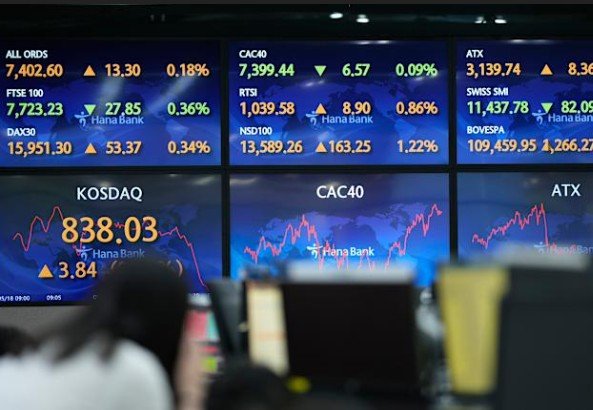
Asia, Mar 17 : Asian equities opened higher on Tuesday, following Wall Street’s rebound fueled by optimism over increased tanker movement through the Strait of Hormuz. Japan, South Korea, and Australia saw early gains, lifting the MSCI Asia Pacific Index by 0.8%. The dollar remained steady after its largest drop in over a month, while Treasuries were largely unchanged as Monday’s dip in oil tempered inflation worries.
Brent crude rebounded to around $102 per barrel after a 2.8% decline in the previous session. U.S. equity futures showed slight weakness, signaling that early-week optimism may be softening. Risk appetite was buoyed by expectations that major economies could release petroleum reserves to offset supply disruptions, as President Donald Trump renewed calls for allies to help safeguard the Strait.
“As the conflict with Iran continues, oil prices are dictating market sentiment, with Strait of Hormuz headlines driving investor behavior,” said Bob Savage, head of markets strategy at BNY. Concerns remain over how central banks will respond amid energy and inflation risks.
Technology stocks continued to lead Wall Street gains, with Nvidia Corp. climbing 1.7% after projecting at least $1 trillion in revenue from AI chips through 2027. Meanwhile, delays in a potential U.S.-China summit, requested by Trump, suggest the war with Iran could extend longer than expected, potentially weighing on global equities, according to Hideyuki Ishiguro, chief strategist at Nomura Asset Management.
The International Energy Agency (IEA) confirmed it has additional emergency oil reserves available if needed. U.S. Treasury Secretary Scott Bessent noted that oil prices could fall below $80 in the coming months, depending on the duration of the conflict.
The partial closure of the Strait of Hormuz has forced UAE and Kuwait to reduce oil output, though some vessels are finding passage. The Japanese yen is under pressure, approaching 160 per dollar, reflecting Japan’s reliance on imported energy. Market participants expect the Bank of Japan (BOJ) to maintain rates this week, with a possible quarter point hike in July.
U.S. Treasury yields fell four to six basis points on Monday as bond markets rallied. Investors now turn to a busy central bank week, with the Federal Reserve expected to hold rates steady on Wednesday. The Bank of England, European Central Bank, and Reserve Bank of Australia will also deliver policy decisions, with the RBA widely anticipated to raise rates later Tuesday.
“Until the Strait of Hormuz returns to normal operations, risks to energy markets and the global economy will persist,” noted Kyle Rodda of Capital.com. “Central bank responses to these challenges will begin to crystallize in the coming days.”

