


Assam Opens Applications for Student Financial Assistance Schemes
Chief Minister Himanta Biswa Sarma launches the application process for Nijut Moina and Nijut Babu schemes while releasing funds to rebuild flood-hit schools and support affected students.
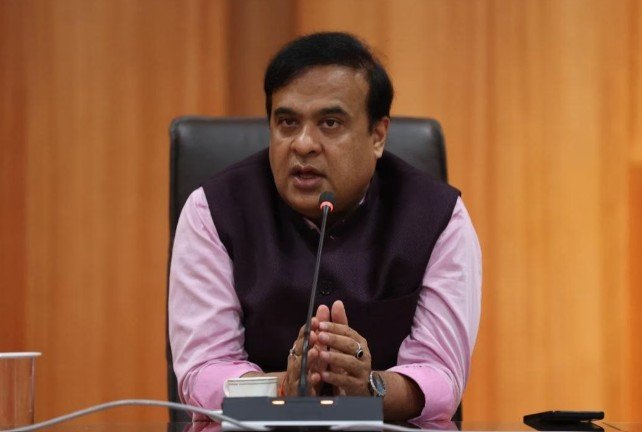
GUWAHATI, Aug. 6: The Assam government has started the application process for its flagship student welfare initiatives, Nijut Moina and Nijut Babu, while simultaneously announcing financial support for schools and students affected by recent floods in the state’s eastern districts.
Chief Minister Himanta Biswa Sarma officially launched the distribution of application forms for both schemes at an event in Guwahati. The programmes are designed to provide financial aid to students pursuing higher secondary, undergraduate and postgraduate education, helping reduce the cost of continuing their studies.
Alongside the launch, the chief minister released Rs 15.86 crore for 793 flood-affected schools across Sivasagar, Charaideo, Jorhat and Golaghat districts. The funding aims to restore damaged educational institutions and ensure that academic activities resume without prolonged disruption.
The state government also sanctioned more than Rs 4.26 crore from the Chief Minister’s Relief Fund (CMRF) for 21,025 students in Sivasagar and Charaideo. The assistance will help students replace books, uniforms and other educational materials lost during the recent floods.
Speaking at the event, Sarma said the two scholarship initiatives are intended to encourage academic excellence and motivate young people to pursue higher education with dedication. He expressed confidence that beneficiaries would inspire more students to remain committed to their studies.
The chief minister reiterated that the Mukhya Mantrir Nijut Moina Scheme was introduced primarily to discourage child marriage by supporting girls in continuing their education. He noted that financial assistance under the Mukhya Mantrir Nijut Babu Scheme is comparatively lower because the social objective of addressing child marriage is specifically linked to girls’ education.
According to the government, the Nijut Moina Scheme was initially planned to benefit 10 lakh girl students across Assam. During 2024-25, around 1.6 lakh girls received assistance, which expanded to nearly four lakh beneficiaries in 2025-26. The government expects another one lakh girls to be included during the current financial year.
The Nijut Babu Scheme, which supported 50,000 boys last year, will now expand to cover an additional 70,000 students, increasing the total number of beneficiaries to approximately 1.2 lakh.
The chief minister also announced that girl students enrolled in polytechnic courses and those studying in the seventh semester of integrated postgraduate programmes will become eligible for financial support from this year, widening the reach of the initiative.
Sarma clarified that only students maintaining regular attendance, discipline and consistent academic performance would qualify for assistance under the schemes. He added that the government intends to increase the financial support available under the Nijut Moina Scheme in the future to further ease the educational expenses borne by families.
Encouraging students to prepare for a rapidly changing job market, the chief minister advised them to develop expertise in an additional field alongside their primary course of study. He remarked that possessing only a conventional undergraduate or postgraduate degree may no longer be sufficient in an increasingly competitive environment.
Highlighting another area of concern, Sarma urged greater participation in science education, stating that Assam’s long-term development depends on producing more students with scientific and technical skills.
Addressing the impact of the recent floods, he said several schools in eastern Assam suffered structural damage or became unusable due to silt accumulation. The government, he said, is committed to restoring educational infrastructure quickly so that students in the affected districts do not fall behind their peers. Institutions found to have sustained permanent damage will receive additional assistance following a detailed assessment.

