


Bangladesh Seeks Conducive Environment for PM Rahman’s India Visit
Dhaka links the proposed New Delhi trip to its demand for Sheikh Hasina’s extradition as uncertainty continues over the Bangladesh prime minister’s BRICS-related visit.
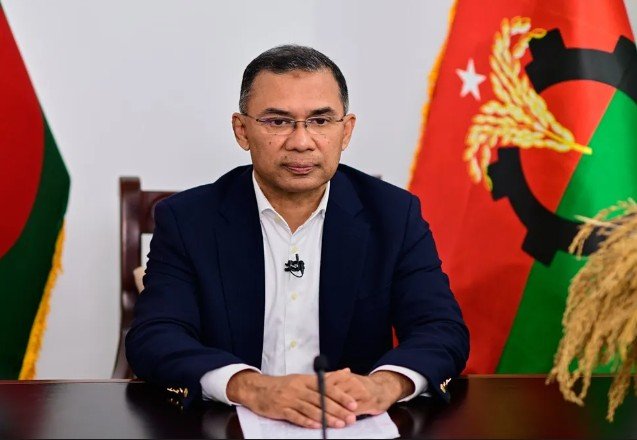
DHAKA, Aug 16: Bangladesh has said that an “appropriate environment” must be created for Prime Minister Tarique Rahman’s proposed visit to India, amid uncertainty over his participation in events linked to the BRICS Summit in New Delhi on September 12-13.
Bangladesh Foreign Ministry spokesperson Shahidul Karim said Dhaka had already communicated its position regarding the proposed trip. His remarks came after Rahman met Indian High Commissioner Dinesh Trivedi last week and raised the issue of former prime minister Sheikh Hasina’s extradition.
“We have made our position clear on this matter. We are of the view that an appropriate environment needs to be created for this visit,” Karim was quoted as saying by The Daily Star.
According to Bangladeshi media reports, the reference to an “appropriate environment” was linked to Dhaka’s continuing demand that India hand over Hasina, who has been living in India since leaving Bangladesh following her ouster in August 2024.
The issue has emerged as a major point of contention in bilateral relations. Dhaka has repeatedly sought Hasina’s extradition, while New Delhi has said the request is being examined under applicable law and established legal procedures.
Uncertainty over New Delhi trip
Questions have remained over whether Rahman will travel to India for the BRICS-related engagements.
Following Rahman’s meeting with the Indian envoy, Bangladesh Foreign Minister Khalilur Rahman said the BRICS invitation was not issued to the prime minister in his personal capacity. He said it was addressed to the chairperson of the Bay of Bengal Initiative for Multi-Sectoral Technical and Economic Cooperation (BIMSTEC).
Bangladesh currently holds the chairmanship of BIMSTEC, a regional grouping comprising Bangladesh, Bhutan, India, Myanmar, Nepal, Sri Lanka and Thailand.
India, however, clarified on August 14 that Rahman had been invited separately for a bilateral visit as well as for the outreach session of the BRICS Summit.
The clarification indicated that New Delhi has extended two invitations — one for bilateral discussions and another connected with the BRICS outreach programme.
Hasina issue strains bilateral ties
Relations between India and Bangladesh have remained strained since Hasina was removed from power after large-scale student-led protests in August 2024. She subsequently travelled to India.
Tensions increased after Hasina addressed the media from New Delhi on August 5 and said she remained determined to return to Bangladesh in December to help restore democracy and put the country back on what she described as the right track.
The remarks triggered a strong reaction from Dhaka, which accused Hasina of making statements that hurt public sentiment and could complicate efforts to improve relations with India.
Bangladesh has described Hasina as an absconding and convicted individual facing serious allegations. In November 2025, a special tribunal in Bangladesh sentenced her to death in absentia in connection with alleged crimes against humanity during the suppression of protests.
India, meanwhile, has maintained that it had no involvement in the media event involving Hasina and did not endorse statements made there concerning the Bangladesh government.
Extradition remains a key issue
Dhaka continues to insist that Hasina should return to Bangladesh to face legal proceedings. The government has maintained that she must surrender and face the law if she comes back.
For India and Bangladesh, the extradition request has consequently become an important issue in their wider diplomatic engagement. The matter could also influence the atmosphere surrounding any high-level meeting between Rahman and Indian officials.
With the BRICS Summit approaching, attention is now focused on whether the two sides can resolve the diplomatic concerns surrounding the proposed visit and create conditions acceptable to Dhaka for Rahman’s travel to New Delhi.
The development comes at a sensitive stage in India-Bangladesh relations, with both countries facing the challenge of maintaining diplomatic engagement while addressing disagreements over Hasina’s future.

