


BJP Slams Sonia Gandhi, Says Her Memoir Should Have Been Titled ‘Whitewashing’ for Glossing Over Historical Wrongs
BJP leaders criticise Sonia Gandhi's book Belonging: A Journey of Love, questioning her account of the Emergency and the 1984 anti-Sikh riots while accusing the Congress of avoiding accountability for past events.
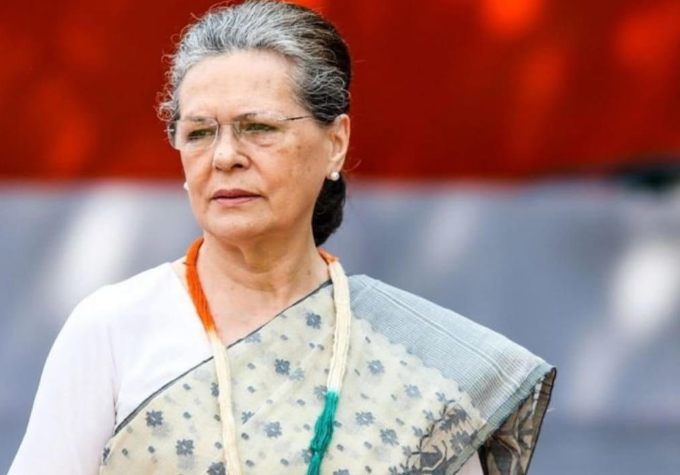
NEW DELHI, Nov 10: The Bharatiya Janata Party (BJP) on Tuesday launched a sharp attack on Congress leader Sonia Gandhi over her newly released memoir, accusing her of attempting to downplay historical controversies involving the Congress and the Nehru-Gandhi family.
The BJP said Gandhi’s book, Belonging: A Journey of Love, should have been titled “Whitewashing”, alleging that it presents a softened account of major political events, including the Emergency imposed in 1975 and the 1984 anti-Sikh riots.
The criticism came after the memoir, published by HarperCollins India, became available in bookstores on Tuesday. The book offers Gandhi’s reflections on her personal journey, political experiences and several significant developments in India’s political history.
BJP national spokesperson C R Kesavan alleged that the Congress leader had attempted to defend her family’s political legacy while avoiding responsibility for controversial decisions taken during Congress rule.
In a post on X, Kesavan said the memoir appeared aimed at covering up historical wrongdoings associated with the Nehru-Gandhi family and the Congress party. He questioned Gandhi’s portrayal of events surrounding the Emergency and the anti-Sikh violence of 1984.
Gandhi has described the Emergency as a mistake and indicated that former prime minister Indira Gandhi eventually recognised the consequences of imposing it. She also suggested that keeping her younger brother-in-law Sanjay Gandhi under control might have prevented much of the damage that followed.
The BJP, however, objected to the account, arguing that it did not adequately address the responsibility of the Congress leadership during that period.
The party also questioned Gandhi’s description of the 1984 anti-Sikh riots, which followed the assassination of then prime minister Indira Gandhi on October 31, 1984.
In her memoir, Sonia Gandhi described the violence as a tragic and shameful chapter in India’s history. She maintained that her husband, former prime minister Rajiv Gandhi, did not harbour hatred or prejudice but was placed in an extraordinary political situation when administrative control had weakened and widespread violence followed.
She also referred to conflicting accounts regarding the delay in deploying the Army to control the situation in Delhi.
According to Gandhi’s account, then Army Chief General A S Vaidya had received instructions on the night of the assassination but reportedly decided against mobilising nearby units because they were manned by Sikh soldiers, fearing that their deployment might worsen the situation.
Reacting to these remarks, BJP leader H S Phoolka accused Gandhi of attempting to absolve Rajiv Gandhi of responsibility by shifting attention towards the then Army chief.
Phoolka argued that the deployment of Army personnel was the responsibility of the civil administration once the forces were available in Delhi. He questioned what steps Rajiv Gandhi had taken against those responsible for any delay.
The BJP leader also referred to Rajiv Gandhi’s controversial remarks following the violence, particularly his statement comparing the assassination of a large tree to the earth shaking, alleging that it was used to justify the killings.
Another BJP spokesperson, Pradeep Bhandari, accused Gandhi of selectively discussing historical events in her memoir. He also raised questions about the absence of references to the Bofors controversy, particularly the alleged links involving Italian businessman Ottavio Quattrocchi and Rajiv Gandhi.
Bhandari further claimed that Gandhi’s account reflected political considerations and criticised her references to the Babri Masjid.
Kesavan also questioned Gandhi’s expression of grief over the demolition of the Babri Masjid, asking whether she had shown similar concern for the victims of the 1984 anti-Sikh violence.
He additionally raised questions about her response to terrorist attacks, including the 26/11 Mumbai attacks, and the deaths of security personnel in militant violence.
The BJP spokesperson also criticised what he described as an attempt to normalise the Emergency, arguing that the period represented a serious setback for democratic institutions and civil liberties.
Union Minister Giriraj Singh also targeted the Congress leader, alleging that her memoir exposed what he described as selective expressions of sympathy on political and religious issues.
Speaking to PTI Videos, Singh claimed that Gandhi’s emotional responses were influenced by electoral considerations. He alleged that she remained silent when Indian citizens and security personnel were killed in terrorist attacks and when violence was carried out by Naxalites.
Singh also responded to Gandhi’s remarks about Prime Minister Narendra Modi, whom she said generally avoided eye contact when they encountered each other.
The Union minister dismissed the observation, saying Modi had no obligation to maintain eye contact with everyone he met. He asserted that the prime minister directly confronted India’s adversaries and spoke confidently about national interests.
In her memoir, Gandhi has also discussed her relationship with Modi, acknowledging that they have had practically no meaningful personal interaction. She wrote that when they come face-to-face, he generally appears to avoid looking at her.
Gandhi further acknowledged that Modi had risen through the organisational structure of the Rashtriya Swayamsevak Sangh (RSS), although she questioned whether his early life was as humble as portrayed by his publicity machinery.
She described Modi as someone pursuing his own vision of India, while asserting that she remained committed to a different political and ideological vision.
The memoir has therefore triggered a fresh political exchange between the BJP and Congress, with competing interpretations of significant events from India’s political past once again becoming a subject of debate.

