


BSE Q2 Results: Profit Surges 45% to Rs 809 Crore as Derivatives Trading Recovers
India's second-largest stock exchange reported a 45 per cent year-on-year increase in September quarter net profit to Rs 809 crore, while record index options activity in October signalled a recovery in derivatives trading.
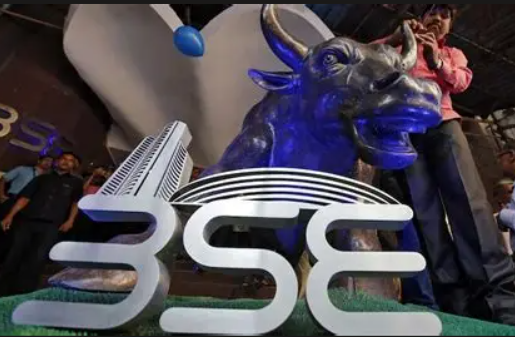
Mumbai, November 5: The Bombay Stock Exchange (BSE) reported a strong improvement in its financial performance for the September quarter of the financial year 2026-27, with consolidated net profit increasing 45 per cent year on year, supported by a recovery in derivatives trading activity.
The exchange announced a consolidated net profit of Rs 809 crore for the quarter ended September 30, compared with Rs 558 crore in the corresponding period of the previous financial year.
The improvement came despite a sequential slowdown in revenue and earnings compared with the June quarter, reflecting the impact of regulatory changes introduced earlier in the year.
BSE’s performance indicates that trading activity has started recovering following the disruption caused by the introduction of the closing auction session (CAS) in August.
The exchange also reported a significant improvement in derivatives participation during September, followed by record activity in October.
The recovery is important for BSE because equity derivatives have emerged as a major contributor to its business growth, supported by increasing participation from brokers, institutional investors and individual traders.
Derivatives Segment Shows Signs of Recovery
The derivatives business played an important role in BSE’s latest financial performance.
The exchange witnessed a recovery in trading activity after market participants adjusted their strategies following regulatory changes introduced in August.
According to Managing Director and Chief Executive Officer Sundararaman Ramamurthy, the uncertainty created by structural changes in the market had temporarily affected trading activity.
He said trading activity recovered decisively in September, while October recorded a new milestone for the exchange.
BSE achieved its highest-ever monthly average daily turnover in index options premium during October.
The development suggests that traders are gradually becoming more comfortable with the revised market structure.
Average daily derivatives turnover, measured through the premiums paid by traders to purchase contracts, increased 50 per cent year-on-year during the September quarter.
However, it remained 24 per cent lower compared with the preceding June quarter, indicating that the recovery was still developing.
The exchange expects the improvement in market participation to support its business performance in subsequent quarters.
Closing Auction Session Had Affected Trading Volumes
One of the major challenges faced by the exchange during the quarter was the introduction of the closing auction session.
The market regulator introduced the mechanism in August to bring Indian market practices closer to international standards.
A closing auction session is designed to establish the final trading price of securities through a designated period near the end of the trading day.
However, the introduction of the system initially created uncertainty among traders, particularly those involved in intraday equity and options trading.
The revised mechanism contributed to greater volatility around market closing hours, prompting some traders to reduce their positions and exercise caution.
As a result, trading volumes in certain segments declined.
The impact was particularly noticeable in derivatives activity, where even small changes in market structure can influence trading strategies and participation.
The regulator subsequently partially reversed the measure in October after concerns emerged over its impact on market activity.
The adjustment helped improve confidence among market participants.
BSE management indicated that the uncertainty surrounding the changes had largely passed, allowing trading activity to recover.
Revenue and Profitability Reflect Strong Year-on-Year Growth
BSE’s September-quarter results showed considerable improvement compared with the same period last year.
Consolidated net profit increased to Rs 809 crore from Rs 558 crore, representing growth of approximately 45 per cent.
The increase reflects stronger business activity and the exchange’s expanding role in India’s equity derivatives market.
However, the company’s financial performance was weaker on a quarter-on-quarter basis.
Net profit declined approximately 7 per cent compared with the June quarter, while revenue fell around 8 per cent.
Despite the sequential decline, BSE performed relatively better than its larger rival, the National Stock Exchange of India, where the quarterly declines were more pronounced.
The comparison highlights the exchange’s ability to maintain comparatively stronger operating momentum during a period of regulatory adjustments.
The year-on-year improvement also demonstrates the benefits of expanding its derivatives offerings and increasing participation across trading platforms.
BSE Strengthens Its Position in Equity Derivatives
BSE has been working to expand its presence in India’s rapidly developing derivatives market.
The exchange has introduced additional index derivative contracts and focused on increasing participation from brokers and investors.
Equity derivatives allow market participants to take positions based on the expected movement of underlying stocks or indices.
These instruments are commonly used for hedging, managing portfolio exposure and taking market positions.
The growing popularity of derivatives has created opportunities for stock exchanges to increase transaction-based revenue.
BSE’s expanding share of this segment has been an important contributor to its recent business growth.
The company has also benefited from the increasing number of brokers and foreign investors participating in its trading ecosystem.
The introduction of additional contracts has helped broaden the range of instruments available to market participants.
However, trading activity remains sensitive to regulatory changes, market volatility and investor sentiment.
Consequently, maintaining a stable trading environment will be important for the exchange’s long-term expansion.
October Trading Activity Provides Encouraging Signals
The October performance offered an additional indication that the derivatives segment was recovering.
BSE reported record monthly average daily turnover in index options premiums during the month.
The achievement came after the September recovery and suggested that market participants were returning to the exchange following the initial disruption caused by the closing auction mechanism.
Management described October as a record breaking month, reflecting improved activity across the index options segment.
The development could provide support to the exchange’s future financial results if the higher participation levels continue.
However, October’s trading performance will be reflected in subsequent quarterly results rather than the September quarter financial statements.
Investors will therefore be watching whether the record activity translates into sustained revenue growth and improved profitability.
Competition With NSE Remains an Important Factor
BSE operates in a competitive environment alongside the National Stock Exchange of India.
The two exchanges compete for trading volumes, market participation, new contracts and broader financial market activity.
While NSE remains the country’s larger stock exchange, BSE has been strengthening its position through new derivative products and improvements in market participation.
The recent financial results indicate that BSE has benefited from its growing share of equity derivatives trading.
Competition between exchanges can encourage improvements in trading infrastructure, technology, product development and market services.
For BSE, maintaining growth will depend on its ability to attract traders and brokers while ensuring efficient market operations.
The exchange will also need to adapt to regulatory developments that influence the structure and functioning of India’s financial markets.
Regulatory Environment Remains Central to Market Operations
The September-quarter experience highlights the influence of regulatory decisions on stock exchange operations.
Changes in trading mechanisms can affect market liquidity, investor participation and the overall volume of transactions.
Although the closing auction session was introduced with the objective of aligning Indian markets with global practices, its initial impact demonstrated the importance of carefully managing changes to established trading systems.
The partial reversal of the measure in October helped address some of the concerns raised by market participants.
BSE management’s comments suggest that trading confidence has improved following the adjustments.
Going forward, the exchange will need to work closely with market participants and regulators to ensure that operational changes do not unnecessarily disrupt liquidity.
A predictable trading environment is particularly important for derivatives markets, where trading strategies depend heavily on market timing and price movements.
Technology and Product Development to Support Expansion
BSE’s long-term growth strategy also depends on its ability to strengthen technology infrastructure and introduce products that meet changing investor requirements.
The exchange has been expanding its derivatives offerings to increase participation across different market segments.
Improved trading systems, efficient order execution and reliable market infrastructure remain important for attracting institutional and retail participants.
The increasing use of technology in financial markets has also raised expectations regarding transaction speed, transparency and system reliability.
Exchanges must continuously invest in these areas to remain competitive and handle rising trading volumes.
BSE’s expanding derivatives business provides an opportunity to increase its market presence, although sustained growth will require consistent operational performance.
What Investors Will Watch in the Coming Quarters
The latest results have brought renewed attention to BSE’s earnings outlook.
Investors will closely monitor whether the improvement in derivatives turnover continues following the October record.
The sustainability of trading activity will be particularly important because a significant portion of the exchange’s business performance is linked to market participation and transaction volumes.
Other factors likely to influence future results include regulatory developments, new derivative contracts, broker participation and competition with NSE.
The exchange’s ability to maintain stable operations while expanding its product portfolio will also remain an important consideration.
Market conditions could influence trading activity, as periods of uncertainty and volatility often change investor participation and derivatives strategies.
Any additional regulatory adjustments may also affect trading volumes.
Outlook
BSE’s September-quarter results reflect a significant improvement in annual profitability despite the temporary slowdown caused by changes in the market structure.
The 45 per cent increase in consolidated net profit highlights the exchange’s growing contribution from equity derivatives and its ability to recover from operational uncertainty.
The record index options activity reported for October provides an encouraging indication of improving market participation.
However, the sequential decline in revenue and profit shows that the recovery still needs to translate into consistent quarterly growth.
Going forward, BSE’s financial performance will depend on sustained trading volumes, regulatory stability, product expansion and its ability to compete effectively in India’s growing capital markets.
The exchange will be looking to build on the recent recovery and strengthen its position as an important participant in the country’s financial market infrastructure.

