


‘Can’t Use a Hammer to Kill a Fly’: SC Questions Metro Station Closures, Train Cancellations
Supreme Court stresses proportionality in security arrangements ahead of October 10 protest, asks Centre to ensure public transport services are not completely suspended.
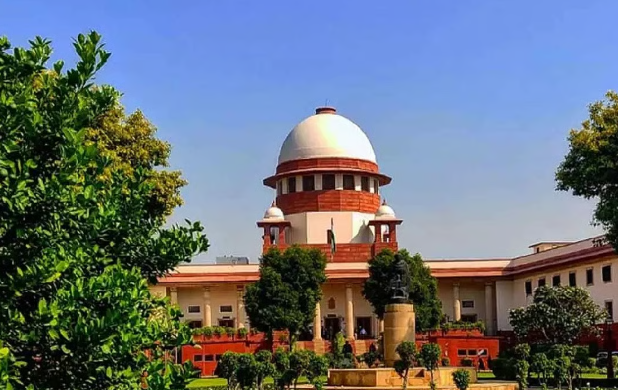
NEW DELHI, Oct 9: The Supreme Court on Friday raised concerns over the closure of 57 Metro stations and cancellation of trains arriving at New Delhi and Hazrat Nizamuddin railway stations ahead of a protest scheduled for October 10, observing that security measures must be proportionate to the situation.
A bench comprising Chief Justice Surya Kant and Justices Joymalya Bagchi and V Mohana told the Centre that authorities could not use a “hammer to kill a fly” while implementing restrictions to maintain law and order.
The court was hearing a petition challenging the suspension of train services to Delhi and restrictions on Metro operations ahead of a protest announced by the Cockroach Janta Party (CJP) and opposition parties demanding the resignation of Chief Election Commissioner Gyanesh Kumar.
Addressing Solicitor General Tushar Mehta, who appeared for the Centre, the bench expressed concern over the decision to close Metro stations from 9 pm on Friday until further orders and cancel mainline and express trains.
Chief Justice Kant emphasised the principle of proportionality, stating that authorities must adopt measures necessary to prevent potential disturbances without imposing excessive restrictions on the public.
“You have to prevent certain things. Take measures only to the extent necessary to prevent them,” the CJI observed, adding that precautionary action should not bring essential services to a complete standstill.
Mehta acknowledged the court’s concerns and said he would discuss the matter with the authorities concerned. However, he requested that the Chief Justice’s analogy about using a hammer to kill a fly not be interpreted as a direct accusation against the government.
The CJI responded that the authorities must exercise abundant caution, stressing that their responsibility extended beyond protecting government property to ensuring the safety and convenience of citizens.
The bench highlighted the difficulties that transport restrictions could cause for students, employees, senior citizens, patients and families dependent on public transport.
It noted that thousands of commuters travel daily from Gurugram, Greater Noida, East Delhi and South Delhi to the national capital for work and other essential activities.
While acknowledging the right of law enforcement agencies to regulate movement and prevent disorder, the court said such measures should not deprive ordinary citizens of transportation facilities.
“There is absolutely no difficulty with taking appropriate measures. But make sure that everything is not brought to a halt. There cannot be complete prohibition,” the bench said.
Justice Bagchi observed that reducing the frequency of trains or regulating Metro operations could be justified under certain circumstances, but shutting down services indefinitely would amount to an extreme measure.
“You can regulate the frequency of trains, but don’t stop it altogether,” he told the Solicitor General.
Mehta argued that a complete suspension of services could, in certain circumstances, be proportionate to the prevailing security situation. He added that authorities needed sufficient flexibility to respond to developments that could not be predicted in advance.
Justice Bagchi acknowledged the need for operational discretion but questioned whether an order directing Metro stations to remain closed from Friday evening until further notice could be considered a regulatory measure.
Justice Mohana also expressed concern over reports from lawyers that barricades had been placed across the city and police restrictions were affecting the free movement of traffic.
She said preventive measures were necessary but should be implemented proportionately, while questioning who would be held responsible if an untoward incident occurred.
Mehta disputed the suggestion that the entire city had effectively been shut down. He maintained that the authorities had adopted proportionate security measures in response to violence following an attempted CJP protest march to Parliament on July 20.
He also informed the bench that the internet shutdown was limited to sensitive areas within a four-kilometre radius of the President’s House and would be reviewed in light of security assessments.
The Supreme Court clarified that its consideration was limited to the disruption of transport services, as the parties organising the October 10 protest were not before it.
During the hearing, advocate Vrinda Grover raised concerns about police personnel allegedly visiting mosques and hotels and advising people against participating in the demonstration. The bench declined to examine the issue on the basis of statements alone, noting that none of the affected parties was before it.
The court also asked the Centre to consider identifying an alternative venue for peaceful demonstrations instead of Jantar Mantar.
In its order, the bench observed that a suitable location equipped with basic amenities should be identified and designated for people wishing to hold peaceful and lawful protests.
It directed the competent authority to consider the suggestion and take an appropriate decision.
The proceedings underscored the need to balance public safety and law-and-order requirements with the right of citizens to access essential transport facilities, particularly when security arrangements are introduced ahead of planned demonstrations.

