


CAQM Mandates 50% Work-from-Home in Delhi-NCR, Curbs Construction Activities from November 5–20
The temporary restrictions will cover Delhi and five NCR districts, with dust-generating construction activities suspended across the region to prevent a seasonal rise in pollution.
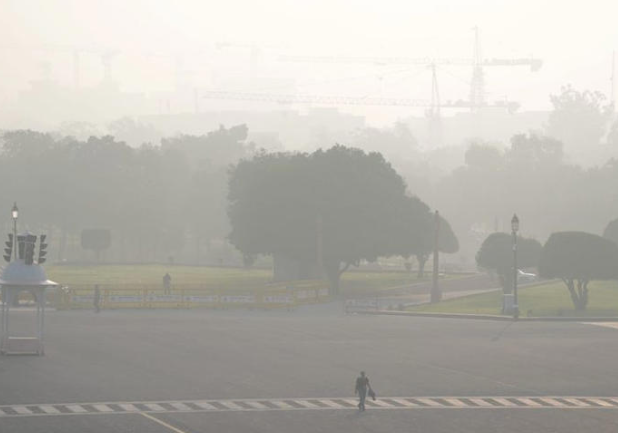
New Delhi, Oct 31: The Commission for Air Quality Management (CAQM) has announced a series of temporary measures to curb air pollution in Delhi-NCR, directing government and private offices in Delhi and five adjoining districts to allow up to 50 per cent of their employees to work from home between November 5 and 20.
Under the directive, the remaining workforce will be permitted to attend offices physically, while industrial establishments and essential services where such arrangements are impractical have been exempted.
The Commission has also imposed restrictions on dust-generating demolition and outdoor construction activities across the entire National Capital Region (NCR) during the 16-day period. Certain critical infrastructure and nationally important projects will, however, be allowed to continue.
According to an order issued on October 30, the workplace restrictions will apply to the National Capital Territory of Delhi and the NCR districts of Gurugram, Faridabad, Sonipat, Ghaziabad and Gautam Buddha Nagar.
The construction curbs will cover activities associated with highways, roads, flyovers, overbridges, power transmission lines, pipelines and telecommunications infrastructure.
The restrictions will not apply to essential projects involving Railways, Metro services, airports, inter-state bus terminals, hospitals, water supply and sanitation. Works connected with national security, defence requirements and other projects of national importance have also been exempted.
Explaining the decision, the CAQM referred to an analysis of historical daily Air Quality Index (AQI) readings recorded in Delhi-NCR between November 2018 and 2025.
The assessment indicated a recurring trend of deteriorating air quality during the first half of November, when pollution levels frequently rise due to a combination of local emissions, agricultural residue burning and unfavourable weather conditions.
The Commission observed that seasonal biomass burning and other intermittent pollution sources add to the region’s overall emission burden during this period.
Weather conditions further aggravate the situation, as reduced wind speeds, a shallow atmospheric boundary layer and limited vertical mixing prevent pollutants from dispersing effectively.
The order noted that Delhi-NCR had witnessed AQI levels reaching the ‘Severe’ and ‘Severe+’ categories on certain days during the period under review, highlighting the need for advance intervention.
The Commission said the measures were designed to reduce pollution at its source and prevent the excessive accumulation of harmful pollutants during the region’s most vulnerable period.
It also clarified that the restrictions were precautionary, temporary and limited to specified geographical areas, taking into account the seasonal pattern of air pollution.
The directions have been issued under Section 12 of the Commission for Air Quality Management in National Capital Region and Adjoining Areas Act, 2021, which empowers the authority to take necessary steps to improve and safeguard air quality across the region.
The latest intervention reflects the Commission’s efforts to limit emissions from workplace-related activities and dust-producing construction operations during the seasonal pollution surge.
With the November period historically associated with worsening air quality, the CAQM has sought to reduce avoidable pollution sources before conditions deteriorate further.
Government departments, private organisations and construction agencies operating in the affected areas will be required to follow the prescribed restrictions for the duration specified in the order.

