


CBSE Approaches Supreme Court Against Class 6 Exemption From Three-Language Policy
The board argues that the September 28 exemption would benefit only 4,186 students, representing approximately 0.18 per cent of Class 6 enrolment in CBSE affiliated schools.
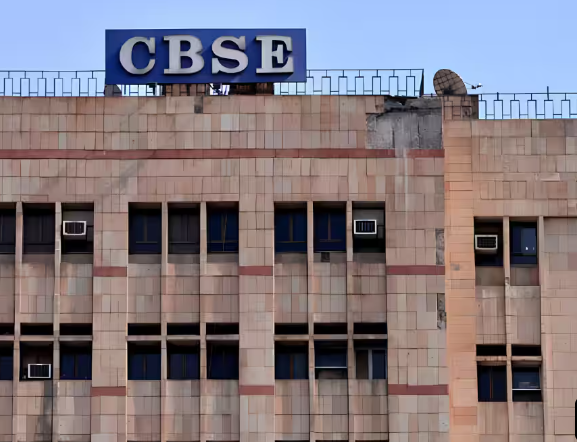
NEW DELHI, Nov 20: The Central Board of Secondary Education (CBSE) has approached the Supreme Court seeking reconsideration of its September 28 order granting Class 6 students an exemption from the three language policy for the current academic year.
The board has argued that the exemption would benefit only a very small proportion of students studying in CBSE-affiliated schools and that most institutions already possess the necessary arrangements to implement the language requirements.
In its application filed before the Supreme Court, CBSE stated that approximately 4,186 Class 6 students, accounting for just 0.18 per cent of the total enrolment, would benefit from the exemption. The board maintained that the issue primarily concerns a limited number of schools where students are studying two foreign languages rather than two Indian languages.
The matter came up before a bench headed by Chief Justice of India Surya Kant. Additional Solicitor General Aishwarya Bhati, representing the Centre, informed the court that certain aspects of the issue required further consideration and requested an early hearing on the application.
The Supreme Court agreed to examine the matter next week.
The development is significant for schools, students and parents because it concerns the implementation of the three language framework introduced by CBSE in accordance with the National Education Policy (NEP) 2020.
What CBSE Told the Supreme Court
In its application, the board presented enrolment figures to explain why it believes the exemption should be reconsidered.
According to the data submitted by CBSE, more than 2.344 million students are enrolled in Class 6 across its affiliated schools. Of these, over 2.340 million students, representing approximately 99.82 per cent, are already studying two native languages.
The remaining 4,186 students are enrolled in schools where two foreign languages are being taught. The board argued that these students represent only around 0.18 per cent of the total Class 6 enrolment.
CBSE also stated that the number of schools offering two foreign languages to Class 6 students is limited to 99 institutions across the country.
The board’s submission is intended to demonstrate that the exemption granted by the court would affect a relatively small section of students, rather than the wider population enrolled in CBSE schools.
It further maintained that the perception that schools offering foreign languages lack the facilities to teach Indian languages is incorrect.
According to the board, affiliated institutions have been teaching two native languages in Classes 6 to 8 for several decades. The introduction of the third-language requirement represents a new development in the existing arrangement.
Background of the September 28 Court Order
The present legal issue arises from an order passed by the Supreme Court on September 28, when it extended an exemption from the three-language requirement to Class 6 students for the current academic year.
The court had observed that similar relief was already available to students in Classes 7, 8 and 9. It considered that Class 6 students should receive comparable flexibility.
The order was passed after the court was informed about the existing exemptions available to students in higher classes.
The Centre had earlier told the court that most CBSE-affiliated schools had already been provided with adequate facilities to implement the third-language requirement. According to the information presented at the time, approximately 98 to 99 per cent of schools had the necessary arrangements, while around 1.2 per cent were yet to provide the required facilities.
Following the September order, the exemption was extended to Class 6 students as well.
CBSE has now requested the court to reconsider that decision, citing the limited number of students who would benefit and the arrangements already available in most affiliated schools.
Three-Language Framework Under NEP 2020
The three-language approach forms part of the wider educational reforms introduced under the National Education Policy 2020.
The policy seeks to promote multilingualism and encourage students to develop proficiency in more than one language. It places emphasis on Indian languages while allowing flexibility in the selection of languages according to educational requirements and institutional arrangements.
The objective is to strengthen communication abilities, improve access to different linguistic traditions and encourage students to appreciate the country’s cultural and linguistic diversity.
Under CBSE’s implementation of the framework, the third language concept was introduced for Class 6 in April 2026.
The board’s submission states that affiliated schools had already been offering two native languages in Classes 6 to 8 for many years. According to CBSE, the introduction of the third language represented a new requirement, with Standard 9 witnessing its introduction for the first time this year.
The policy has consequently required schools to examine their existing language arrangements, availability of teachers and academic resources.
The issue has also brought attention to the practical challenges involved in implementing a common educational framework across institutions with different student populations and language combinations.
CBSE’s Position on School Preparedness
The board has maintained that most affiliated schools are adequately equipped to implement the language requirements.
Its application refers to information previously provided to the Supreme Court regarding the availability of facilities in schools. CBSE’s position is that the majority of institutions have already made arrangements for teaching the required languages.
The board has also highlighted the distinction between schools teaching two Indian languages and those offering two foreign languages.
According to the figures submitted, 19,892 students in the identified schools are pursuing two native languages, while 4,186 students are studying two foreign languages.
CBSE has relied on these figures to argue that the situation affecting the latter group should not be treated as representative of the entire Class 6 population.
The board’s application therefore seeks reconsideration of the relief granted by the court, with particular attention to the scale of its impact and the existing infrastructure available in affiliated institutions.
Scale of India’s School Education System
The information presented before the court also provides an indication of the size of India’s school education network.
According to the data cited by CBSE, the country has 1,466,682 schools, including both affiliated and non-affiliated institutions, with a combined enrolment of 247,219,766 students.
Of these institutions, 33,017 are affiliated with CBSE. These schools collectively have more than 27.5 million students from Classes 1 to 12.
The figures demonstrate the scale at which education-related decisions must be implemented and monitored.
Even a relatively small change in academic requirements can involve administrative planning, teacher availability, curriculum adjustments and communication with parents across thousands of institutions.
Language education presents additional challenges because schools operate in different linguistic environments. The availability of qualified teachers and suitable learning materials may vary from one region to another.
The board’s arguments have therefore focused on the need to consider actual institutional preparedness while deciding the extent of exemptions.
What the Court Will Consider Next
The Supreme Court is expected to hear CBSE’s application next week. The proceedings will determine whether the September 28 exemption granted to Class 6 students should be reconsidered.
The court will have to examine the board’s arguments regarding the number of affected students, the availability of language-teaching facilities and the relationship between the existing exemptions for Classes 7 to 9 and the requirement applicable to Class 6.
The Centre’s request for an early hearing has brought the issue back before the court, although no final decision on CBSE’s application has been announced.
Until the court considers the matter and passes further directions, the existing judicial order remains relevant to the implementation of the policy.
Schools and parents will be watching the proceedings closely because the outcome could influence how the three-language framework is applied to students during the current academic year.
The case also highlights the importance of balancing the broader objectives of multilingual education with the practical circumstances of individual schools and learners.
Implications for Schools, Students and Parents
The legal proceedings have placed the implementation of language education under renewed focus.
For schools, the immediate concern involves ensuring that academic arrangements remain consistent with applicable court directions and CBSE instructions. Institutions may also need to review their language-teaching resources and communicate any relevant developments to parents.
For students, the issue concerns the language requirements applicable to their current academic year. Any changes to the existing arrangements would depend on the final directions issued by the Supreme Court and subsequent instructions from the board.
Parents, meanwhile, may seek clarity about the languages their children are expected to study and whether existing subject combinations will be affected.
The case also raises wider questions about how educational policies should accommodate differences between schools without undermining their overall objectives.
The three language framework is intended to encourage multilingual learning, but its implementation requires adequate planning, qualified teachers and appropriate academic support.
As the Supreme Court prepares to examine CBSE’s application, the focus will remain on whether the existing exemption should continue or whether the board’s arguments justify a reconsideration of the earlier order.

