CBSE Directs Schools to Celebrate Janjatiya Gaurav Divas from November 1 to 15
The 15 day programme will highlight tribal freedom fighters, indigenous traditions and cultural heritage through workshops, competitions, performances and community outreach activities.
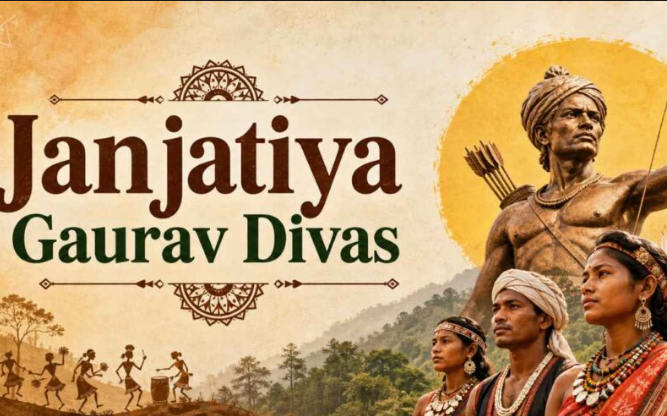
NEW DELHI, Nov 2: The Central Board of Secondary Education (CBSE) has asked all its affiliated schools to organise a series of educational and cultural activities from November 1 to 15 to mark Janjatiya Gaurav Divas 2026, with an emphasis on introducing students to the contributions of tribal communities to India’s history, freedom struggle and cultural diversity.
The initiative is part of a nationwide fortnight-long observance intended to promote awareness about tribal heritage and recognise the role played by tribal leaders and freedom fighters in the country’s development. The Board has encouraged schools to ensure meaningful participation from students and teachers through classroom activities, cultural programmes and community-based initiatives.
In its circular dated October 30, CBSE outlined a range of suggested activities that schools can organise during the 15-day period. These include workshops on tribal art, music, dance and handicrafts, essay-writing competitions, painting contests, photography activities, quizzes and theatrical performances.
The programme will culminate on November 15, which marks the birth anniversary of Bhagwan Birsa Munda, a prominent tribal leader and freedom fighter whose contribution to the struggle against British colonial rule remains an important part of India’s history.
Schools have been encouraged to organise special programmes on the concluding day, including floral tributes to Birsa Munda and other tribal freedom fighters. The observance is also intended to familiarise younger generations with the historical struggles, traditions and achievements of indigenous communities.
The government designated November 15 as Janjatiya Gaurav Divas in 2021 to honour Bhagwan Birsa Munda and recognise the contribution of tribal communities to India’s freedom movement. The 2026 programme marks the sixth nationwide observance since its introduction.
CBSE has suggested that schools use the occasion to provide students with a broader understanding of tribal history beyond conventional textbook lessons. Educational institutions can organise discussions and presentations highlighting the role of tribal leaders in resisting colonial policies, protecting traditional lands and safeguarding community rights.
Among the suggested activities are age-appropriate workshops introducing students to different forms of tribal art, traditional crafts, folk music and dance. Such programmes are expected to provide opportunities for students to understand the diversity of India’s indigenous cultures through practical learning experiences.
The Board has also encouraged schools to recognise distinguished personalities from tribal communities, including scholars, artists, social workers and other achievers. Inviting such individuals to interact with students could help provide real-life examples of achievement and encourage greater appreciation of the contributions made by tribal communities.
Creative competitions will form another important component of the celebrations. Students can participate in painting activities based on the theme ‘My Tribe, My Heritage’, along with essay-writing competitions focusing on tribal contributions to India’s freedom struggle.
Photography contests, traditional art and craft demonstrations, slogan-writing activities and cultural presentations have also been included in the suggested programme.
Schools can organise drama performances and nukkad nataks to communicate important social and historical messages. These performances may focus on tribal education, healthcare, livelihoods, environmental protection and community development.
The use of street theatre and cultural presentations is intended to make the subject more accessible to students while encouraging them to explore issues affecting tribal communities in contemporary India.
Community outreach has also been highlighted as an important part of the initiative. Schools can undertake activities that encourage interaction with tribal communities and provide students with opportunities to understand their traditions, social practices and everyday challenges.
Such engagement can help promote respect for cultural differences and discourage stereotypes. It can also introduce students to the importance of preserving indigenous knowledge, languages, art forms and traditional practices.
The programme is expected to involve a wide range of educational institutions. The circular has also been shared with organisations such as the Kendriya Vidyalaya Sangathan, Navodaya Vidyalaya Samiti and Eklavya Model Residential Schools, along with other relevant educational authorities for wider dissemination.
These institutions have been encouraged to coordinate activities and ensure that the observance reaches students across different regions.
A major objective of the initiative is to improve awareness about the historical role of tribal communities in India’s independence movement. Several tribal leaders and communities participated in resistance movements against colonial administration, challenging policies that affected their traditional lands, forest rights and livelihoods.
However, their contributions have not always received sufficient attention in mainstream historical discussions. The fortnight-long observance seeks to encourage schools to address this gap by introducing students to important personalities and movements associated with tribal resistance.
Bhagwan Birsa Munda remains central to the programme because of his leadership during the late nineteenth-century tribal uprising against British rule. His movement challenged colonial interference in tribal land and social systems and became an important symbol of resistance and self-determination.
The celebrations also offer an opportunity to highlight the importance of tribal languages, traditional knowledge systems and cultural practices. Students can learn about indigenous approaches to agriculture, conservation, healthcare and community organisation, many of which remain relevant to discussions about sustainable development.
The educational value of the initiative extends beyond history lessons. Cultural workshops and interactive programmes can help students develop an understanding of India’s social diversity and the importance of respecting different communities.
Schools have been encouraged to document their activities through photographs, videos and brief written reports. Details of the programmes, including participation figures and information about events, are to be submitted through the designated Janjatiya Gaurav Divas portal of the Ministry of Tribal Affairs.
The documentation process is expected to help authorities assess participation and record the activities conducted by educational institutions during the observance.
Teachers have an important role in ensuring that the celebrations remain educational rather than limited to ceremonial events. Discussions, classroom assignments and student-led presentations can help connect the activities with the broader curriculum.
The programme also provides an opportunity to encourage research-based learning. Students can explore the history of tribal freedom fighters, collect information about local traditions and prepare presentations on indigenous contributions to Indian society.
Through these activities, CBSE aims to encourage students to develop a deeper appreciation of the country’s cultural heritage and recognise the contributions of communities that have played an important role in shaping its history.
With the celebrations underway from November 1, schools have been encouraged to make the fortnight meaningful through active participation, cultural exchange and educational engagement, culminating in tributes to Bhagwan Birsa Munda and other tribal freedom fighters on November 15.